Labels serve different purposes, from identifying products and showcasing your brand to sharing important information and ensuring packages reach the right destination. Additionally, they also improve your packaging, simplify shipping, promote sales and special offers, and create a better customer experience. Not sure which label type to choose? This UPrinting guide explains the most common types of labels, what they're used for, and how to pick the best one for your products and packaging.
Different Types of Labels
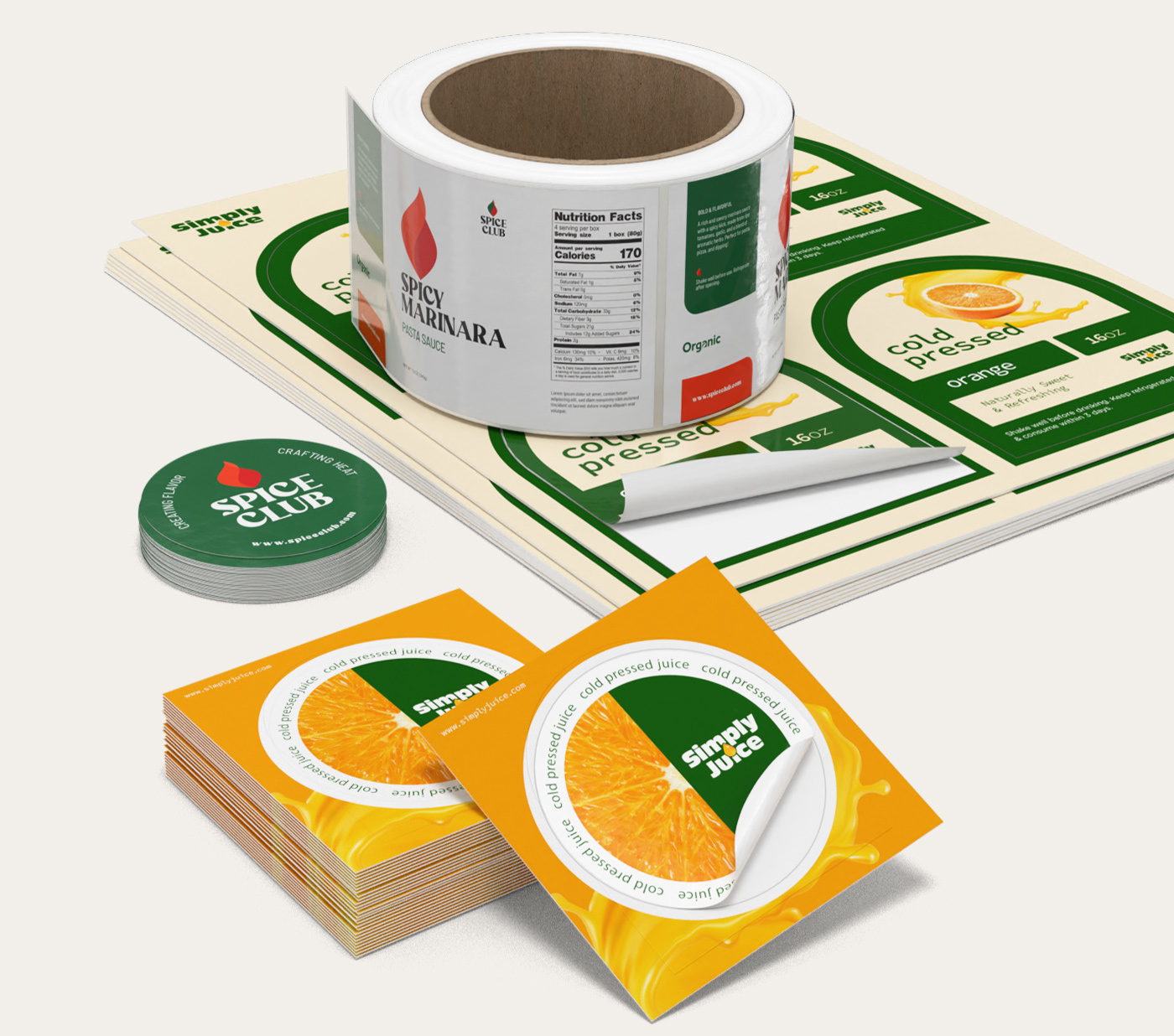
Various custom labels and stickers
Learning about the different types of labels can help you determine the right fit for your business needs. Here's a look at the most common types of labels businesses use:
1. Product Labels
Product labels help identify a product and give customers the information they need before they make a purchase. These labels appear on the primary container or packaging and are usually the first thing customers notice when they see your products on the shelf. Product labels make products stand out and reinforce your brand. They communicate what it is while creating a professional look across your packaging. They're found on everything from food and beverages to cosmetics and household goods.
What Information They Include
- Product name
- Brand logo
- Product description
- Size or quantity
- Ingredients
- Barcode or SKU
- Manufacturer information
- Instructions on how to use the product
- Story behind the product
Common Uses
Product labels are often used on bottles, jars, boxes, tubes, pouches, cosmetics, personal care products, candles, lip balms, lip gloss, soaps, and household goods.
Tip: Choose a size that fits your packaging and a material that can withstand how the product will be stored, displayed, or handled.
2. Food and Beverage Labels
Food and beverage labels help customers make informed decisions while meeting food labeling requirements. They show what’s inside the package, how to use or store the product safely, nutritional information, and sometimes indicate the quality or grade of a product.
What Information They Include
- Product name
- Ingredients
- Nutrition facts
- Food grade
- Allergen information
- Net weight
- Best-by or expiration date
- Storage instructions
- Barcode
Common Uses
Food and beverage labels are seen on coffee bags, beverage bottles, snacks, wine bottles, beer bottles, bakery products, spice jars, and other various packaging.
Tip: If your products are refrigerated, frozen, or exposed to moisture or oils, pick a durable material that can handle those conditions.
3. Promotional Labels
Promotional labels help your products stand out by highlighting sales, special offers, and limited-time campaigns. They're often used during seasonal promotions, product launches, and retail events to attract attention and create a sense of urgency or excitement among consumers while boosting sales.
What Information They Include
- Sale prices
- Discount offers
- “New” or “Limited Edition” messaging
- QR codes
- Promotional call-to-actions
Common Uses
Promotional labels are used on a variety of applications, including retail products, holiday packaging, product displays, gift boxes, and subscription boxes.
Tip: Keep promotional messages short, bold, and easy to spot. If they’re temporary, choose a label that’s removable or replaceable.
4. Mailing and Shipping Labels
If you’re sending items to customers, mailing and shipping labels are exactly what you need. They help ensure packages reach the right destination while helping carriers process and track shipments. Clarity and readability come first with these labels, but many businesses still include their logo for a polished, professional touch.
What Information They Include
- Company or sender’s name
- Recipient’s name
- Tracking barcode
- Recipient’s address or return address
- Carrier and shipping service information
Common Uses
Mailing and shipping labels are applied to shipping boxes, poly mailers, bubble mailers, envelopes, and shipping tubes.
Tip: Look for labels with strong adhesive and clear printing that remain readable throughout shipping.
5. Barcode Labels
Barcode labels help businesses track products, manage inventory, and speed up checkout and fulfillment. They're commonly used in retail stores, warehouses, and distribution centers.
What Information They Include
- Barcode or QR code
- SKU or product number
- Product name
- Batch or serial number
Common Uses
You’ll see barcode labels on retail products, warehouse inventory, storage bins, and shipping cartons.
Tip: Before ordering, consider the label’s print quality for accurate scanning. Make sure to follow barcode size requirements, and see to it that the label is properly placed on the product or packaging.
6. Warning Labels
Warning labels communicate information and required product details such as hazards, handling instructions, or precautions to help reduce the risk of accidents and protect customers and employees before a product is used.
What Information They Include
- Warning statements
- Safety symbols
- Handling instructions
- Usage precautions
Common Uses
You’ll often find warning and safety labels on cleaning products, chemical containers, electronics, batteries, industrial equipment, and automotive products.
Tip: Choose durable labels with high-contrast colors and easy-to-read text that remains visible throughout the product’s lifespan.
7. Regulatory Labels
Regulatory labels display information required by the government or industry standards. Depending on the product, they can convey safety information, ingredients, certifications, or compliance details to help businesses meet legal requirements.
What Information They Include
- Ingredients or materials
- Nutrition facts
- Allergen information
- Safety warnings
- Certification marks
- Required compliance statements
- Country of origin
- Manufacturer information
Common Uses
Regulatory labels are often seen on medicines, food and beverage products, cosmetics, dietary supplements, and children’s products.
Tip: Double-check the regulations that apply to your industry, and ensure that your labels include the required wording, symbols, or certifications.
8. Hang Tags
Hang tags are usually paired with product labels when you need to provide additional information without covering the packaging. These are attached using a string, ribbon, or plastic fasteners, and are a popular option for retail products.
What Information They Include
- Brand logo
- Product name
- Price
- Care instructions
- Materials
- QR codes
Common Uses
Hang tags are applied almost anywhere, from apparel, bags, and jewelry to handmade goods and home decor.
Tip: Consider the tag size, paper stock, attachment method, and whether you’ll go for single- or double-sided printing before ordering.
Quick Comparison of Label Types
Use the table below to compare the most common label types and their primary purpose.
| Label Type | Best Used For | Examples |
|---|---|---|
| Product Labels | Branding and identifying products | Beer bottles, wine bottles, jars, candles, cosmetics |
| Food and Beverage Labels | Displaying food information and meeting labeling requirements | Coffee bags, honey jars, hot sauce bottles, bakery items |
| Promotional Labels | Highlighting sales, discounts, or limited-time offers | Sale stickers, "New Product" labels, seasonal promotions |
| Mailing and Shipping Labels | Mailing letters and shipping packages | Shipping boxes, envelopes, poly mailers, return address labels |
| Barcode Labels | Tracking inventory, products, and assets | Retail products, warehouse inventory, shipping cartons |
| Warning Labels | Communicating hazards and safe handling instructions | Cleaning products, chemicals, batteries, machinery |
| Regulatory Labels | Meeting legal or industry labeling requirements | Food products, cosmetics, supplements, electronics |
| Hang Tags | Adding product details without attaching an adhesive label | Clothing, bags, shoes, jewelry, handmade goods |
Common Label Materials
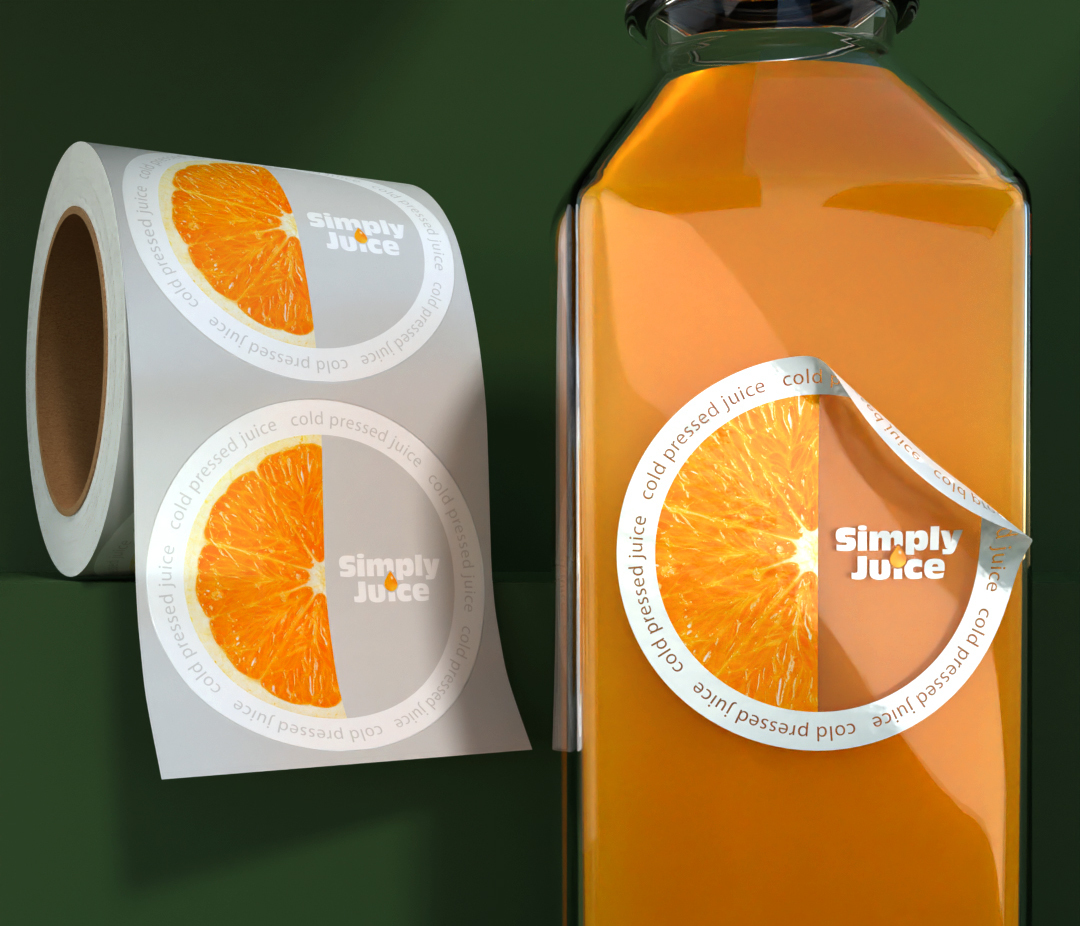
Custom beverage label and label roll
The right material depends on how and where you intend to use your custom labels.
- White paper – An affordable paper material suitable for everyday indoor use.
- Gloss paper – Offers a shiny finish that makes colors pop and is ideal for detailed graphics.
- Matte paper – Provides a smooth, nonreflective finish that’s easy to read and write on.
- White vinyl – Durable and waterproof, best for items that are often exposed to moisture or outdoor conditions.
- Clear film – A transparent material that creates a “no-label” look.
- BOPP – A durable, water- and oil-resistant plastic film commonly used in food, beverages, and bath and body products.
- Kraft – A brown paper material with a natural, rustic appearance that works best for handmade goods, artisan foods, and eco-friendly brands.
Basic Label Design Tips
Ready to design custom labels? Follow these tips for the best results:
- Place key important information like the product name or warning where customers can easily spot it.
- Choose fonts that are clear and readable at a glance.
- Maintain consistent brand colors and logos across all labels to create a recognizable, professional look.
- Avoid clutter by leaving enough white space to make text and images stand out.
- Use high-resolution images to ensure your labels print clearly.
- Keep barcodes and QR codes large enough to be easy to scan.
- Double-check spelling, measurements, and product information to avoid costly printing errors.
- Ensure required regulatory information is clearly visible to help meet labeling requirements.
Choosing the Right Label
Before placing an order, ask yourself these questions to ensure you’re able to choose the right label:
- What is the purpose of the label?
- Where will you apply it?
- Will it be exposed to water, heat, or sunlight?
- Does it need to include required product details?
- Will it be used permanently or only for short-term promotions?
Once you can answer these questions, you’ll have a clear idea of what type of label fits your needs.
Small Labels, Lasting Impressions
A well-designed label is more than a finishing touch; it also builds brand recognition, earns customer trust, and keeps operations running smoothly. Now that you know the different types of labels and their uses, you're all set to create professional, effective, and unforgettable packaging.
Related Articles
Choosing the Right Sticker Material: Paper, Vinyl, BOPP, and More
What Is BOPP: Why Is It Ideal for Labels?
Buyer’s Guide to Roll Labels: Sizes, Materials, Printing, and Application Tips
How to Create and Design Product Labels
Breaking Down the Parts of a Product Label: A Beginner’s Guide
Designing and Printing Labels: Useful Tips
A Visual Guide for Printing Custom Labels