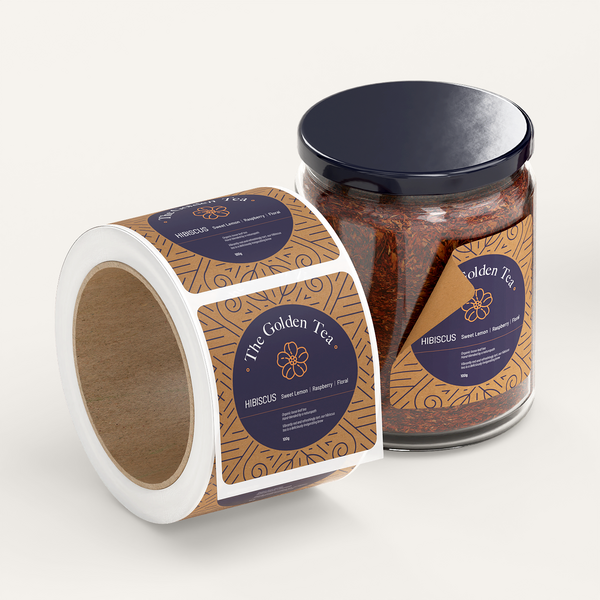
If you’ve ever ordered roll labels and wondered why some apply effortlessly while others seem to fight you every step of the way, the issue often comes down to more than just design.
Material choice, finish, roll direction, and how the labels were produced all affect how well they perform once they’re in your hands.
For businesses using labels on packaging, products, shipping, or retail displays, these details can impact speed, consistency, and even how polished your brand looks. A label that wrinkles, peels poorly, or dispenses in the wrong direction can slow down fulfillment and create unnecessary waste.
Whether you’re labeling products by hand or using a dispenser or applicator, understanding how roll labels work helps you make better buying decisions from the start.
How Roll Labels Are Made
Roll labels may look simple, but several production steps determine how durable, easy to apply, and visually consistent they’ll be.
- Printing the Label Design
Everything starts with your artwork being printed onto a label material, also called facestock.
Common roll label materials include paper and film-based options like BOPP (biaxially oriented polypropylene). The right choice depends on where and how the label will be used.
- Paper labels are often chosen for dry goods, retail packaging, and short-term indoor use.
- Film materials are more durable and better suited for products exposed to moisture, oils, refrigeration, or repeated handling.
Print quality matters here, especially if your design includes fine details, small text, gradients, or vibrant brand colors.
- Curing the Ink
Once printed, the ink needs to be cured so it properly bonds with the material.
This usually happens through UV curing or heat, depending on the printing process. Curing helps prevent smudging, fading, and transfer during shipping or application.
Without this step, labels may look fine initially but wear down quickly in real-world conditions.
- Applying a Protective Finish
Not every label needs extra protection, but many do.
A finish helps preserve print quality and improves durability depending on how the product will be handled.
Common options include:
- Gloss: Bright, vibrant, and attention-grabbing
- Matte: Softer appearance with a more premium feel
- Laminate: Added protection against scratches, moisture, oils, and friction
For food containers, cosmetic packaging, refrigerated items, or bath products, protective finishes often make a noticeable difference in performance.
- Die-Cutting the Labels
After printing, labels are cut into their final shape while remaining attached to the backing liner.
This process is called die-cutting.
Standard shapes include:
- Circle
- Oval
- Square
- Rectangle
- Rounded rectangle
Custom die-cut labels are also available for brands that want a more distinctive shape.
A clean die cut matters because poorly cut labels can tear, peel unevenly, or jam in applicators.
- Removing the Matrix
The excess material surrounding each label is removed after cutting. This is called matrix removal.
It may seem like a minor step, but it directly affects how smoothly labels dispense.
Incomplete or inconsistent matrix removal can lead to lifting edges, messy rolls, or application problems.
- Winding the LabelsOnto Rolls
This is where many buyers accidentally run into problems.
Once labels are finished, they’re wound onto rolls in a specific orientation. This determines how the label peels off during application.
If the roll direction matches your workflow:
- Labels dispense naturally
- Application feels faster
- Placement stays consistent
- Operators make fewer mistakes
If it doesn’t:
- Labels may come off upside down
- Designs can peel sideways
- Manual application becomes awkward
- Applicators may not work properly
For businesses applying hundreds of labels, this small detail can create major inefficiencies.
- Counting and Packaging
Finished labels are counted into set quantities and packed for shipment.
Common roll counts may include:
- 250
- 500
- 1,000
- Higher bulk quantities
Proper packaging protects labels from dust, pressure damage, and moisture before they reach your business.
Why Roll Direction Matters More Than Most Buyers Expect
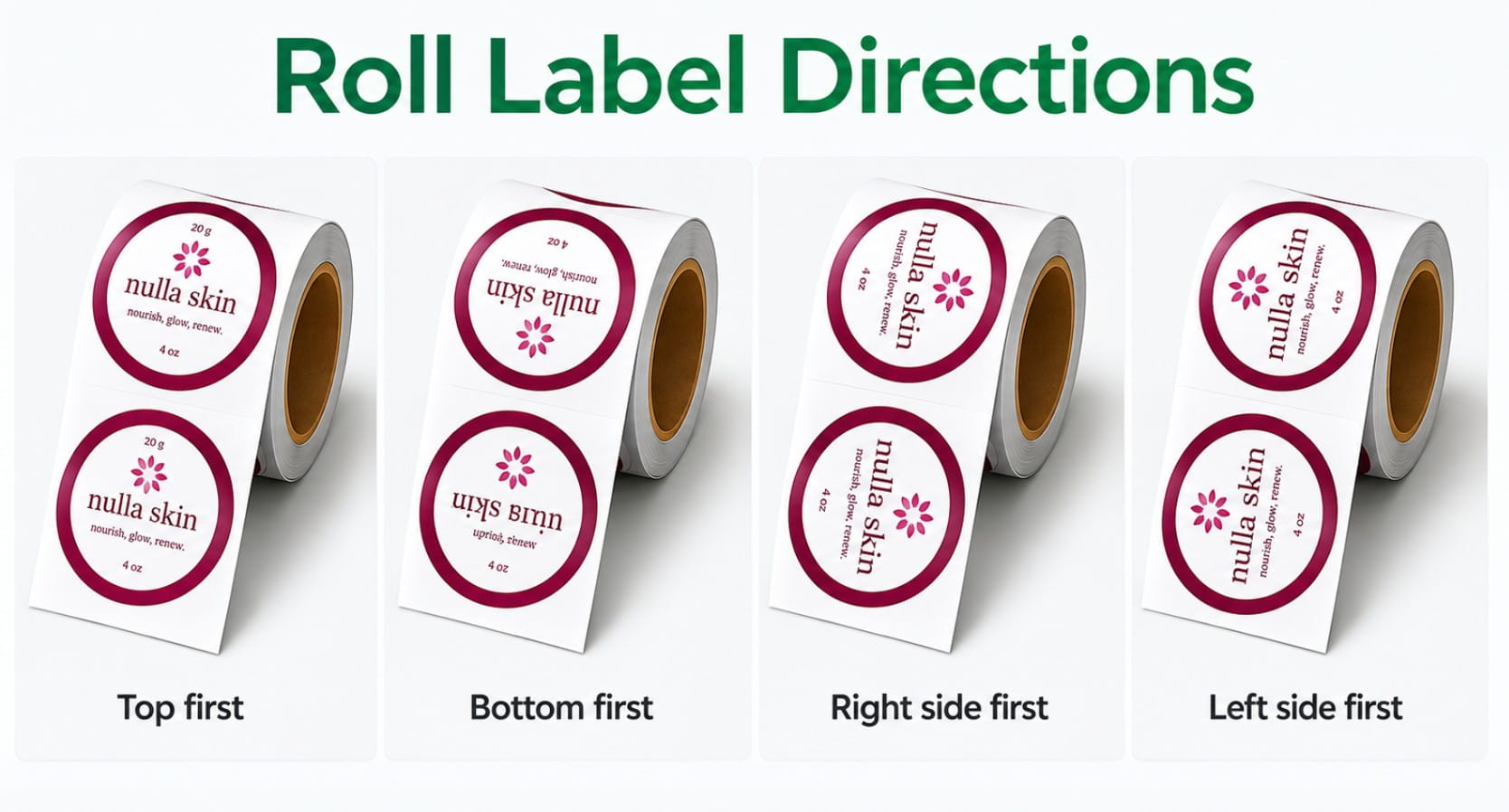
different roll label directions
Roll direction affects how the label presents itself when peeled from the liner.
If you’re applying labels manually, the wrong orientation can feel annoying but manageable.
If you’re using a dispenser or automated applicator, it can be a real operational issue.
Different applicators require specific unwind directions, and ordering the wrong one may make your labels unusable without rewinding.
Before placing an order, consider:
- Will labels be applied by hand?
- Will they be applied from the top, side, or bottom?
- Are you using a label applicator?
- Does your equipment require a specific unwind direction?
If you’re unsure, checking before production is much easier than fixing it later.
How to Choose the Right Roll Label Size and Shape
The right size depends on both your packaging and the information your label needs to display.
A label that’s too small can feel cramped or hard to read. One that’s too large may overpower the product or create application issues.
Common Roll Label Sizes
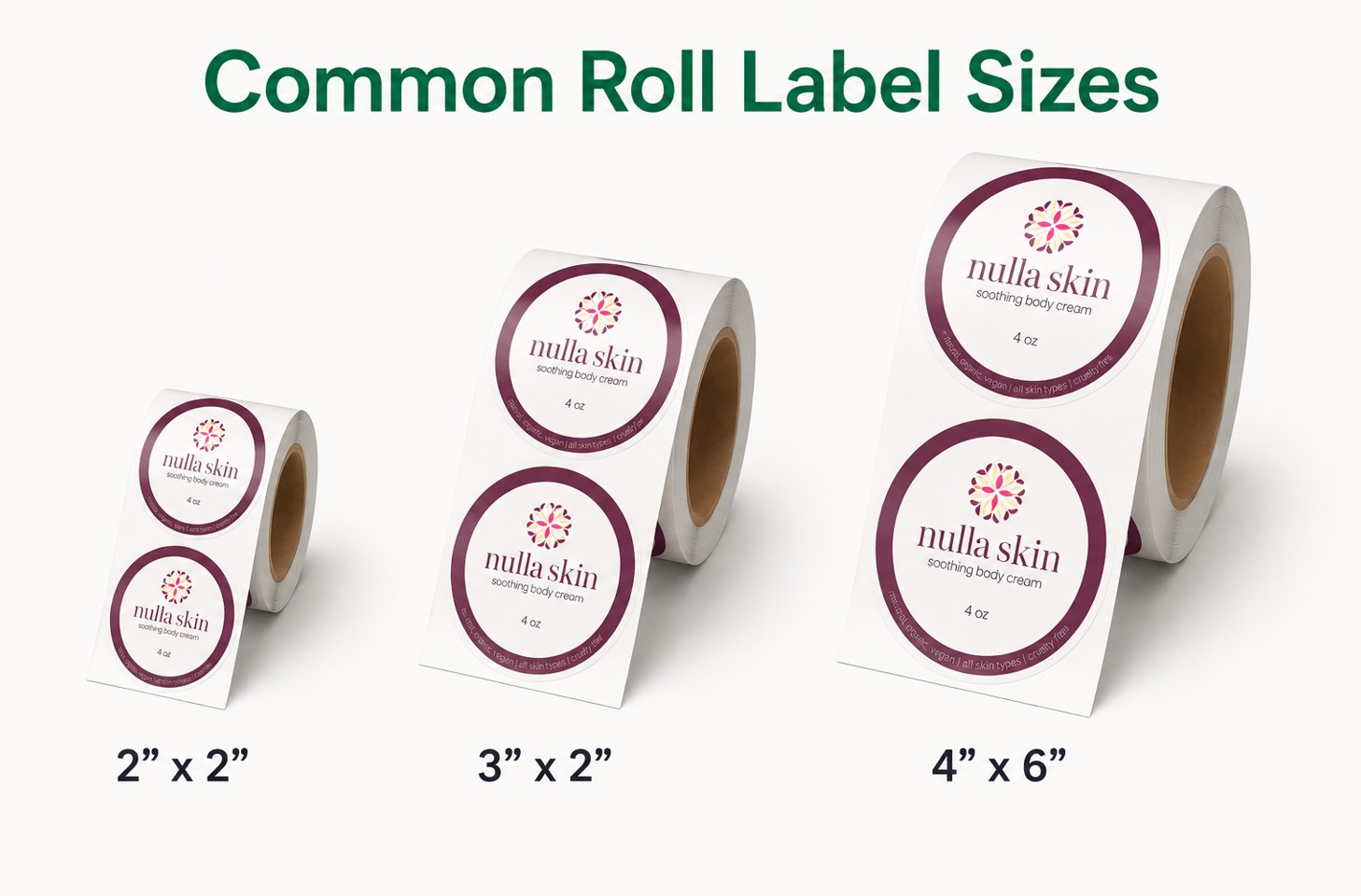
common roll label sizes
Popular sizes often include:
- 2" x 2" for jars, bottles, and compact packaging
- 3" x 2" for product packaging and retail goods
- 4" x 6" for shipping and logistics labels
- Smaller formats for sample packaging or specialty products
At UPrinting, sizes range from 0.5" x 0.5" up to 5" x 5", giving businesses flexibility across different packaging formats.
Choosing the Right Shape
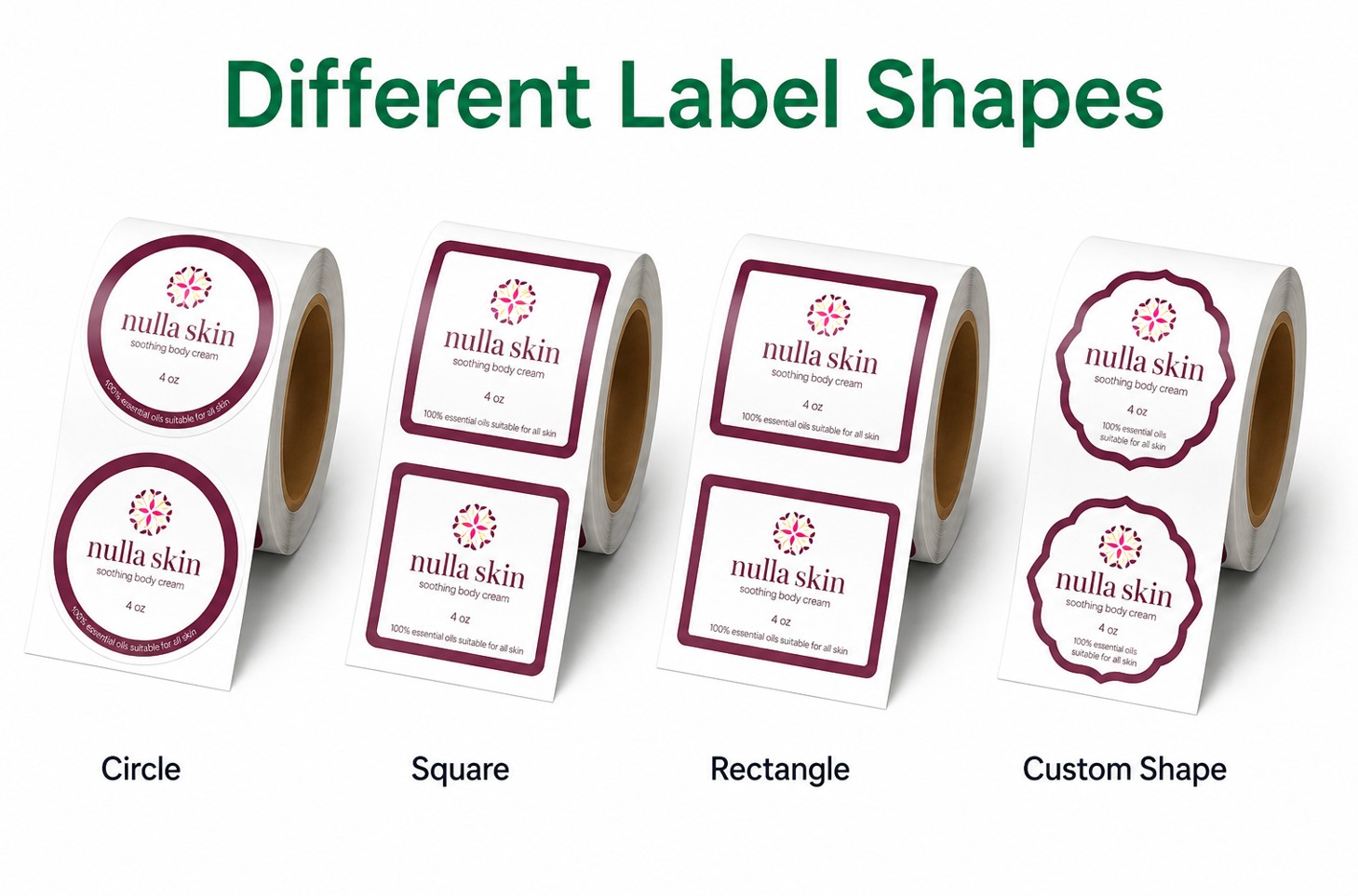
different label shapes
Shape influences both aesthetics and usability.
Circle labels
Great for jars, candles, lids, and minimalist branding.
Rectangle labels
Best for ingredient-heavy packaging, product information, or shipping.
Square labels
Balanced and versatile for many retail applications.
Custom shapes
Ideal when branding impact matters and you want packaging that stands out.
Comparing Roll Label Materials
Material selection affects durability, appearance, and cost. Choosing based only on price can create problems later.
BOPP Labels
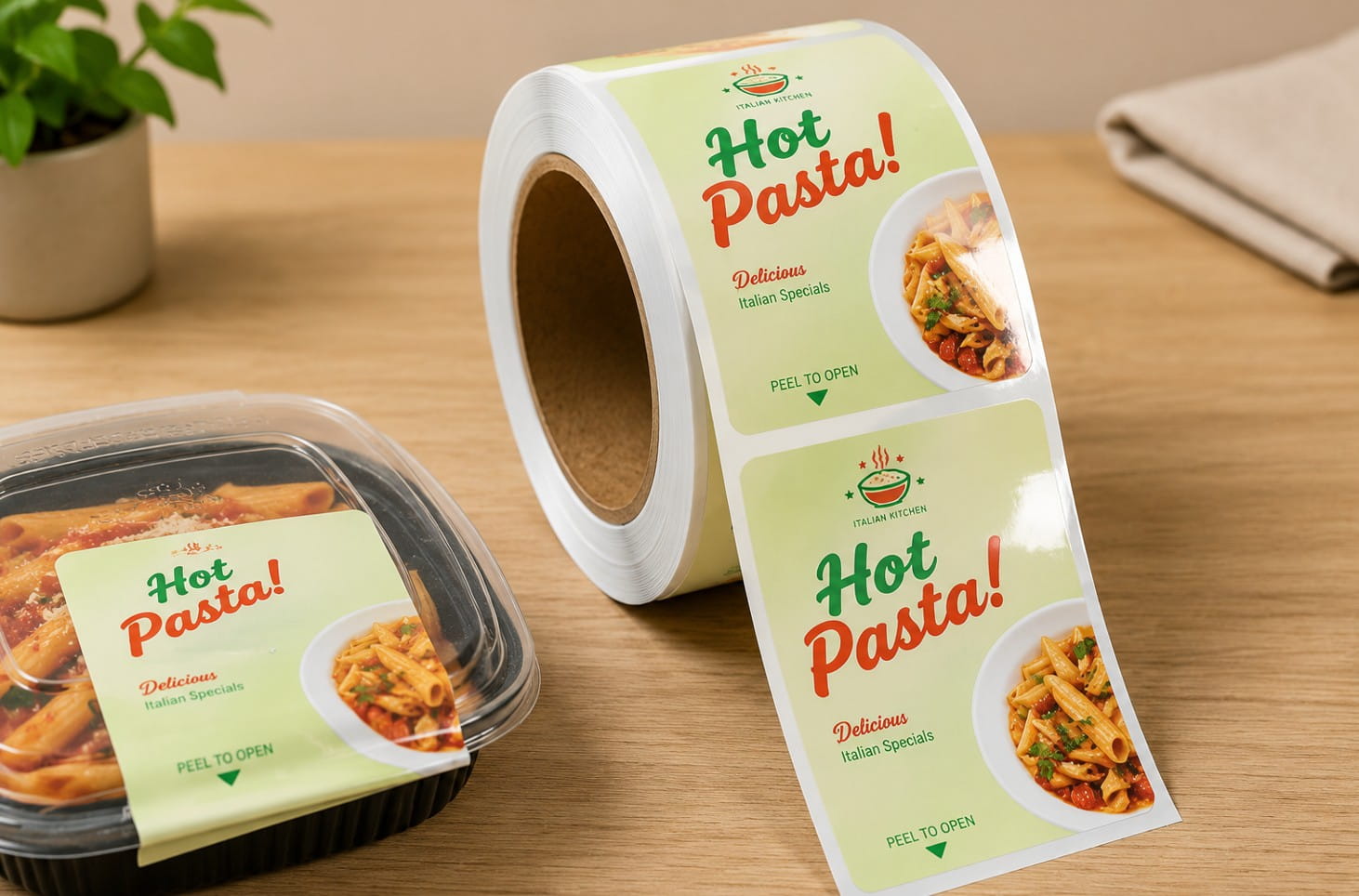
bopp roll label
BOPP is one of the most commonly used roll label materials for product packaging.
Available in:
- White
- Clear
- Metallic
Best for:
- Food packaging
- Beverage bottles
- Cosmetics
- Refrigerated products
- Bath and body items
Why businesses choose it:
- Moisture resistant
- Oil resistant
- Durable under handling
- Clean professional finish
If your product lives in kitchens, bathrooms, coolers, or shipping boxes, BOPP is often the safer option.
White Paper Labels
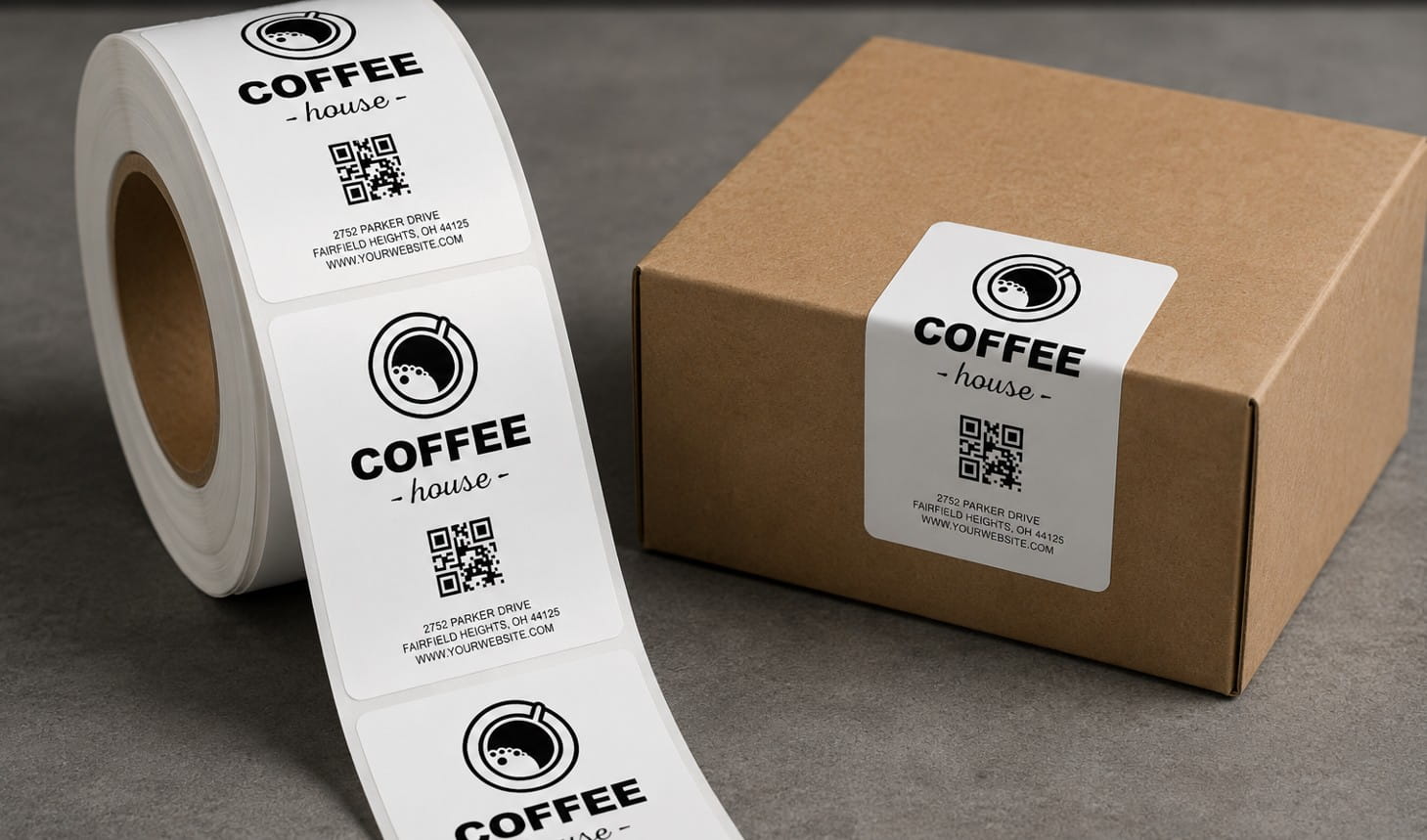
white paper roll label
Paper labels remain a popular budget-friendly choice.
Best for:
- Dry goods
- Retail packaging
- Indoor products
- Temporary promotions
Benefits:
- Excellent print quality
- Crisp color reproduction
- Lower cost than film materials
They’re less ideal for wet or rough environments.
Textured and Specialty Papers
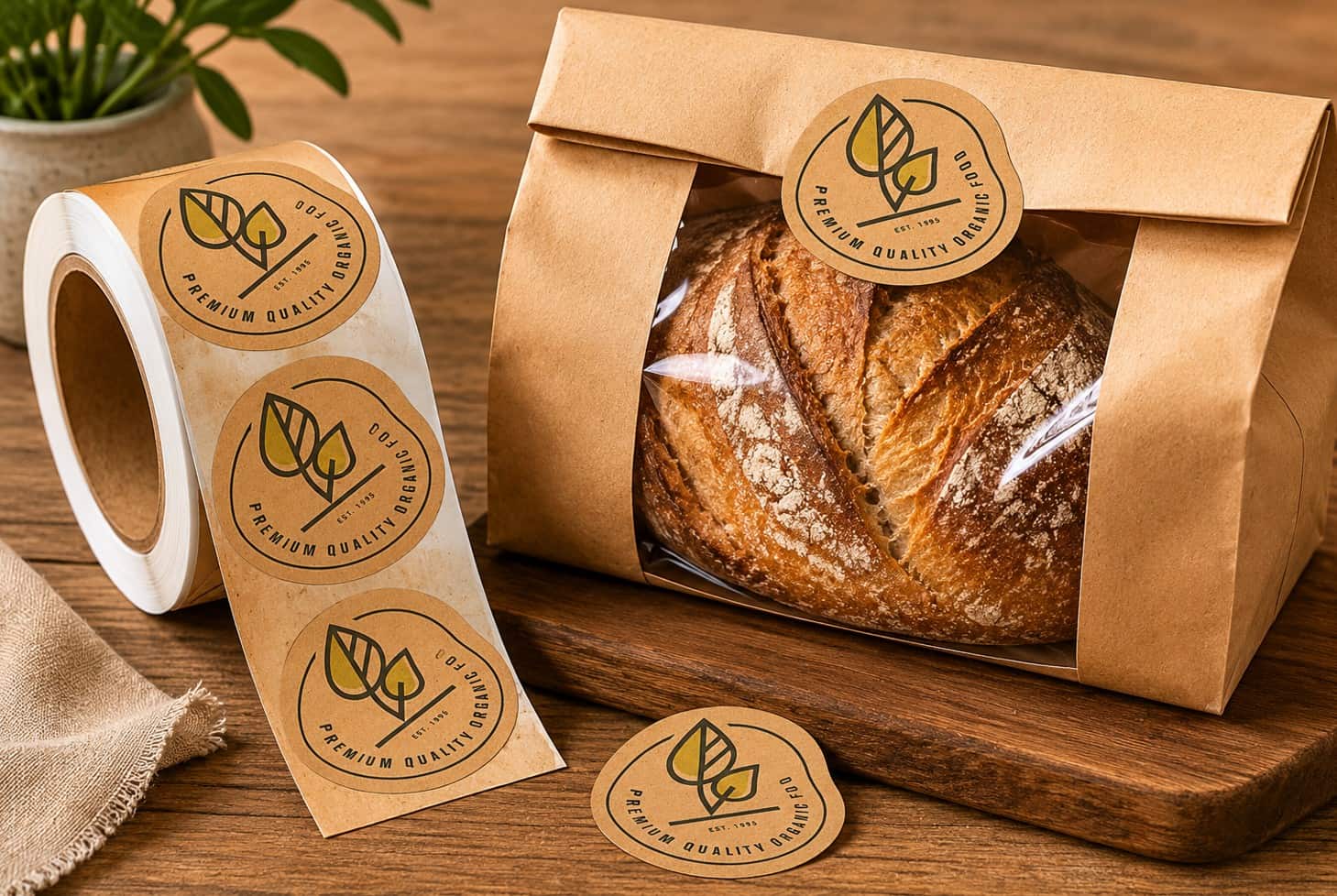
recyled kraft roll label
These materials prioritize visual character over heavy-duty durability.
Examples include:
- Vellum white
- Laid paper
- Recycled kraft paper
Popular for:
- Handmade products
- Artisan packaging
- Gift items
- Eco-conscious branding
These materials help products feel more tactile and premium.
Roll Labels vs. Sheet Labels
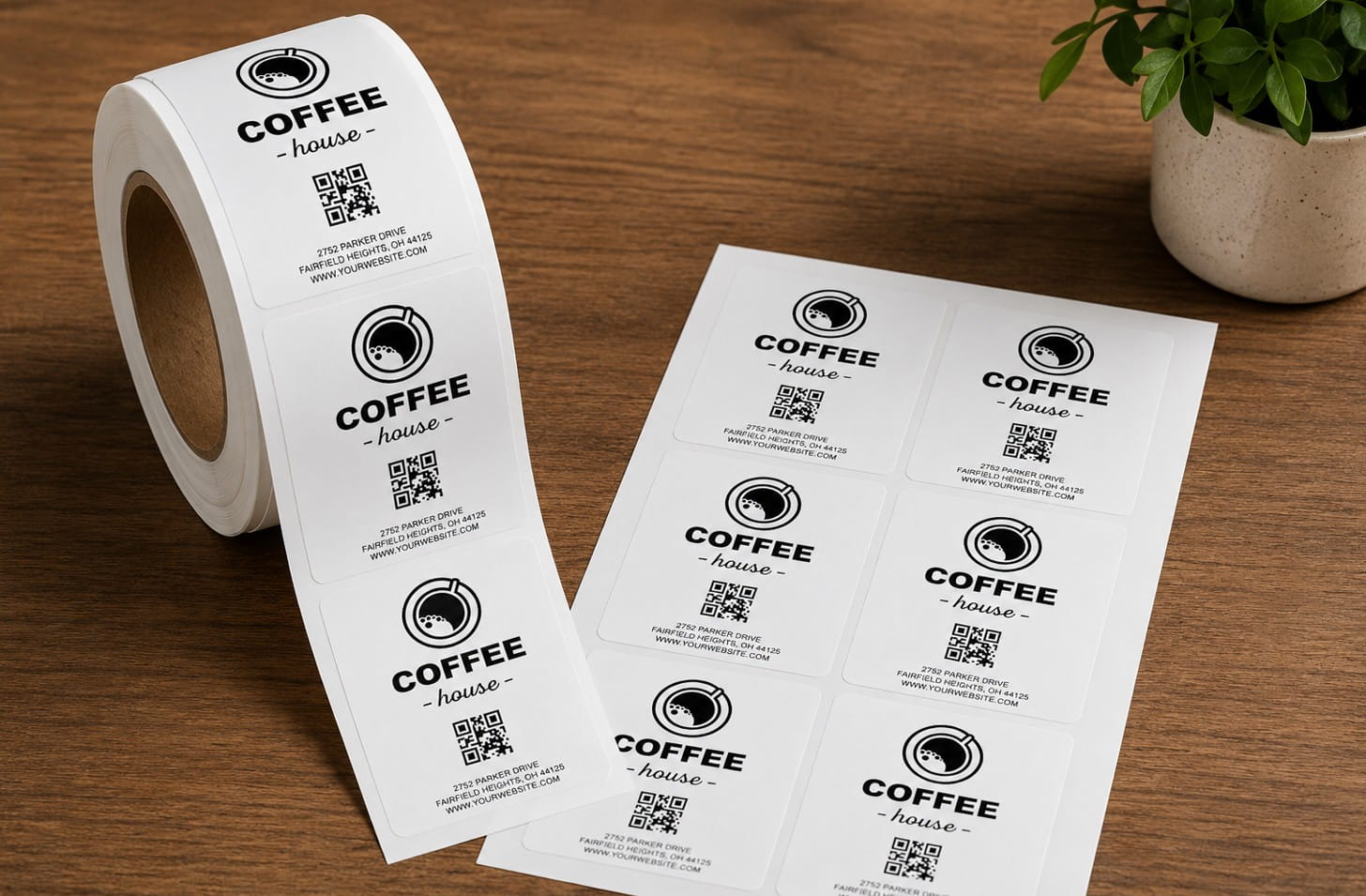
roll label and a sheet label
Not sure whether roll labels are the right format?
Here’s the practical difference.
| Feature | Roll Labels | Sheet Labels |
|---|---|---|
| Best for | Medium to high volume use | Small batches |
| Manual application | Fast | Slower |
| Dispenser compatible | Yes | No |
| Applicator compatible | Yes | No |
| Storage efficiency | Compact | Bulkier |
| Setup flexibility | More production-specific | Simpler |
Choose roll labels if:
- You label products regularly
- Speed matters
- You use dispensers
- You want cleaner workflow efficiency
Choose sheet labels if:
- You only need small quantities
- You print in-house
- Application speed is less important
How to Store Roll Labels Properly
Even high-quality labels can fail if stored poorly.
Heat, humidity, dust, and pressure can all affect adhesive performance and print quality.
Best practices:
- Store labels in a cool, dry area
- Keep rolls away from direct sunlight
- Avoid humid storage spaces
- Keep rolls clean and dust-free
- Store by size or SKU for faster access
- Prevent rolls from being crushed or loosely unwinding
If your business handles multiple products, even simple organization can reduce labeling errors and wasted materials.
frequently asked questions
A.
Roll labels are wound around a cardboard core in a specific orientation that determines how they peel during application.
A.
Label winding refers to the direction labels are rolled after printing and finishing. This matters for both manual use and machine application.
A.
That depends on how you’ll apply the labels. Manual application offers more flexibility, while dispensers and applicators often require specific unwind directions.
A.
For businesses labeling products regularly, yes. Roll labels are typically faster, easier to dispense, and more compatible with automated workflows.
A.
BOPP is often the strongest choice because it resists water, oils, and temperature fluctuations better than paper labels.
A.
Yes. Custom die-cut roll labels are commonly used for branding, specialty packaging, and products that need a more distinctive shelf presence.
Conclusion
Roll labels do more than display your logo or product details. They directly affect how efficiently your packaging workflow runs.
Choosing the right material, size, finish, and roll direction helps prevent avoidable problems like poor adhesion, awkward application, and wasted time during fulfillment.
If you’re labeling products regularly, understanding these production details can help you order labels that actually fit your workflow—not just your design.