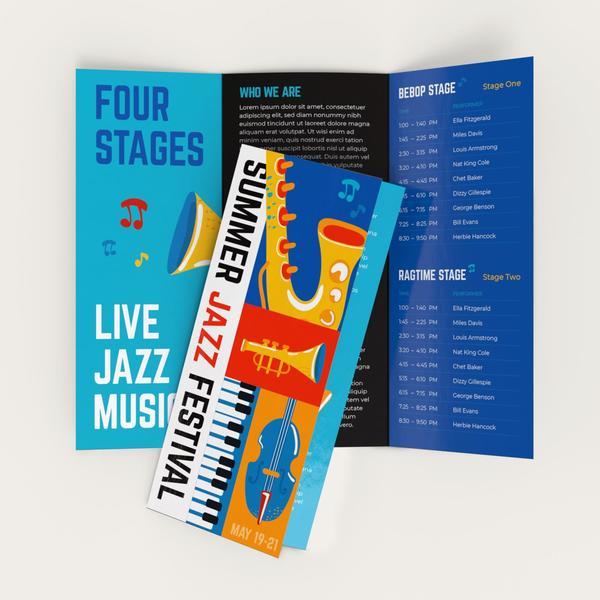
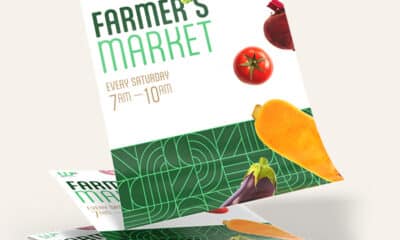
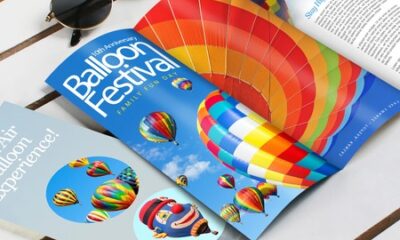
- Flyers work well for quick promotions and getting noticed fast.
- Brochures give you extra room to explain your products, services, or business in a professional way.
- Pamphlets are often used to share educational or informational content.
- Flyers are the most affordable choice if you need to reach a lot of people.
- Brochures help businesses share information in a polished and organized format.
- Pamphlets are useful when readers need detailed information they might want to keep and look at later.
Brochures, flyers, and pamphlets are all types of printed marketing materials, but each serves a different purpose. While each of these printed materials can help disseminate information and provide brand visibility, understanding their differences is also an advantage. You can learn more about the flyers’ strengths, the brochure’s perks, and when to use pamphlets. This guide breaks down the differences between brochures, flyers, and pamphlets, including their common sizes and folds, paper options, design tips, and how to choose the right format for your business or campaign.
Comparing Flyers, Brochures, and Pamphlets
The easiest way to understand the differences is by how much information your audience needs before taking action.
Flyers grab attention quickly, brochures explain and persuade, and pamphlets focus on education and detailed information.
The chart below offers a quick comparison between the three:
| Feature | Flyer | Brochure | Pamphlet |
|---|---|---|---|
| Main purpose | Promote events, sales, or special announcements | Support marketing efforts while strengthening brand awareness | Provide educational content and detailed informational materials |
| Format | Usually printed on just one sheet of paper | Folded panels that help organize the information | Can be folded or made up of several pages with information |
| Information | Provides the most important information so people can read it quickly | More details about products, services, or the brand's history | A brief publication that presents information or explores a specific topic or issue |
| Best used for | Best suited for events, promotions, sales, and announcements | Highlights products, services, businesses, and presentations | Ideal for instructional guides, critical information, and public outreach. |
| Costs | Affordable to produce and easy to hand out in large numbers | More expensive to produce because of the folds and design | May cost more to produce with more pages to print |
| How they help customers | They work best when you want to raise awareness of your business | Customers can use them to compare their options when they are thinking about what to choose | They give customers detailed information and help them remember and stay interested over time |
Why Businesses Use Flyers
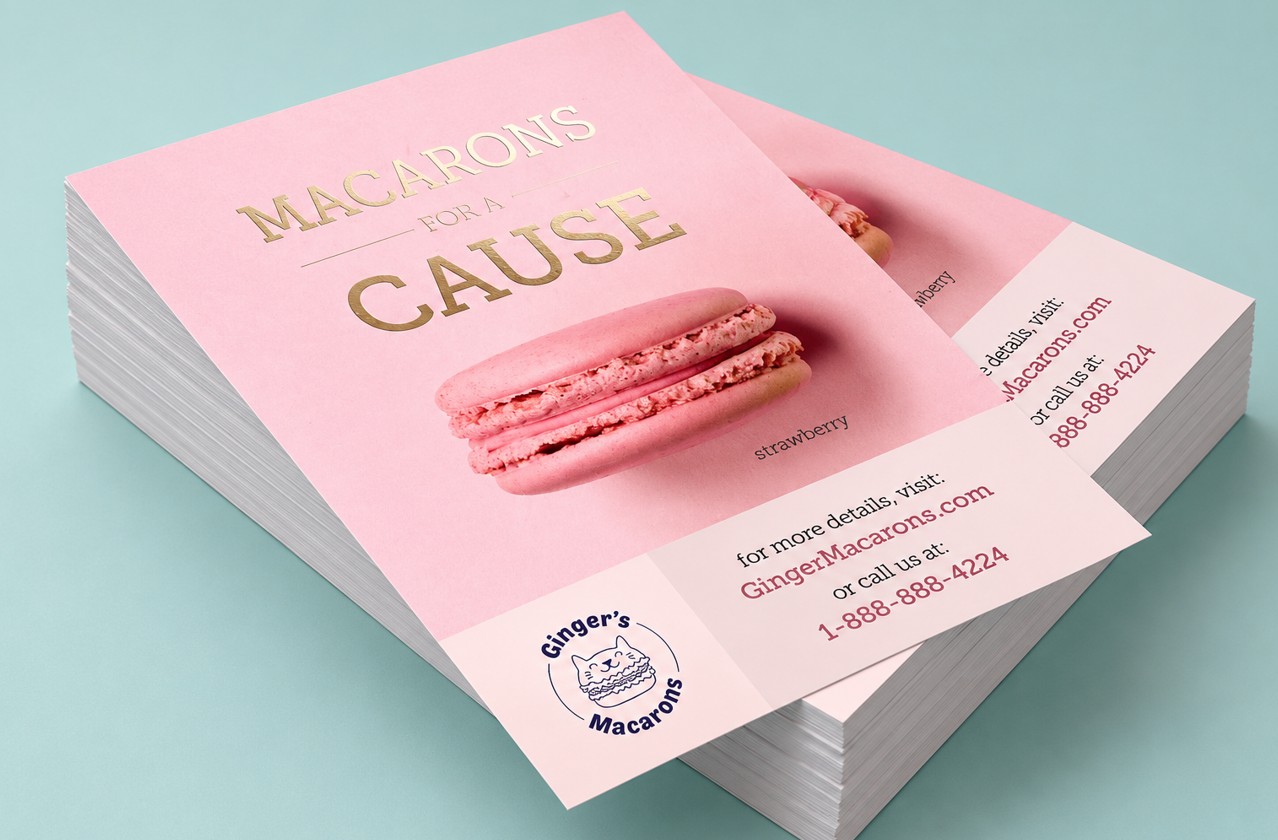
A stacked pile of pink promotional flyers for a macaron charity event
Businesses turn to flyers when they want to get noticed fast. Flyers stand out because they use bold visuals and are easy to read in just a few seconds. Since they can be handed out in large numbers, flyers are one of the most affordable and impactful ways to market locally.
Flyers work best for simple, time-sensitive messages such as:
- “Grand Opening This Saturday”
- “50% Off This Weekend”
- “Live Music Friday Night”
- “Now Hiring”
Flyers are low-cost, easy to distribute, and ideal for quick local reach.
They are especially helpful for local businesses that want to reach people in their area.
Choosing Flyers Based on Sizes
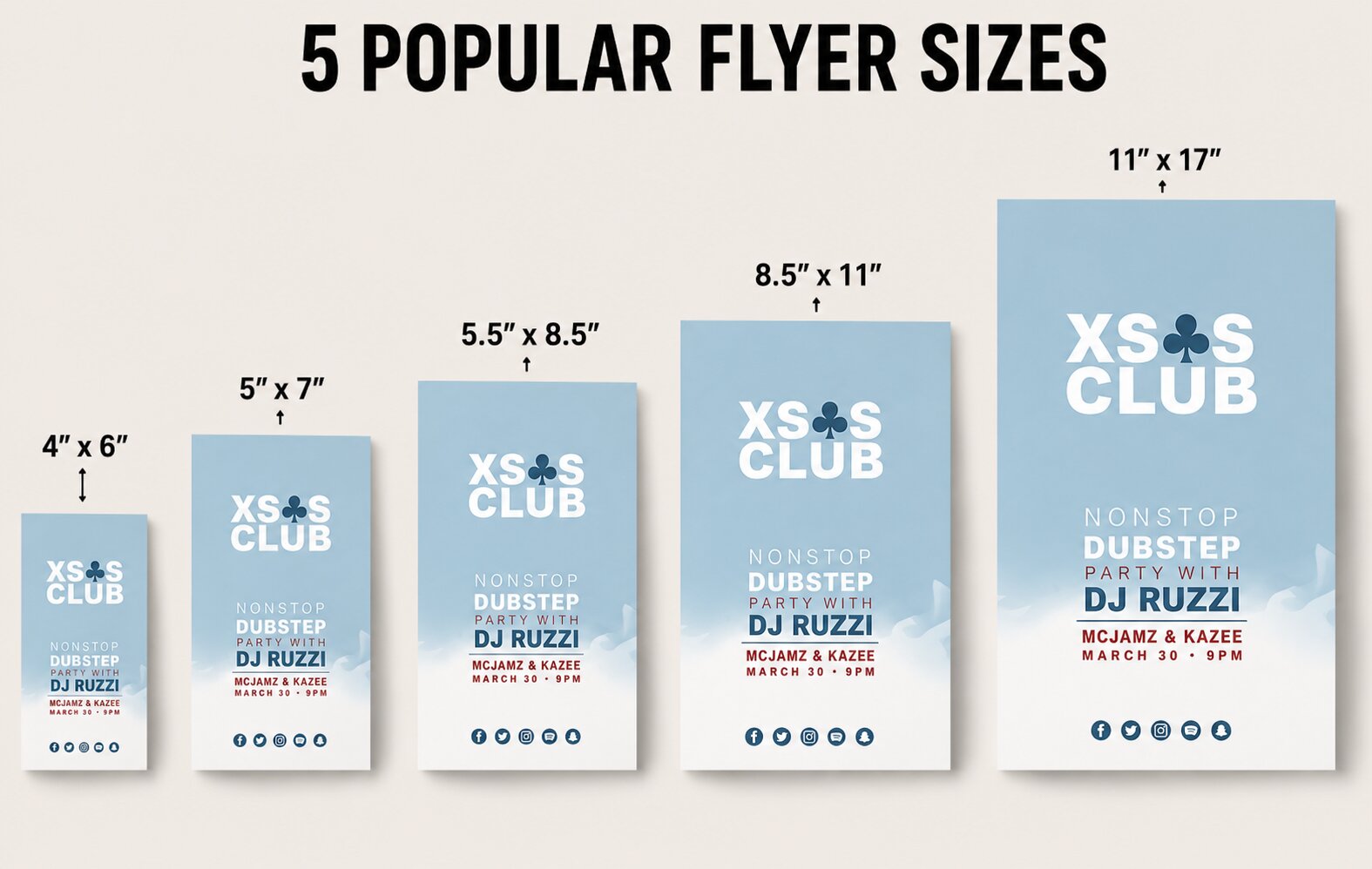
5 popular flyer sizes
- 4" x 6" – Budget-friendly and easy to hand out; great for coupons, event invitations, or direct mail.
- 5" x 7" and 5.5" x 8.5" – Easy to carry and read; ideal for retail promotions, informational flyers, and handouts.
- 8.5" x 11" – A versatile choice with plenty of room for images, promotions, menus, and details without feeling cluttered.
- 11" x 17" – Bold and eye-catching; perfect for promotions and event displays that need to stand out from a distance.
Different Flyer Shapes to Consider
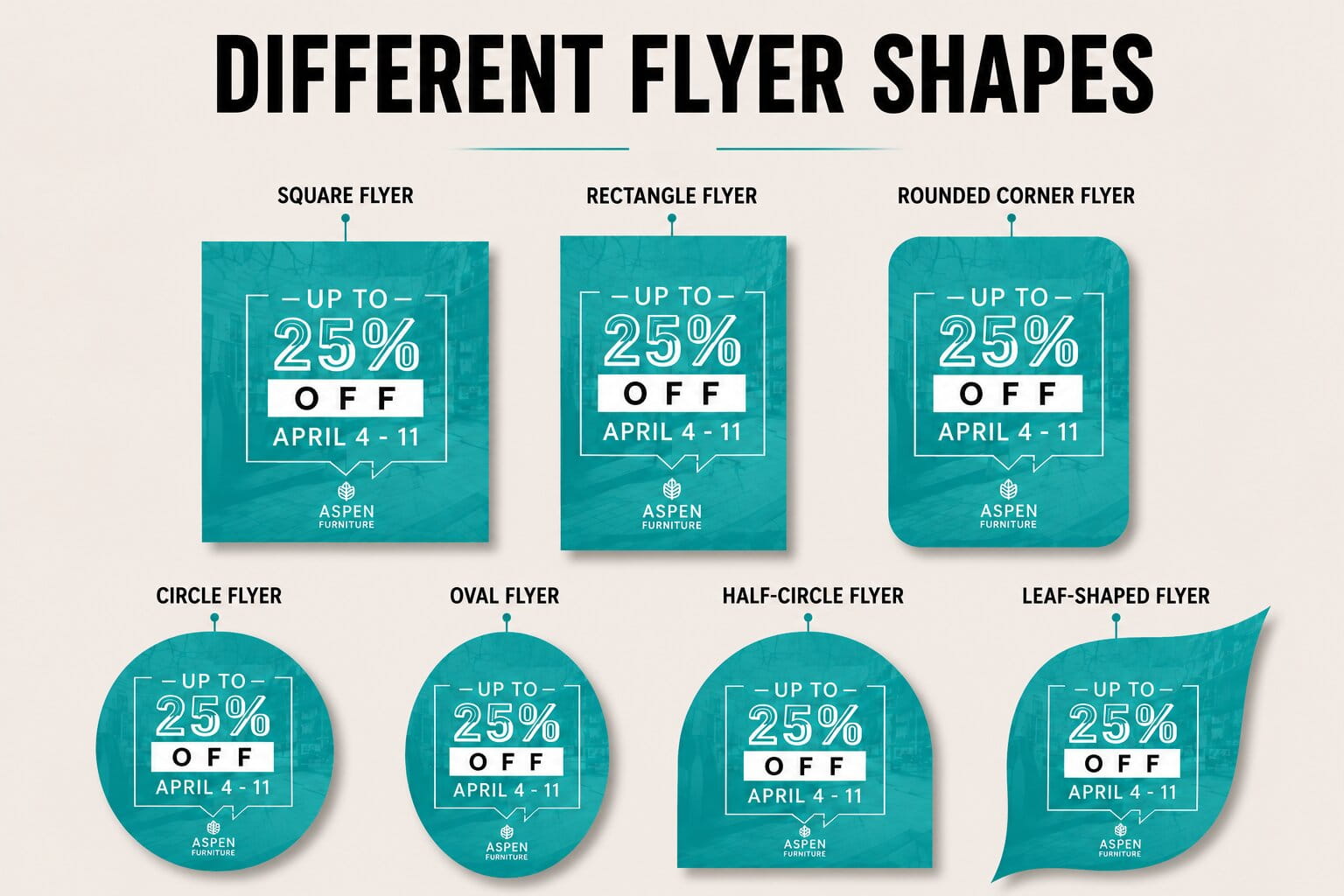
different flyer shapes
Standard rectangular flyers remain the most popular choice. They are versatile, simple to print, and suitable for nearly any kind of promotion.
Square flyers are another popular option, especially for modern, image-driven designs. They work well for retail, beauty, food, and marketing campaigns inspired by social media.
There are also custom flyer shapes that help businesses stand out, including:
- Rounded corner flyers
- Circle flyers
- Oval flyers
- Half-circle flyers
- Leaf-shaped flyers
- Custom die-cut flyers
Custom-shaped flyers are great for creative promotions, product launches, restaurant marketing, events, and brand campaigns that need to stand out. They usually cost more than standard flyers, but they are more likely to catch people’s attention and be remembered.
Best Paper and Finishes for Flyers
Since flyers are usually printed in large numbers, picking the right paper and finish can help you manage costs while making sure they look good and last.
Here are some common paper and finish choices for flyers:
- Uncoated paper is easy to write on, so it works well for flyers with coupons, forms, or appointment times.
- Gloss paper makes colors stand out and gives flyers a bright, eye-catching look.
- Matte paper gives flyers a clean, professional look and is easy to read.
- UV coating adds shine and helps protect flyers from fingerprints and damage.
- Thick cardstock makes flyers feel sturdier and more premium, which is great for high-end promotions or events.
For regular promotions or handing out lots of flyers, gloss or matte paper is a good choice. If you want your flyers to feel more durable or polished, try thicker cardstock or add UV coating for a stronger impact.
Why Do Businesses Use Brochures?
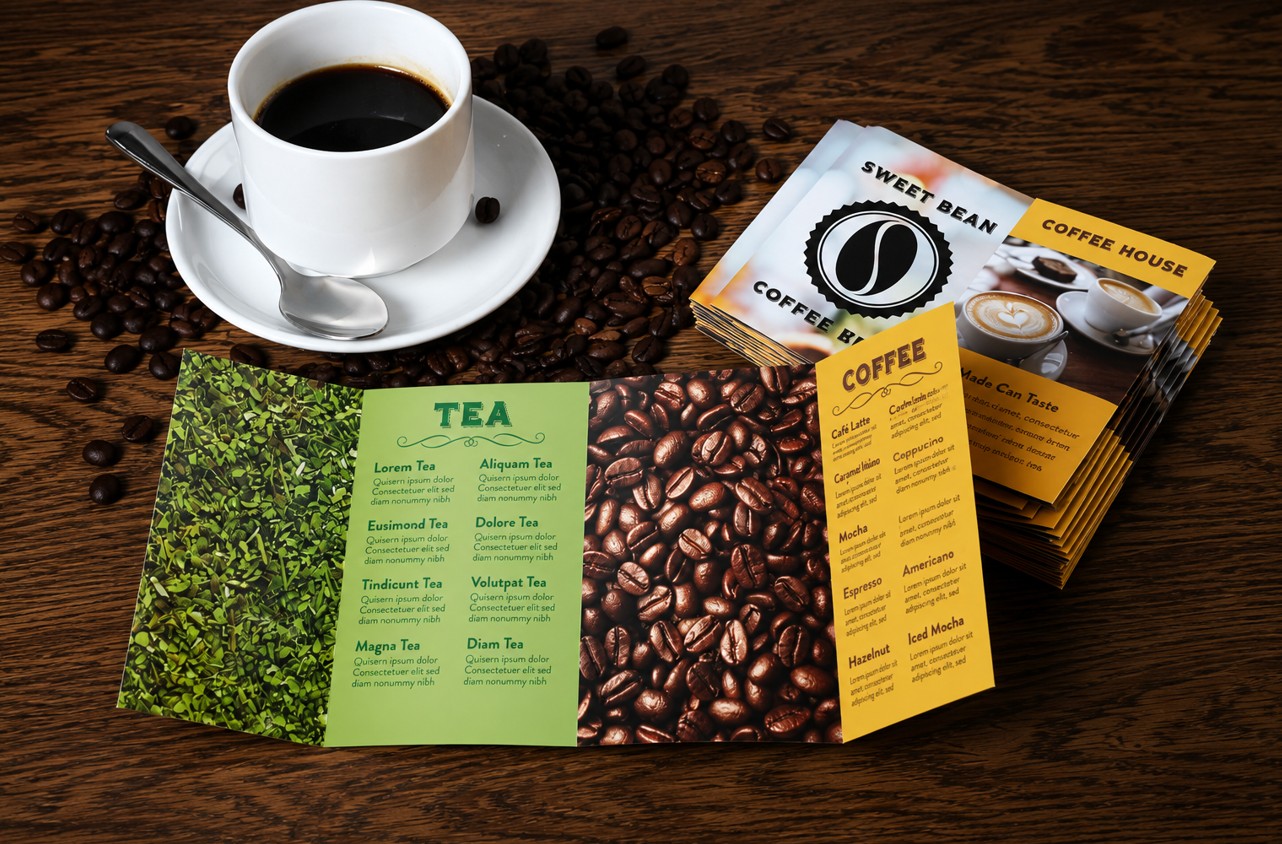
Tri-fold coffee house menu displayed on a wooden table
A brochure is ideal when your audience needs more than a quick overview.
Unlike flyers, brochures use folded sections to guide readers through your content — giving businesses room to explain services, showcase products, share their story, and answer common questions without feeling cluttered.
Flyer vs. brochure in practice: A flyer might introduce a landscaping business, while a brochure can cover services, before-and-after photos, packages, and FAQs — all in one piece.
More polished and professional than a flyer, a brochure organizes information clearly and gives customers something they can keep and revisit.
Sales teams often use brochures to walk prospects through offerings — especially at trade shows, in offices, and during meetings.
Common Brochure Sizes to Consider
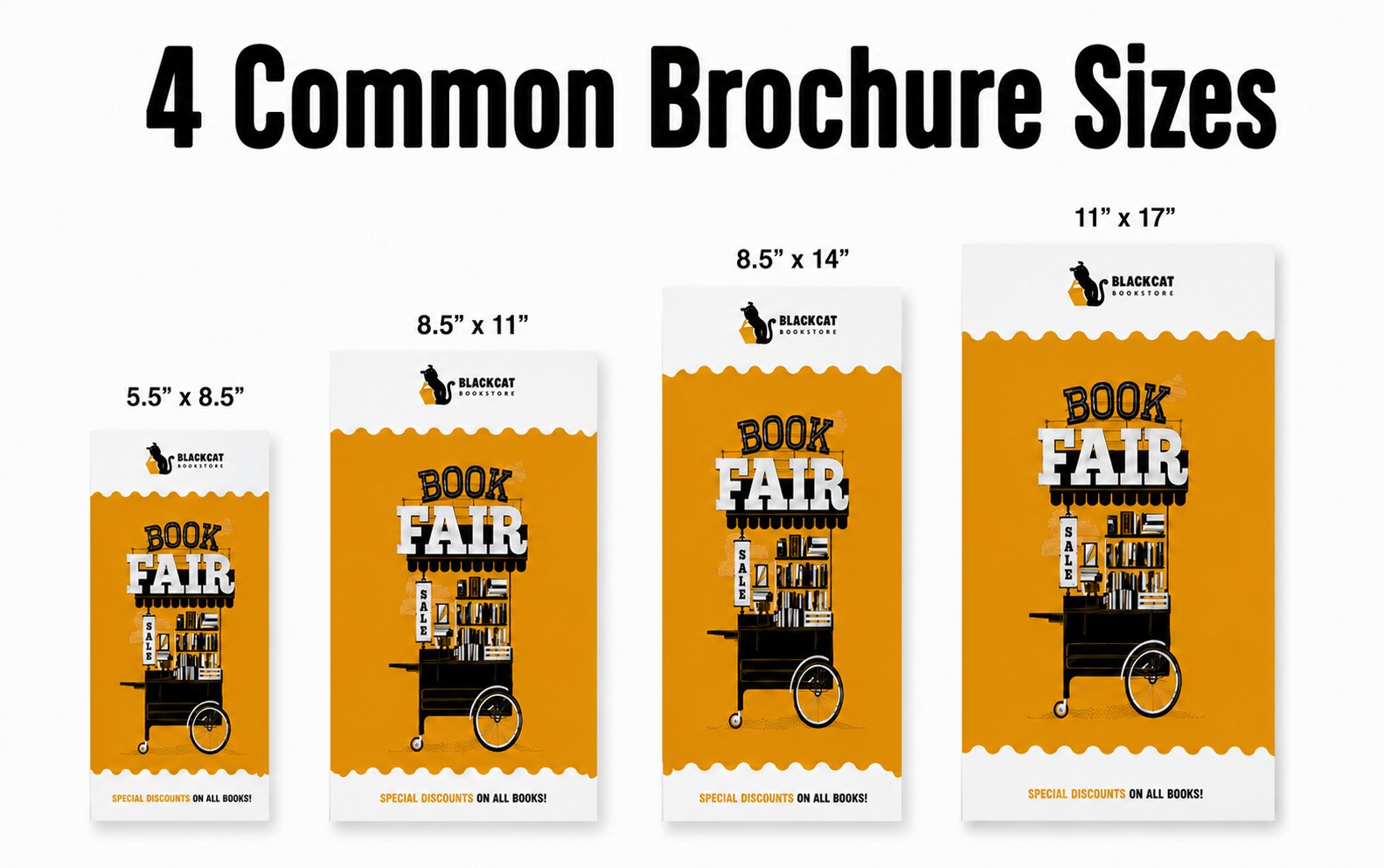
Common brochure sizes
The 8.5” x 11” brochure is the most popular choice. It gives businesses plenty of room for images, product details, and organized content, and it is still easy to hand out or mail.
You can also pick from several other brochure sizes:
- 5.5" x 8.5" – Compact and easy to hand out; great for menus, event flyers, and simple service guides.
- 8.5" x 14" and 11" x 17" – Extra room for visuals, pricing tables, and detailed information; makes a bigger impression.
Before you pick a size, consider how your customers will get and use the brochure. Smaller sizes are easier to carry and mail, while larger ones work better for presentations, trade shows, or designs with lots of images.
Common Brochure Folds
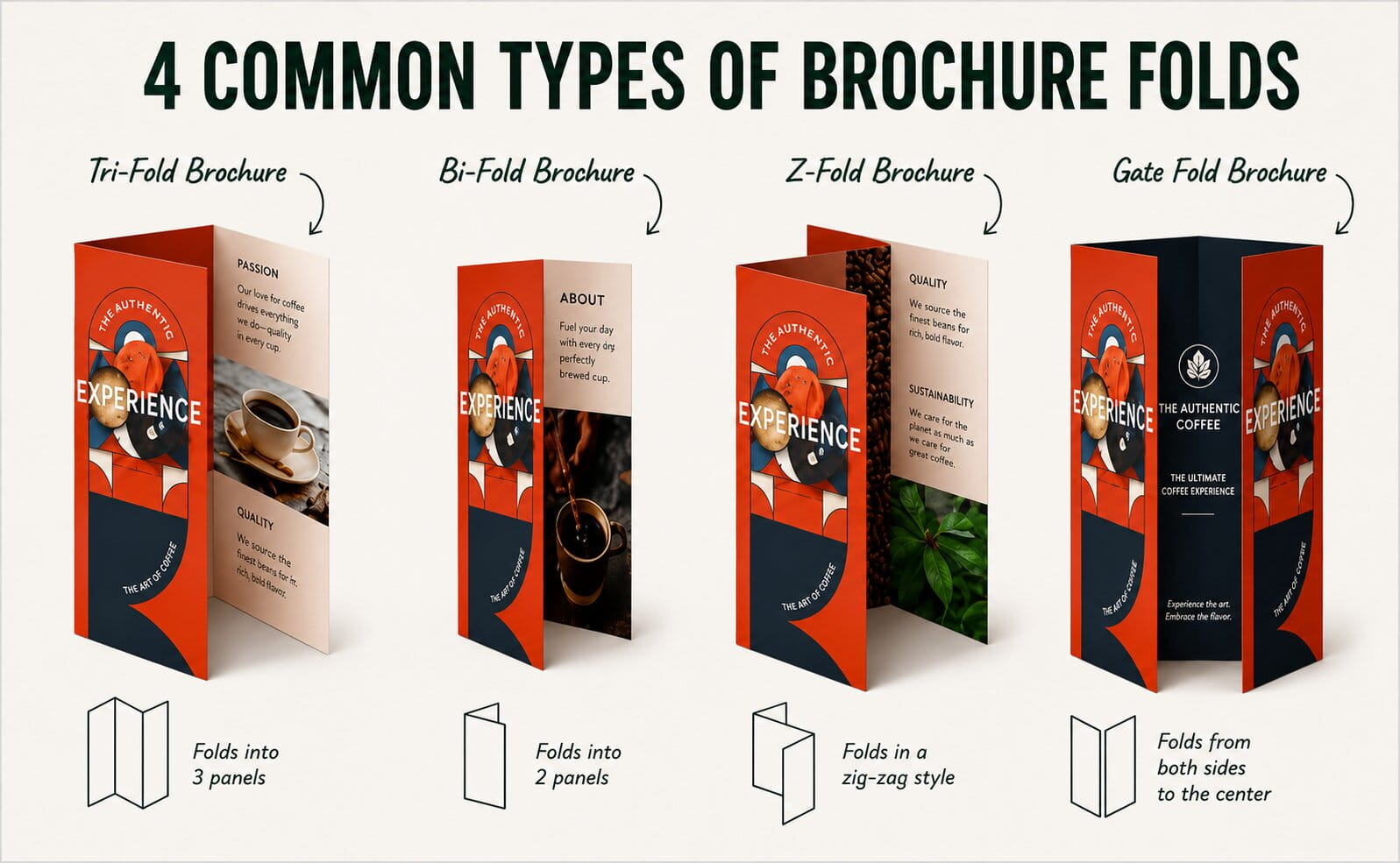
types of brochure folds
Besides the size of your brochure, the type of fold you pick also shapes how your information is presented. Here are some common folding options:
- Trifold Brochure: This is the style most people imagine when they think of brochures. A trifold splits the paper into six panels, so you can easily organize details like services, pricing, testimonials, and contact information. It is versatile, compact, and suits most businesses.
- Bi-Fold Brochure: This style folds once down the middle, similar to a booklet. With larger panels, this style is great for layouts with big photos, menus, maps, or less text.
- Z-Fold Brochure: This opens in a zigzag shape. It is especially useful for step-by-step guides, timelines, processes, or storytelling layouts.
- Gate Fold Brochure: Opens from the center, which creates a dramatic effect. Businesses often use them for premium marketing, product launches, or big visuals.
The Best Paper and Finishes for Brochures
If people will handle your brochure often or you want it for high-end marketing, using thicker paper and adding protective coatings can really help.
Here are some popular types of brochure paper and finishes:
- Gloss paper makes colors look brighter and photos clearer. It works well for restaurants, retail products, travel brochures, and designs with lots of images.
- Matte paper gives a softer, more professional look and is easier to read. It is often used for healthcare, corporate, and educational materials.
- Thick cardstock makes brochures more durable and gives them a premium feel, which is great for presentations and trade shows.
Why Businesses and Organizations Use Pamphlets
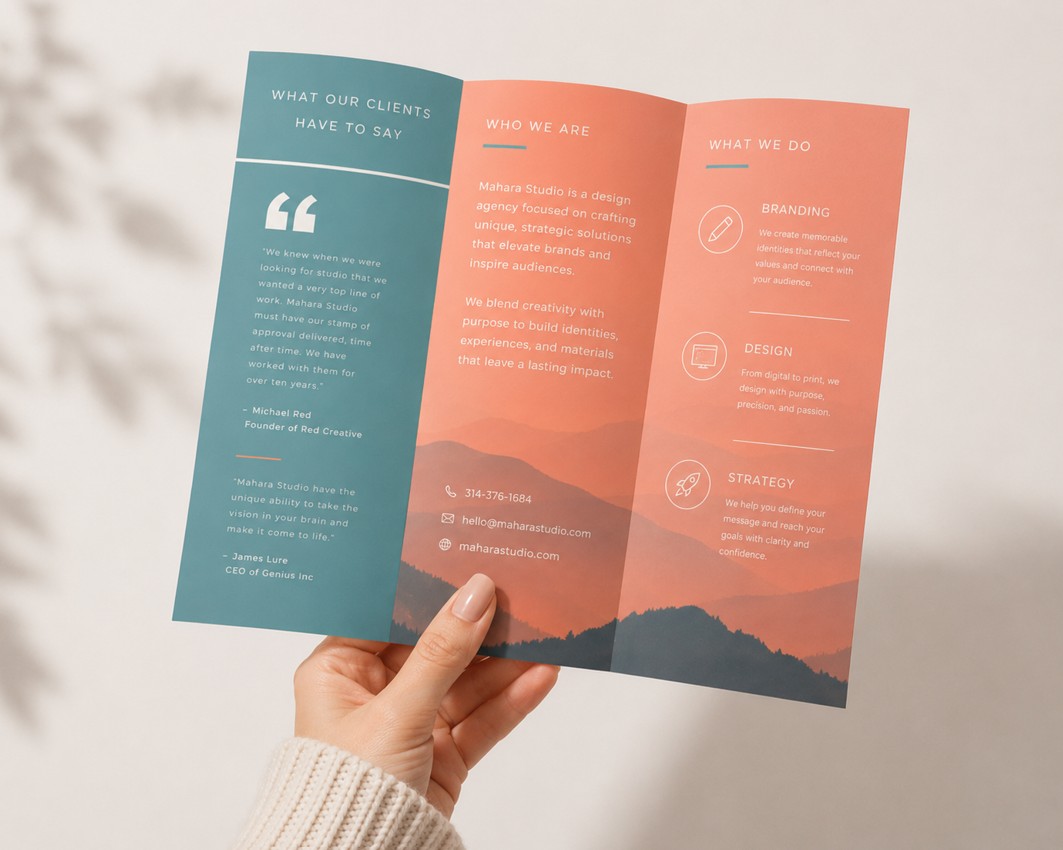
A hand holding an open, modern tri-fold business brochure
Pamphlets are most impactful when they help people understand information clearly.
People often confuse pamphlets with brochures because they look alike, but they usually serve different purposes.
- Brochures typically focus on promoting products or services.
- Pamphlets are primarily educational.
A pamphlet can explain health information, give instructions, answer common questions, or teach readers about a specific topic.
For example, a healthcare clinic might use a pamphlet to explain treatment options or
preventive care. A nonprofit could use one to describe community services or donation programs.
Pamphlets are useful because people can keep them to refer to later.
They help organizations share information and teach audiences by breaking down complex topics with simple words and pictures. Pamphlets can also give step-by-step instructions and offer resources readers can take home.
Common Pamphlet Sizes and Folds
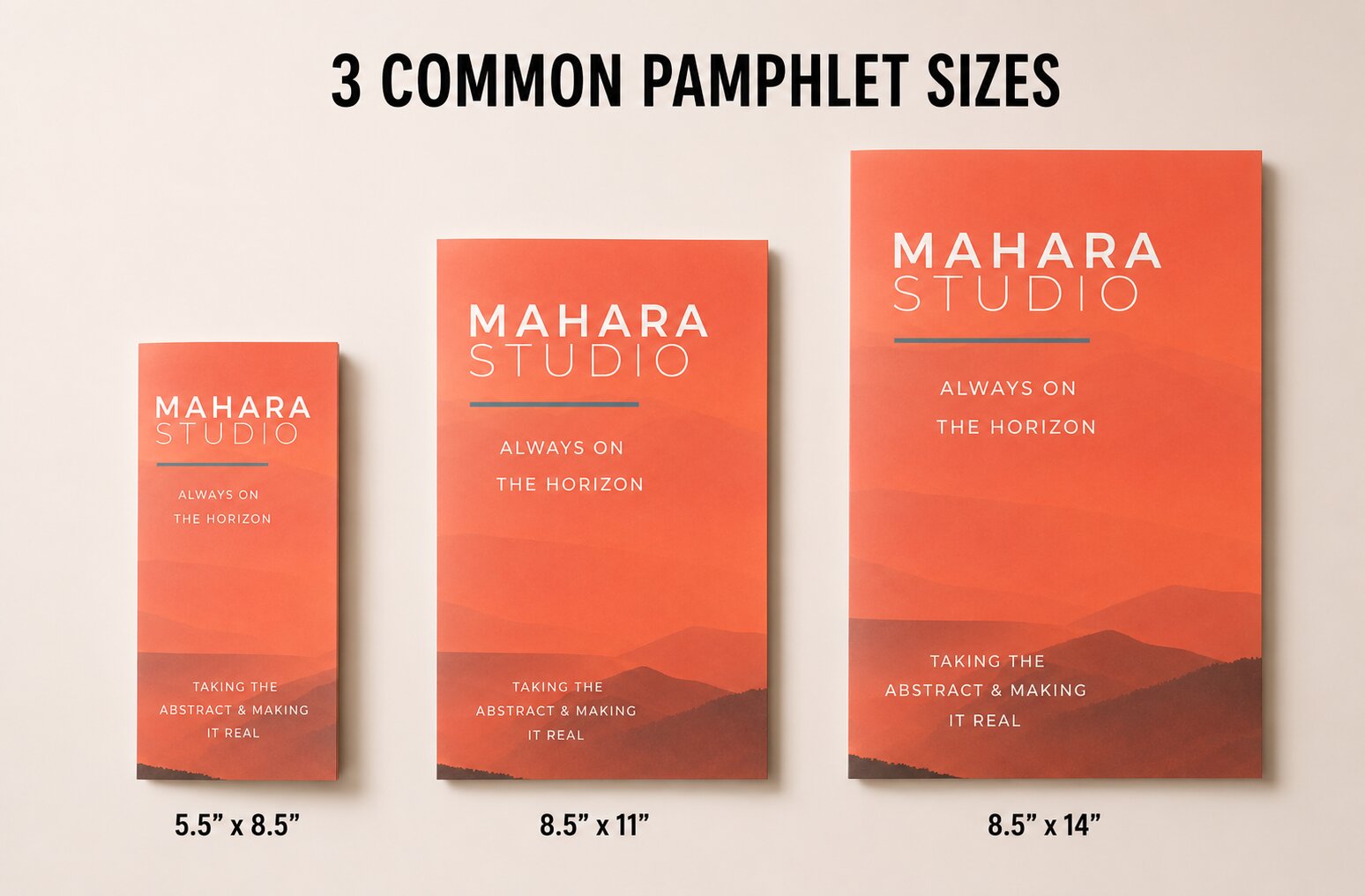
common pamphlet sizes
Pamphlets usually come in the same sizes and folds as brochures. If you need more space, you can also find longer pamphlets in small saddle-stitched booklets with extra pages.
Standard pamphlets are available in these sizes:
- 5.5” x 8.5” – This compact size is easy to hand out and works well for informational flyers, community events, and outreach materials.
- 8.5” x 11” – The most common pamphlet size. It gives you plenty of room for details but is still easy to read and fold.
- 8.5” x 14” – This larger size is great if you need extra space for charts, guides, healthcare details, or educational content.
Here are some common ways to fold pamphlets:
- Bi-fold: This simple fold is easy to read and works well for basic information or short guides.
- Trifold: This popular option keeps your content organized in clear sections and is still compact and easy to hand out.
- Z-fold: This style is useful for step-by-step instructions, timelines, or any content that needs to follow a sequence.
- Accordion fold: This fold works well for detailed educational materials, maps, processes, or any information that needs a continuous flow.
Best Paper and Finishes for Pamphlets
Pamphlets are meant to be read, so it is more important for them to be easy to read than to have fancy finishes.
- Many people choose matte paper because it cuts down on glare and makes long passages easier to read.
- Uncoated paper is also a good choice for educational materials since it feels softer and more natural.
If your pamphlet has several pages, using lightweight booklet paper makes it easier to carry and keeps costs down.
frequently asked questions
A.
Not quite. Brochures are mostly used for promotion and marketing, while pamphlets tend to focus on education or sharing information.
A.
Flyers usually cost less since they use less paper and don’t need to be folded.
A.
Yes. Double-sided flyers are common when businesses want more space but don’t need a full brochure.
A.
Trifold brochures are the most popular. They keep information organized and are easy to hand out.
A.
Definitely. Pamphlets are still common in healthcare, education, nonprofits, and community outreach because printed materials are easy to keep and reread.
Brochures, flyers, and pamphlets each have their own uses, so it’s important to pick the one that fits what your audience needs. Matching the format to your message makes your marketing clearer and more impactful. UPrinting can help you decide which print product is right for your current campaign. By getting your flyer, brochure, or pamphlet designs ready ahead of time, you can make printing easier and spend more time sharing, promoting, and informing clients about your brand’s products and services.