Brochures help businesses build credibility and share information in a clear, tangible format. The way a brochure folds shapes how readers discover that information. Multi-panel folds reveal content step by step, while flat brochures show everything at once.
The right brochure fold can help you narrate or sell more effectively, depending on the impact you're going for and the story you want to tell. Below, we walk through 10 of the most popular brochure folds and share practical tips to help you design one that works.
Two-Fold Brochures
1. Half-Fold
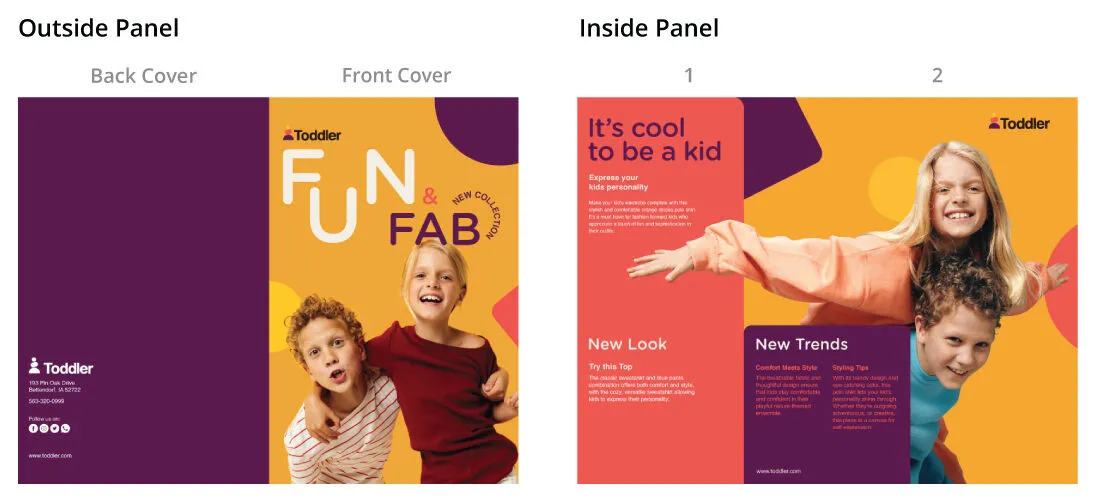
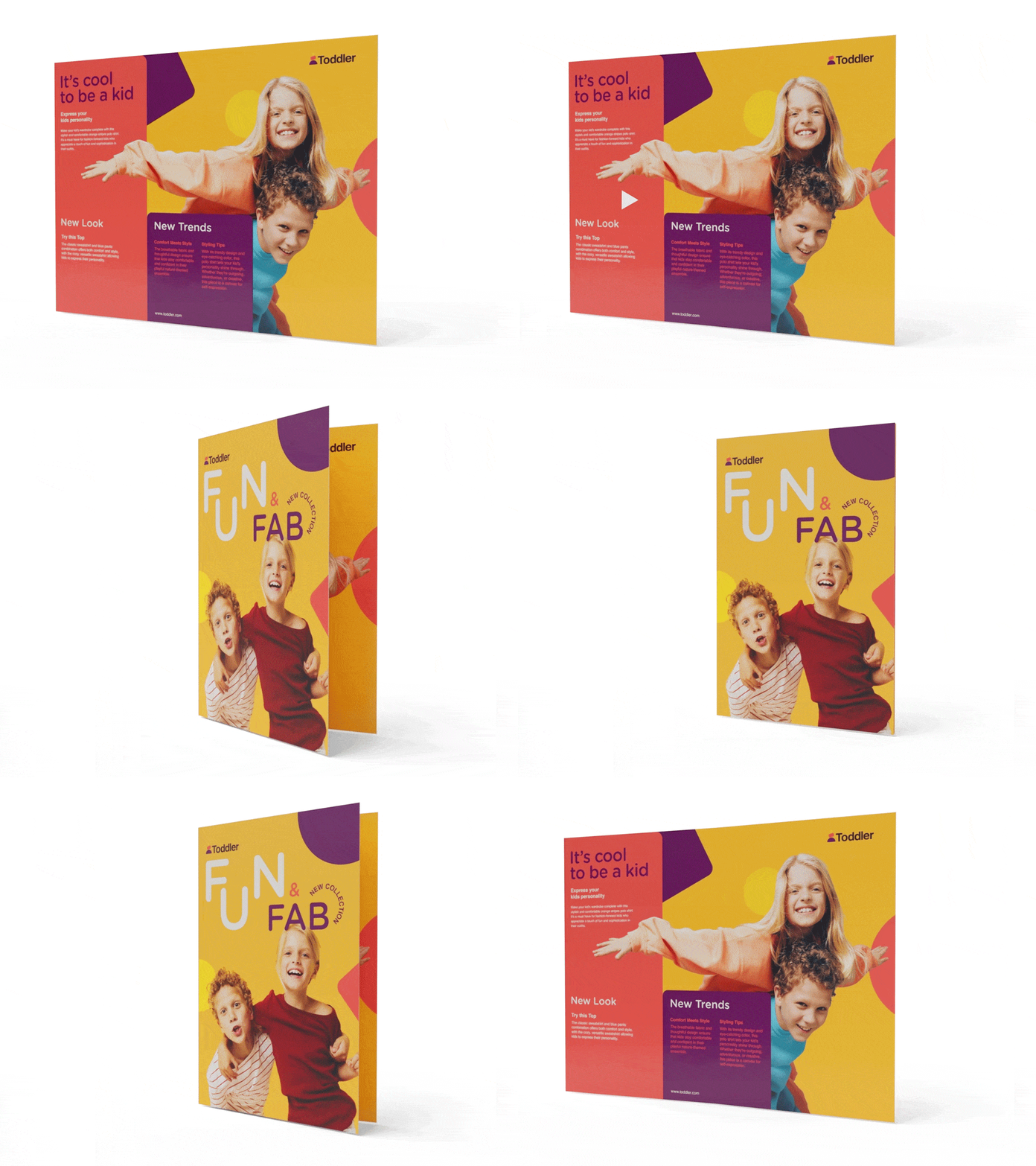
Also known as the bifold, this layout involves folding a sheet of paper in half to get two panels. A half-fold done horizontally opens and reads like a magazine, while a vertical half-fold will give you a conventional commercial brochure.
Perfect for: Quick business presentations, product guides, and side by side comparison of two products
Three-Fold Brochures
2. Trifold
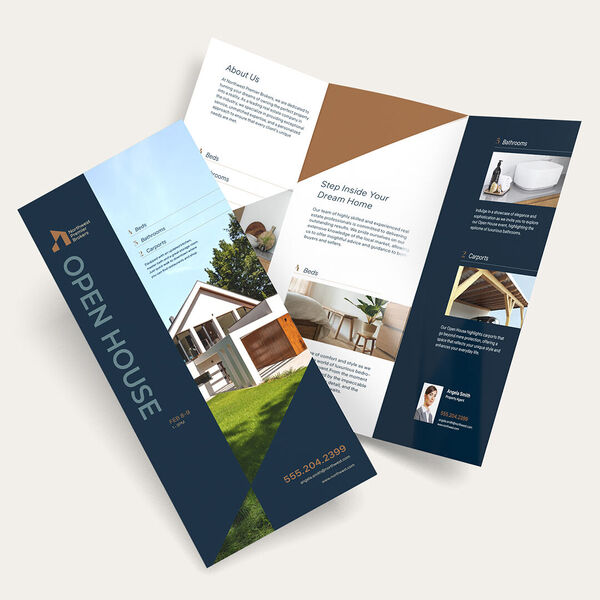
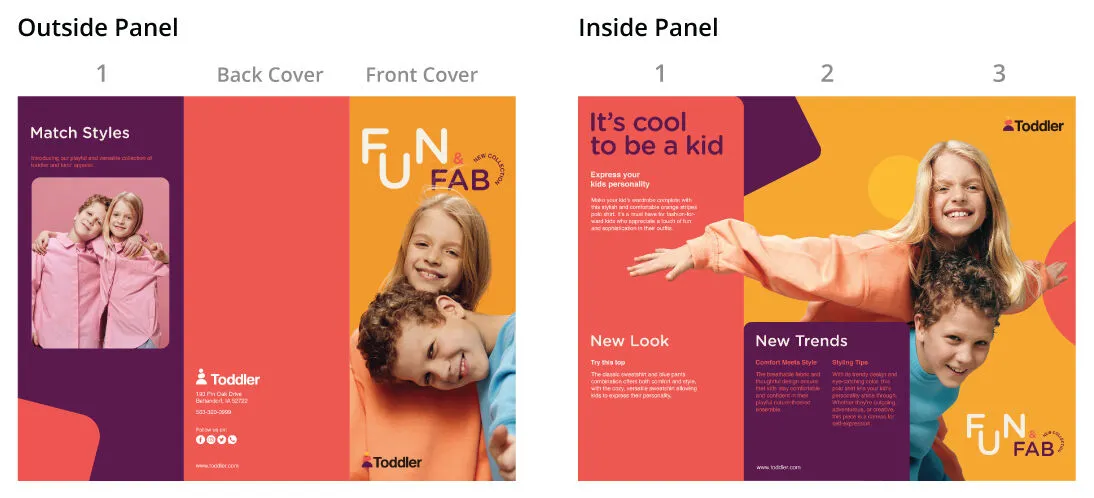
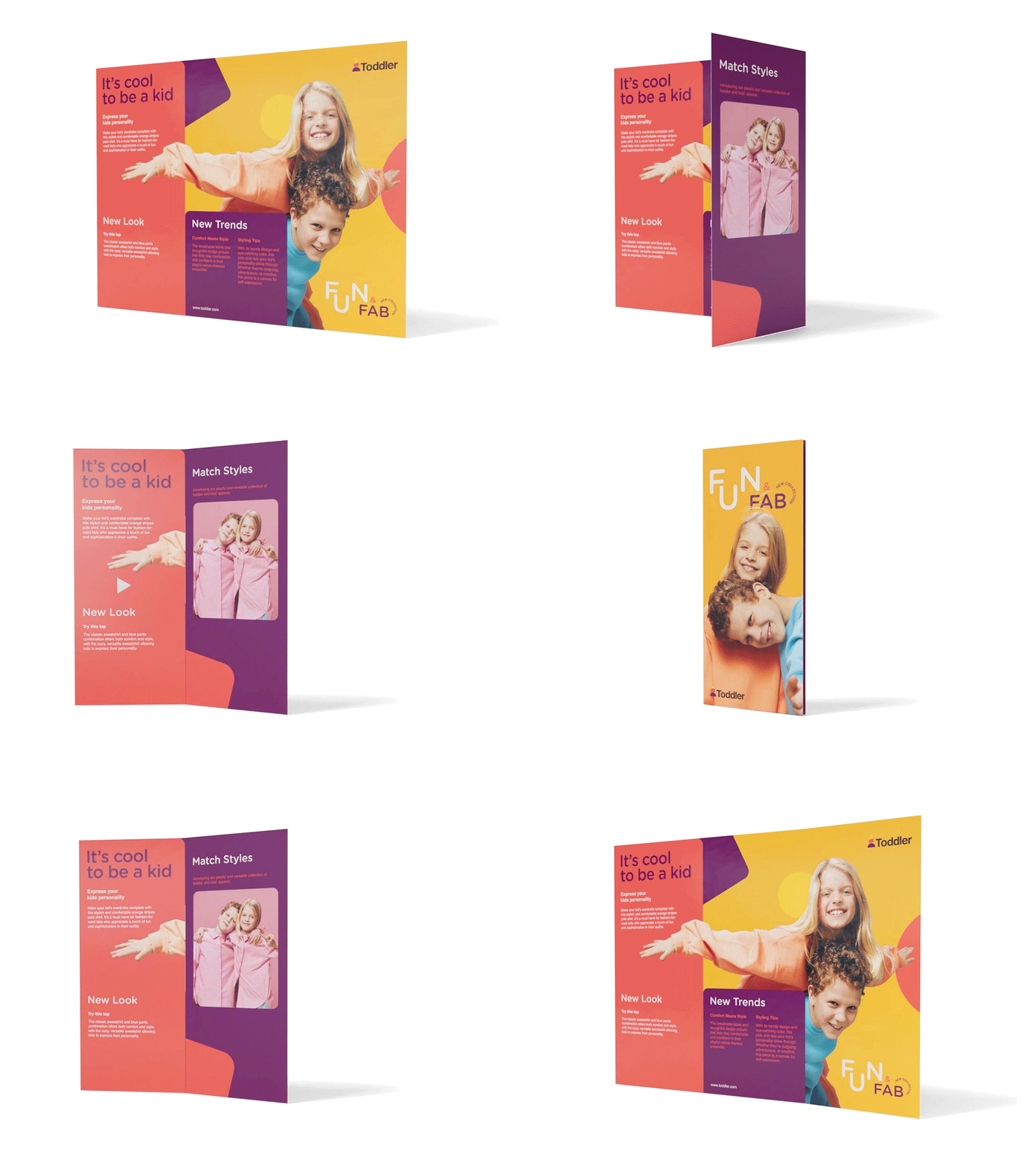
One of the most common brochure folds is the trifold where you fold the material like you would a letter. It also resembles the letter C when opened.
Perfect for: Travel brochures, presenting company information, career fair brochures
3. Z-Fold
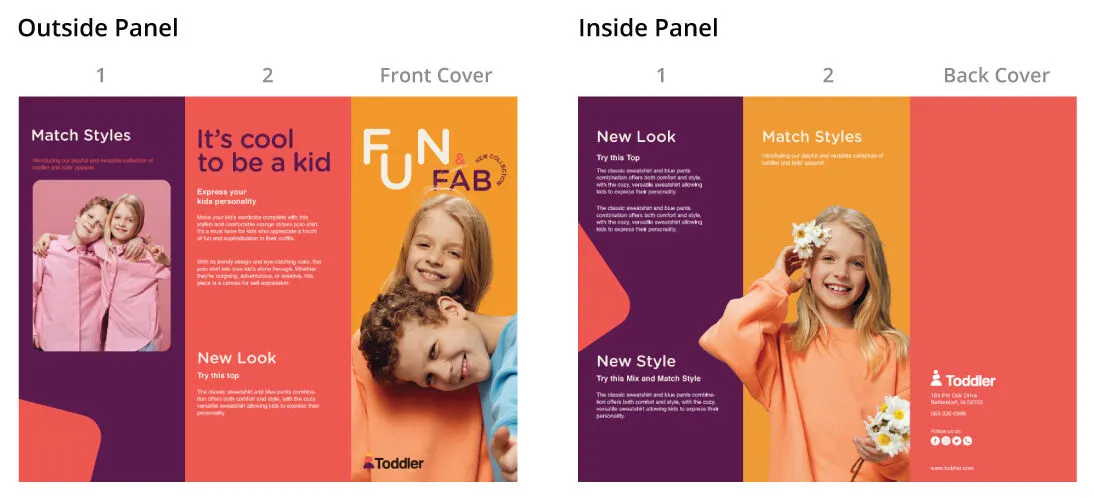
A popular type of trifold brochure, the Z-fold moves likes an accordion and is great for presenting cascading information.
Perfect for: Hotel brochures, real estate brochures, restaurant menus
4. Gate Fold
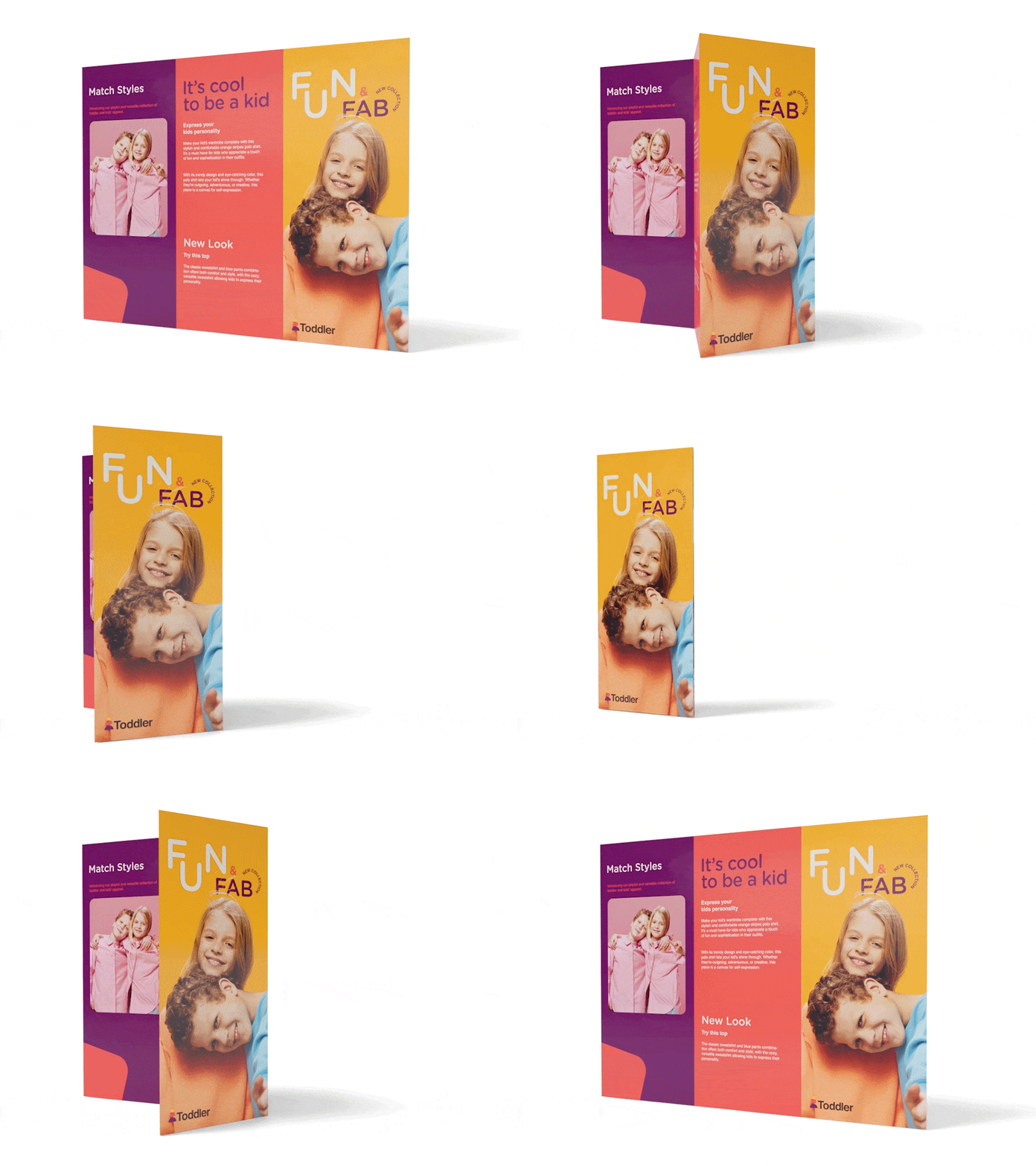
The gate fold method adds a touch of drama by having two front flaps that open outward, priming the reader to expect something special inside.
Perfect for: Special events brochures, real estate brochures, interior decoration brochures
Four-Fold or More
5. 4-Panel Accordion Fold
An accordion fold traditionally features four equal alternating panels that open like a fan.
Perfect for: Healthcare brochures, corporate brochures to present team members or services
6. Double Gate Fold
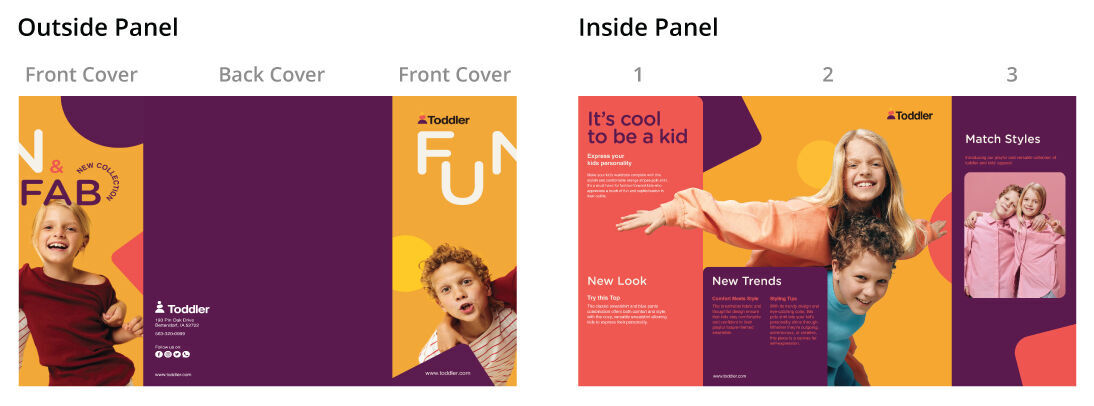
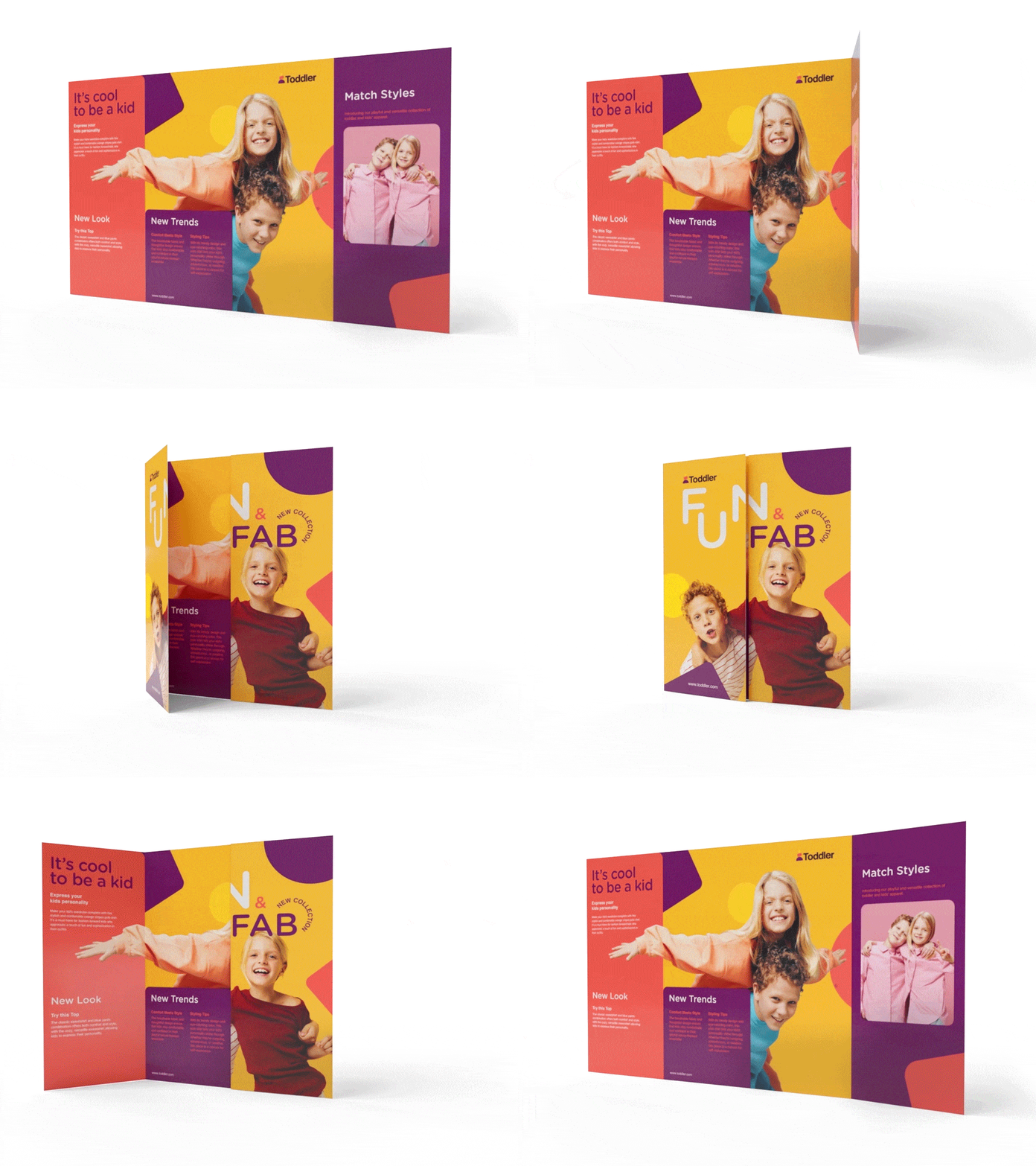
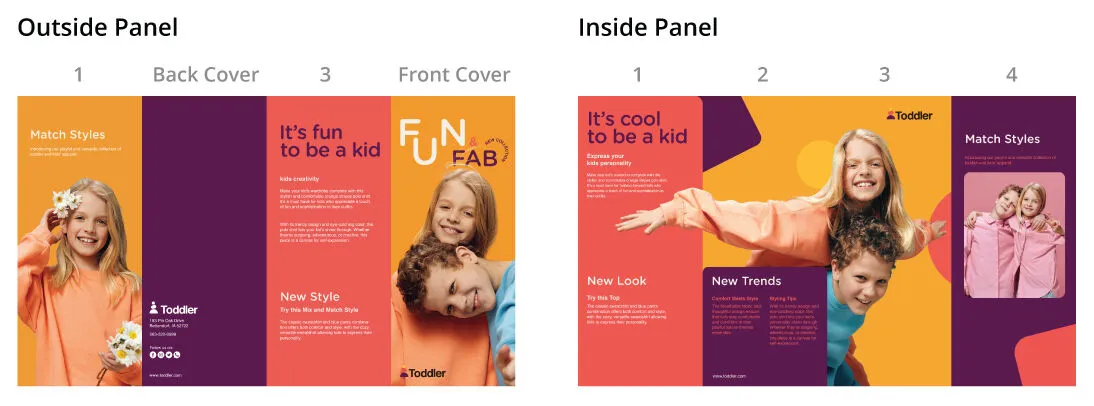
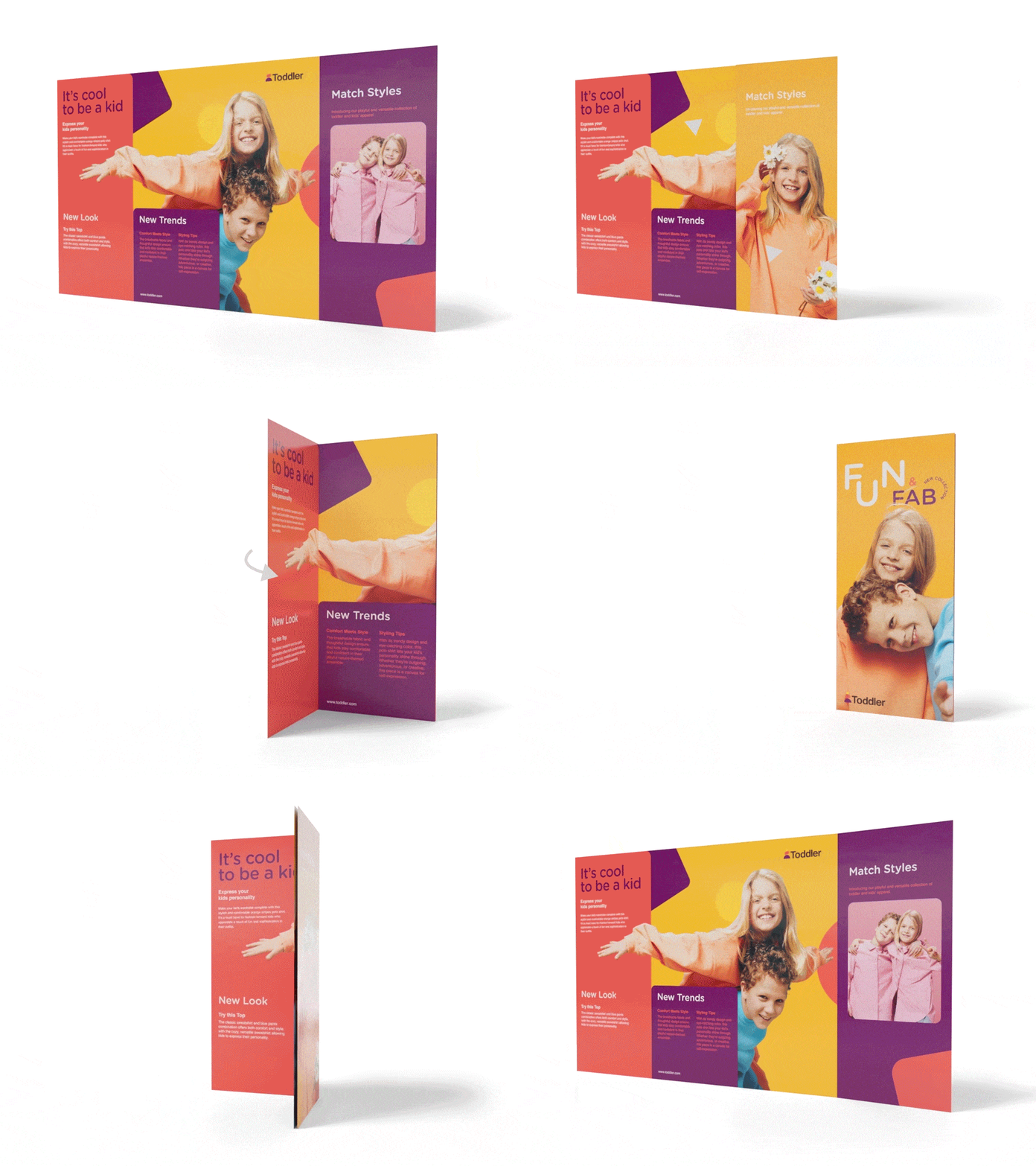
To achieve this brochure style, you create a classic gate fold and then fold it in half.
Perfect for: Guides for cinemas, galleries, and art exhibits, year-end reports, travel brochures
7. Double Parallel Fold
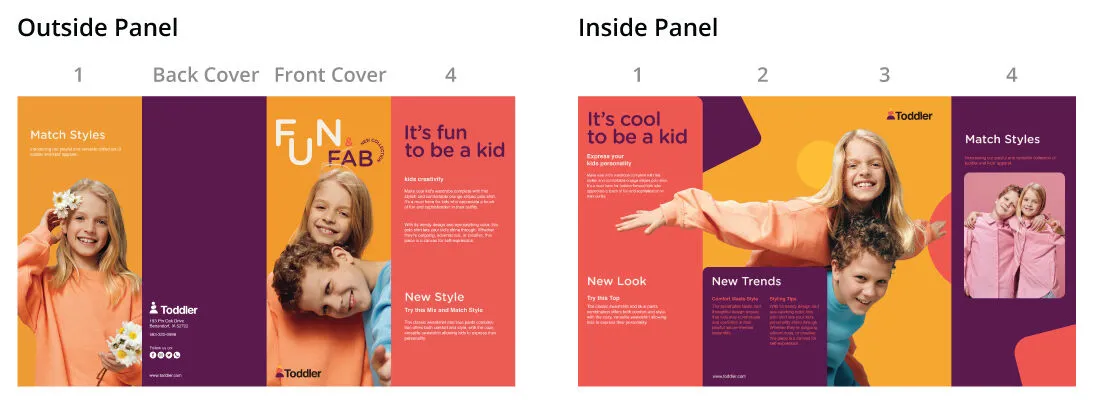
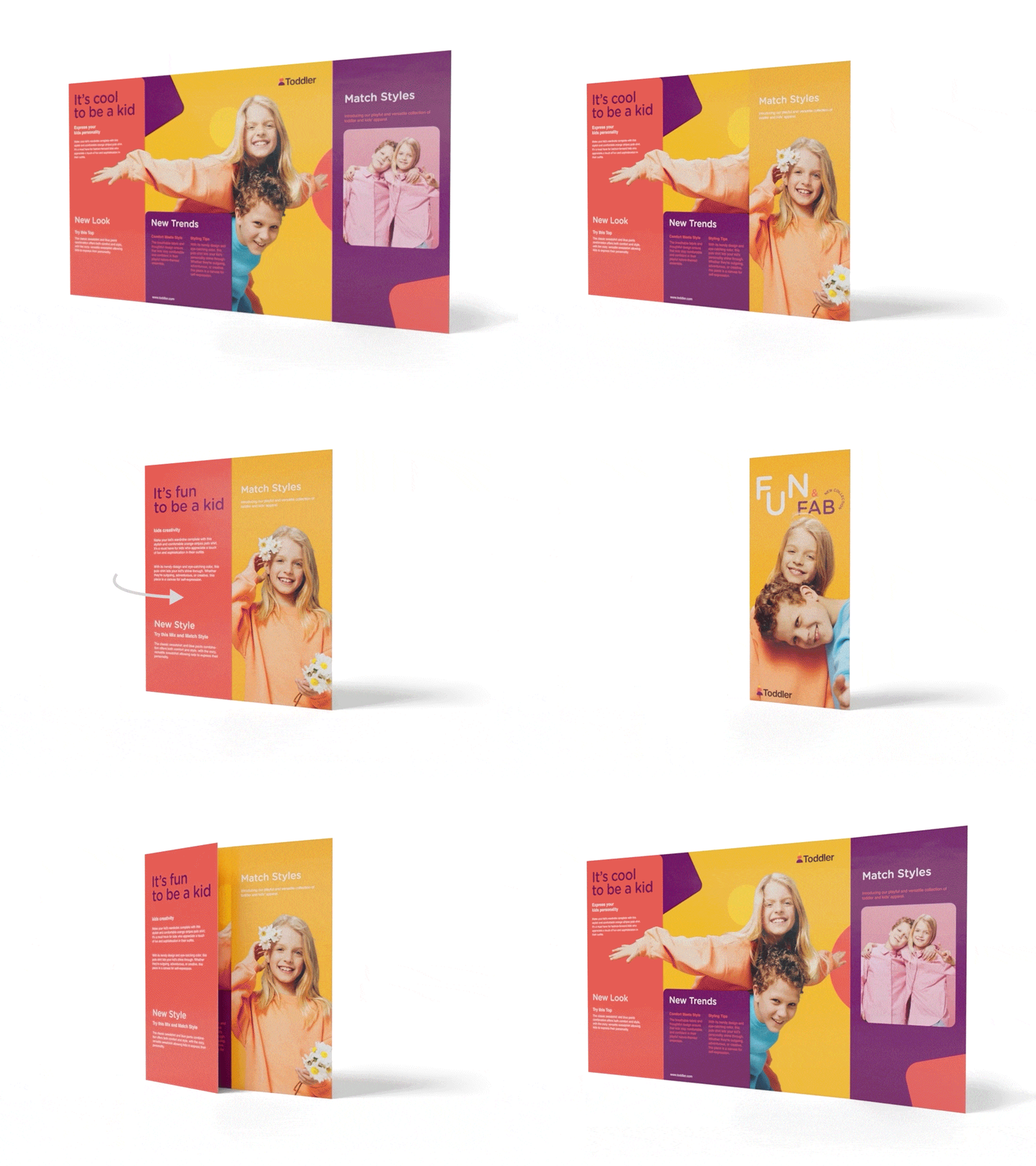
When you fold a half-folded sheet of paper twice, you get a double parallel fold. It is also crucial to the double parallel fold that the panels are in the same direction.
Perfect for: Travel guides, conference primers
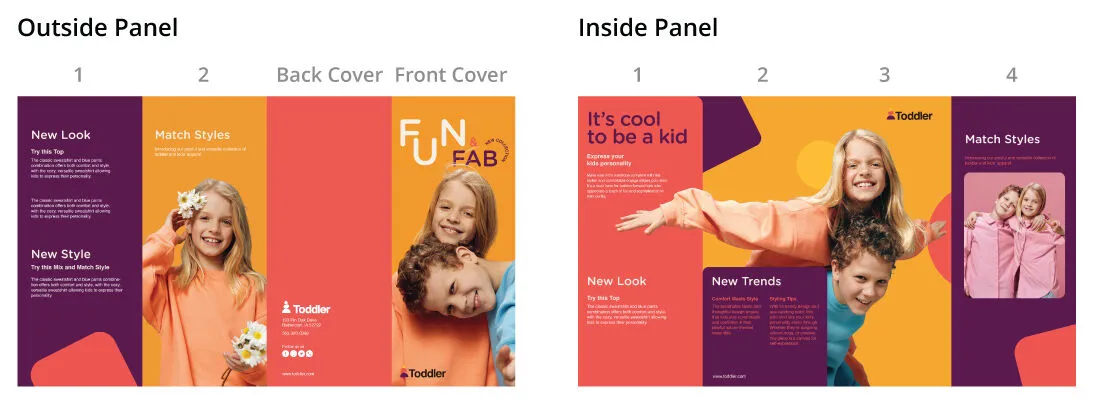
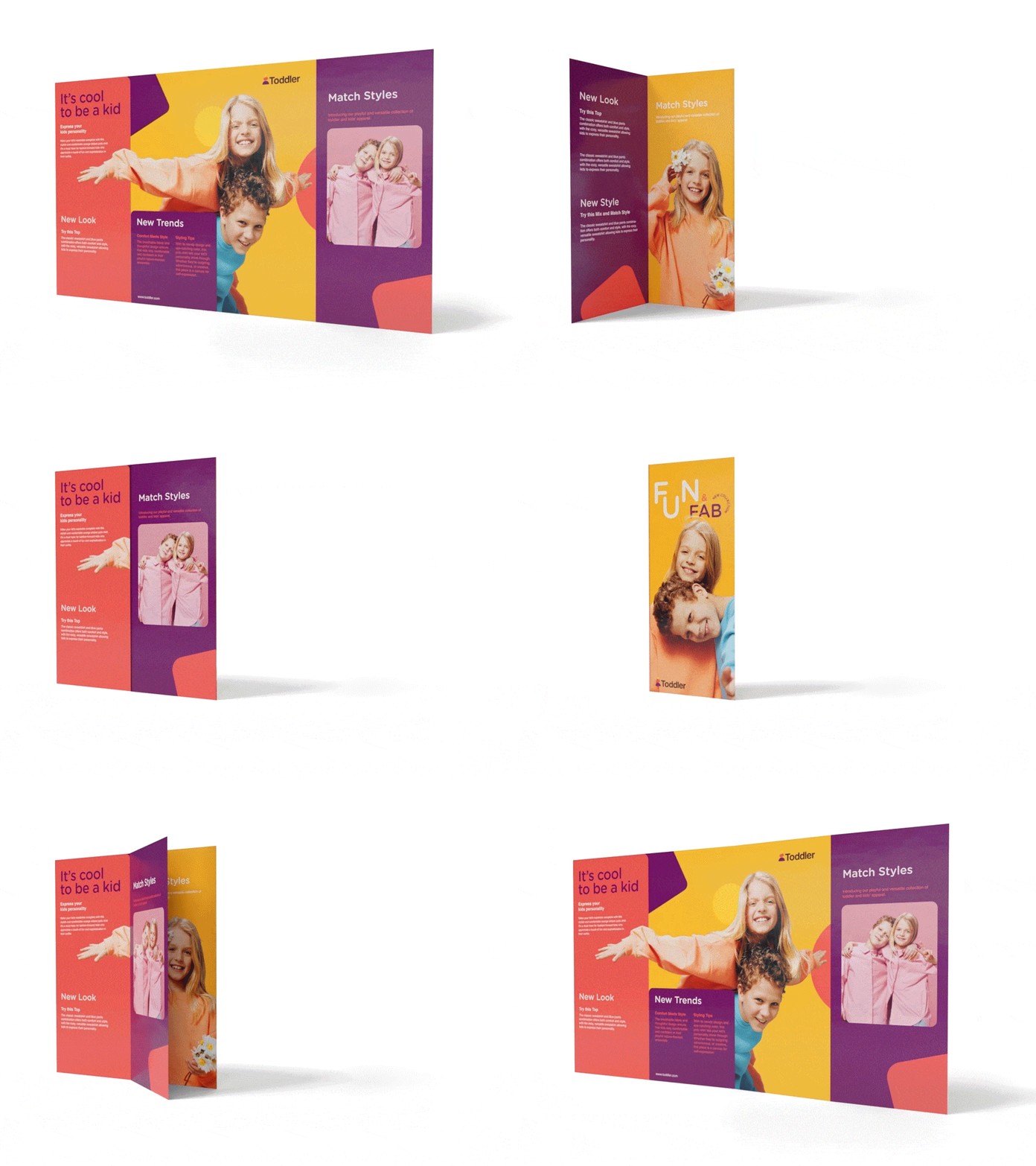
8. French Fold
The French fold involves folding a sheet of paper in half vertically, and then folding it again in half horizontally. This choice is ideal for when you want to make the entire inner panel of your brochure into a poster.
Perfect for: Beauty and wellness brochures, stylized travel maps, new product launches
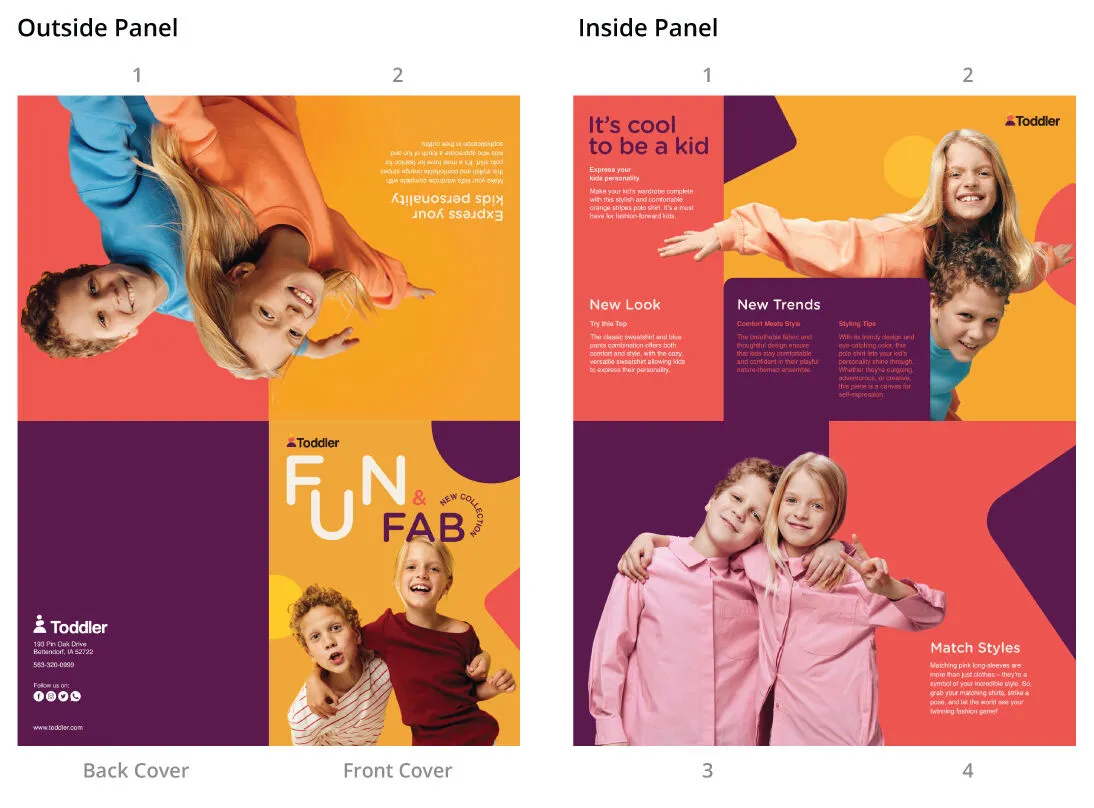
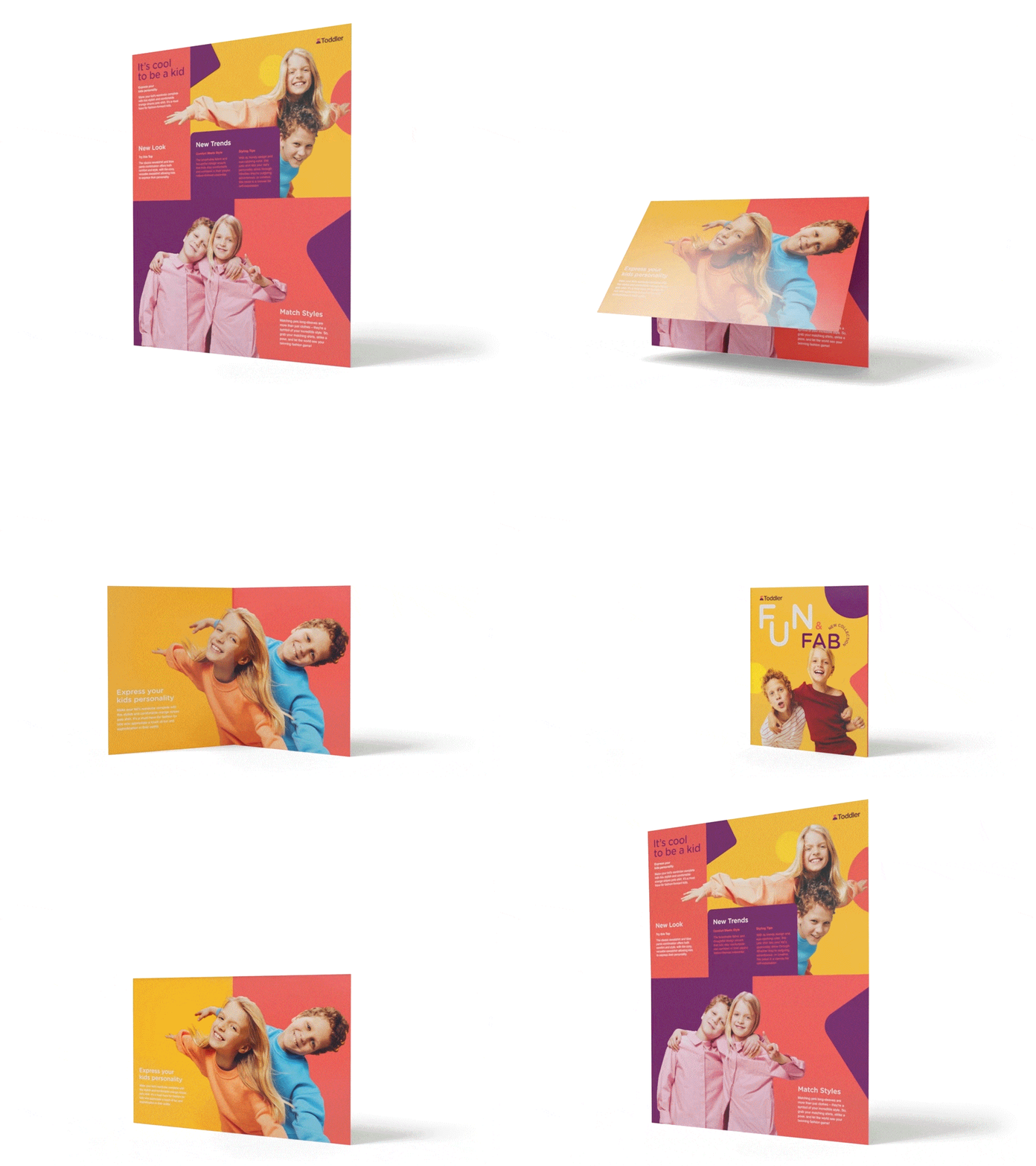
9. Roll Fold
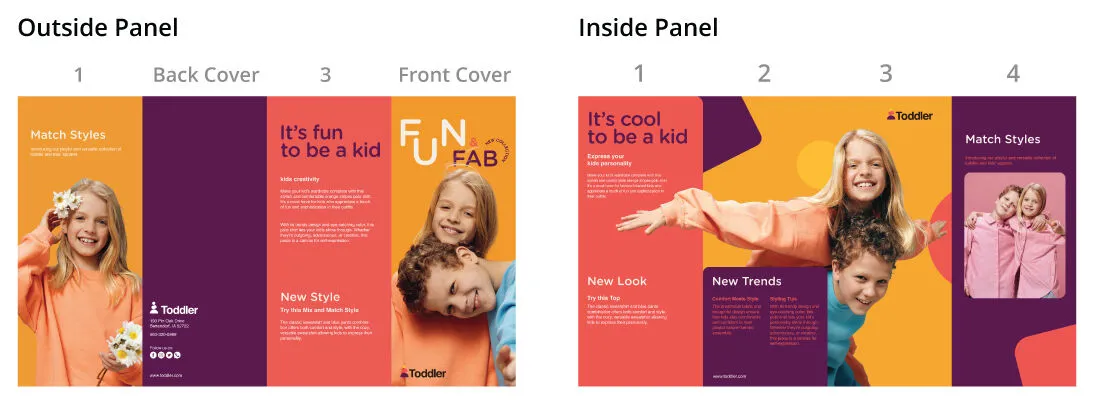
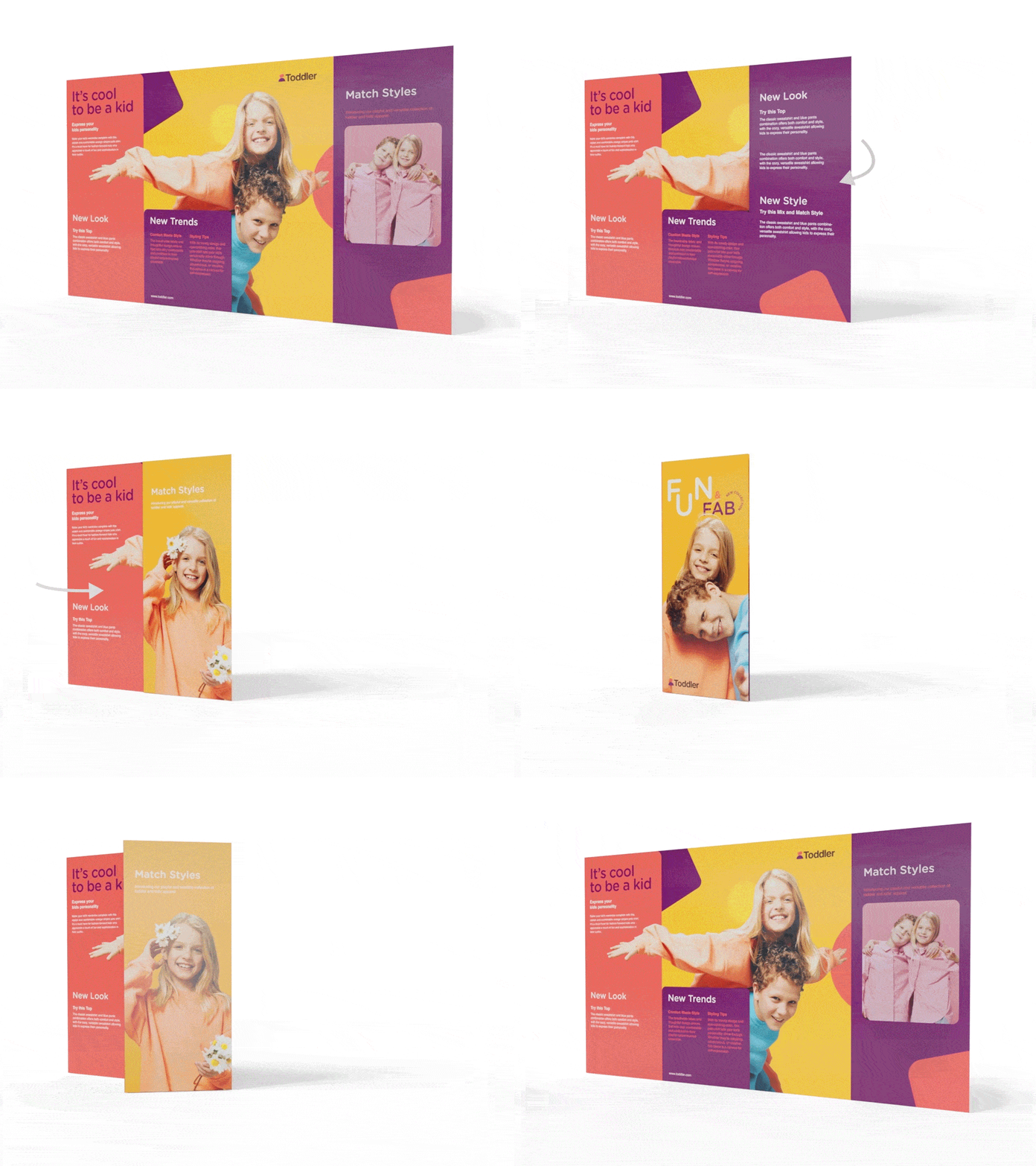
The Roll fold is an elegant way to execute a reveal. All you need is to fold a sheet of paper into four equal parts, fold the rightmost panel inward into the left, and then close it off with the leftmost panel.
Perfect for: Step-by-step guides, educational materials
10. Half-Fold Then Trifold
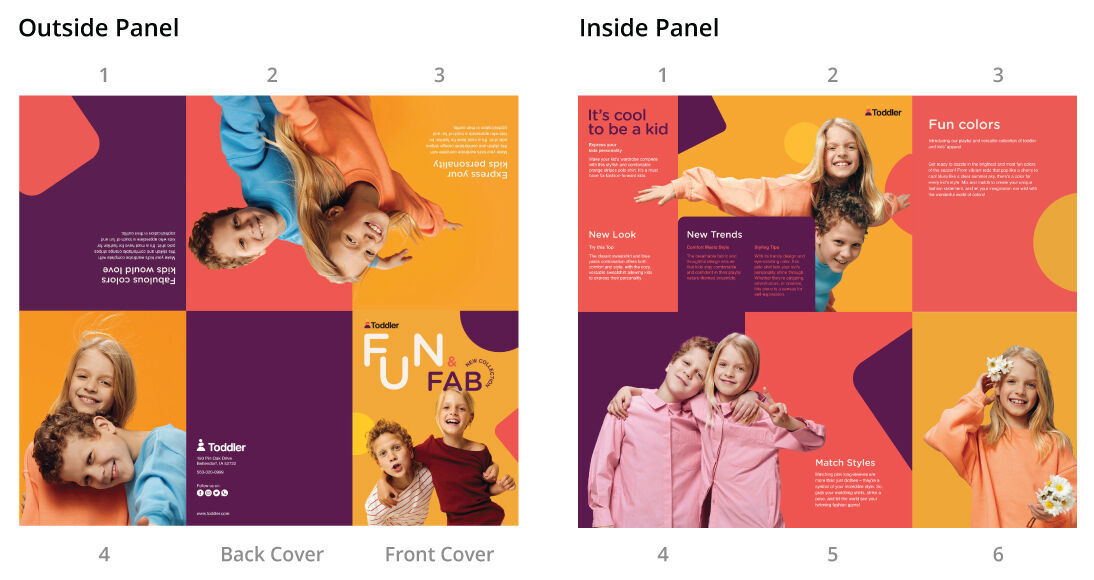
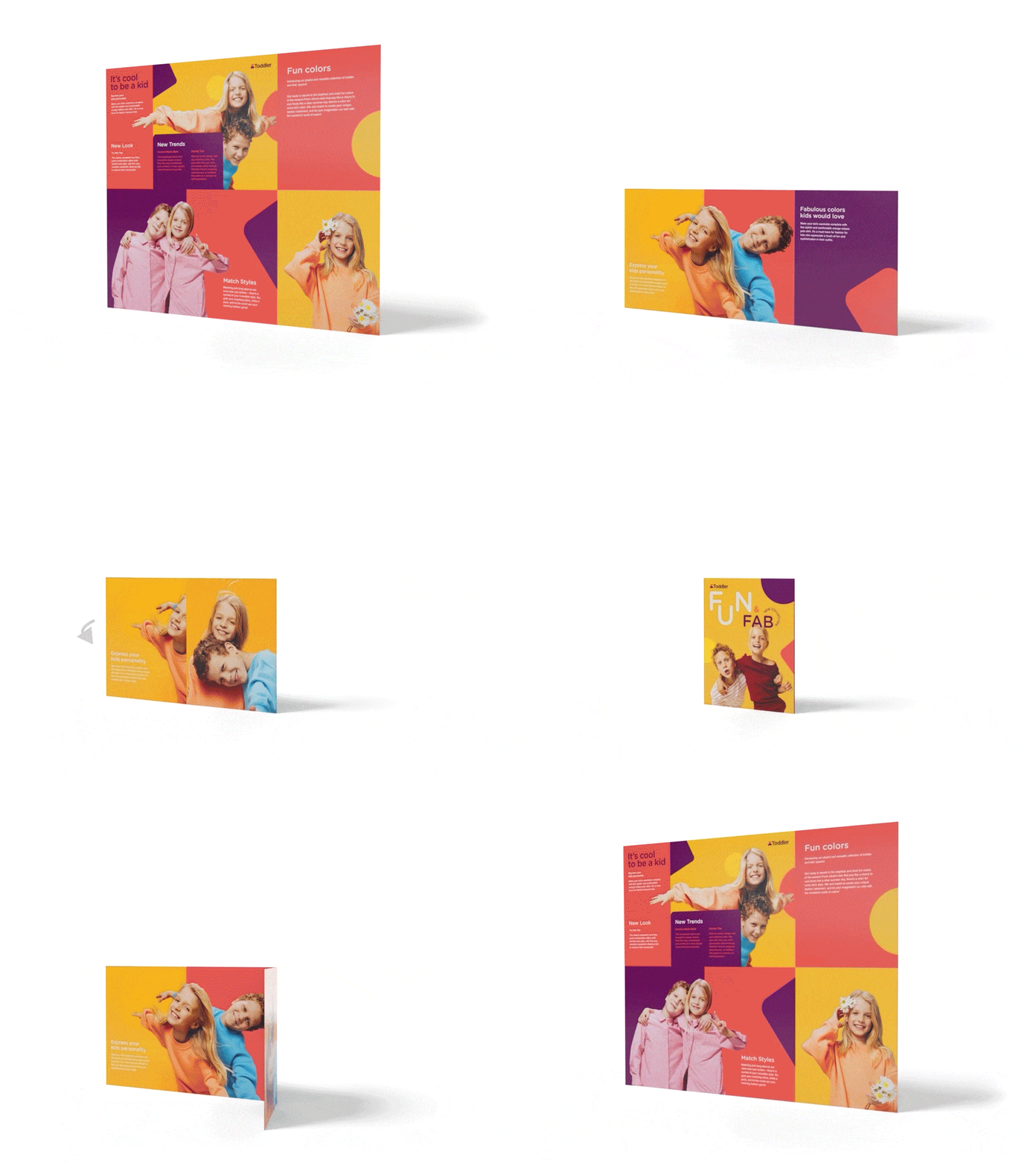
You can achieve this style by setting a sheet of paper vertically, folding it in half (from top to bottom), and then folding it again into three equal columns.
Perfect for: Art workshops, comprehensive seminars, pet adoption guides
Flat vs. Folded: Is a Flat Brochure Still a Brochure?
Short answer: Yes.
A lot of us are more familiar with folded brochures, but did you know that this marketing mainstay comes in flat versions, too?
A flat brochure delivers the same content as a folded one, with a key difference: where folded panels build narrative through segmentation, a flat brochure communicates everything at once with full-page impact. It also has an immediacy that folded formats don't; one glance and a quick skim is all it takes to absorb the key information. Flat brochures make a great canvas for bold, large-scale graphics and can be printed on standard paper sizes and distributed as-is.
A Few Reminders Before Creating Your Brochure
- Decide on a paper size. The amount of content you’ll put out will dictate the paper size you need for your brochure, and it’s essential that you finalize your content first so you can reasonably gauge how big (or small!) your paper is going to be. At UPrinting, our most popular paper size is 8.5” x 11” which is also known as US Letter Size. You can create a brochure as small as 4.25” x 5.5” and as big as 11” x 25”. If you require specific dimensions, you can pick Custom Size from our menu and we can cut the exact paper size you need.
- Use your space wisely. Unfolding a beautiful multi-paneled brochure is exciting but designing one isn’t as easy. On the one hand, they provide you with a lot of room to show more elements such as product images, service listings, short copy blocks, or even just utilize the white space available. That being said, you don’t want to crowd your brochure; a cluttered brochure loses readers quickly.
- Be mindful of the margins and bleed marks. Making a brochure gives you a lot of room to be creative and the rules of art can be flexible. That being said, make sure you don’t compromise on certain elements of design. Do not position objects along the fold lines so that the crease won’t affect their readability. Also, ensure that your layout lies within the margins of the entire sheet to prevent any images or textboxes from being cut off unnecessarily.
- Do some test folds before with actual paper. It will help you envision your brochure better if you practice with a physical sheet of paper of your preferred size. A mockup is also great for imagining the layout — you can create a draft of your layout and plan where the photos should be, how much space a background image should take, or how many lines your headline should occupy.
- Establish a focal point. Maximize your paper or stock by making an important design element the page’s focal point. It can be an image, a headline, or a pull quote — whatever attracts your target audience best and keeps them engaged deserves ample real estate on your brochure. This is especially true for flat brochures since you’re free from what limitations multiple panels can impose.
A well-designed brochure opens real possibilities for your brand, whether you're introducing a product, inviting someone to an event, or simply making a lasting impression. Now that you know the range of folds available and how to approach the design process, you have everything you need to create something your audience will actually want to keep.