Stickers and labels may look the same, but they serve very different roles in your business. Stickers grab attention. Labels deliver information.
Choosing the right one can improve how your product looks, how customers understand it, and how well your brand stands out. In this guide, you’ll quickly learn when to use each and how to get the most value from both.
Stickers vs. Labels: A Quick Comparison
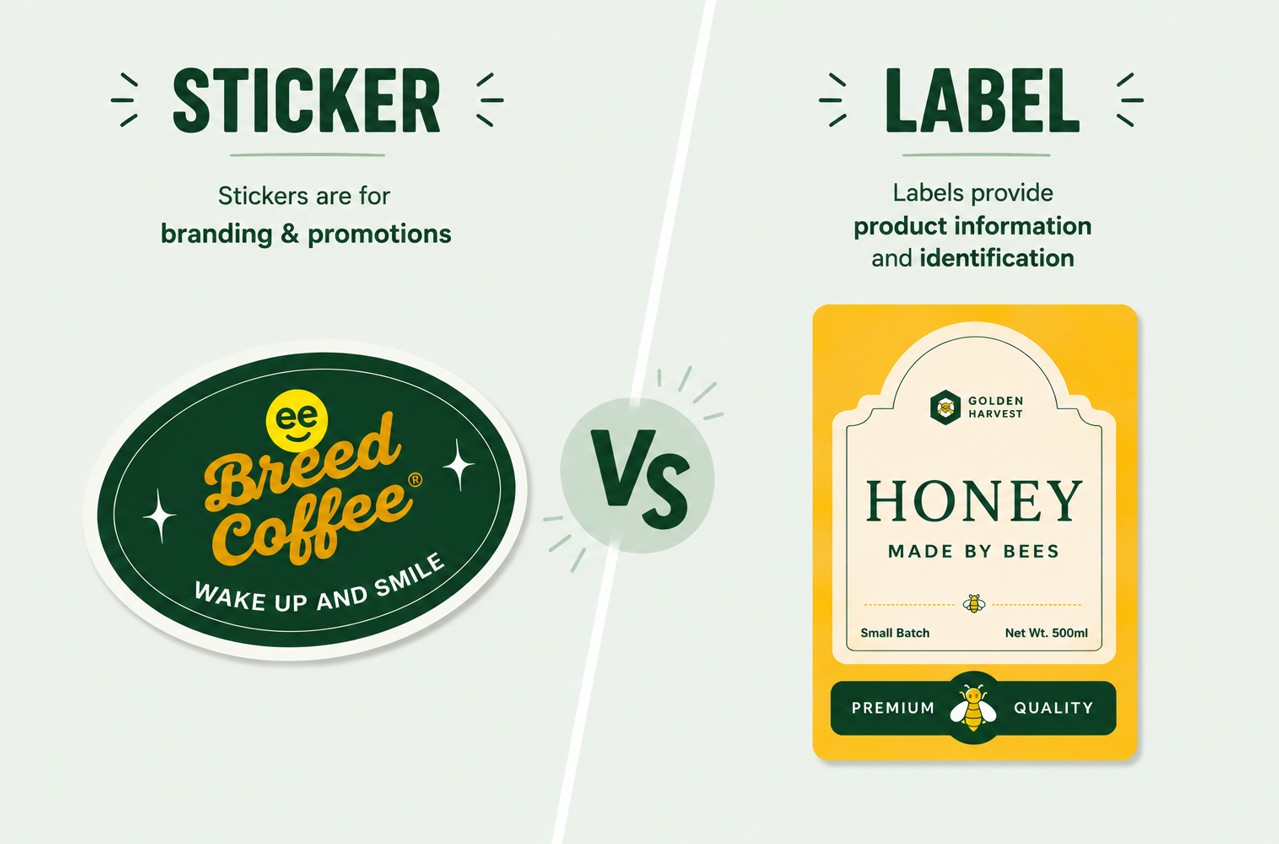
Sticker vs label infographic comparison
Most brands use stickers and labels interchangeably because they are so similar. The best way to differentiate them is to look at their intended use:
- Stickers are mainly used to grab attention. For example, laptop decals, giveaway stickers, or colorful packaging inserts are all made for branding and promotions.
- Labels, on the other hand, are meant to share information. You’ll often see them on bottles, jars, boxes, and shipping packages showing product details, instructions, barcodes, or addresses.
The comparison chart below makes it easier to see the differences between them.
| Feature | Stickers | Labels |
|---|---|---|
| Purpose | Attract attention | Share essential information |
| Focus | Eye-catching design | Clear, readable details |
| Best for | Branding, promotions | Packaging, shipping |
| Application | Usually by hand | By hand or machine |
| Standard shapes | Typically circular, square, and custom shapes | Usually rectangular or oval; square, circle. |
| Material options | Paper, vinyl, holographic, or clear materials | Paper, BOPP, or vinyl |
| Impact | Boost visibility | Build trust and clarity |
| Best case | Engagement | Function and compliance |
Why Businesses Use Stickers?

Laptop with various colorful stickers.
Businesses use stickers because they are a simple and affordable way to get noticed. A well-made sticker rarely stays on its original packaging. Customers stick them on laptops, water bottles, notebooks, phone cases, or cars. No matter where they end up, the sticker keeps your brand visible.
Stickers help advertise your brand wherever they go. The better the design, the more likely people are to remember your brand.
For small businesses, stickers are one of the best promotional tools and novelty items. They are inexpensive to produce but still catch people’s attention.
Maximizing Sticker Design and Sizes
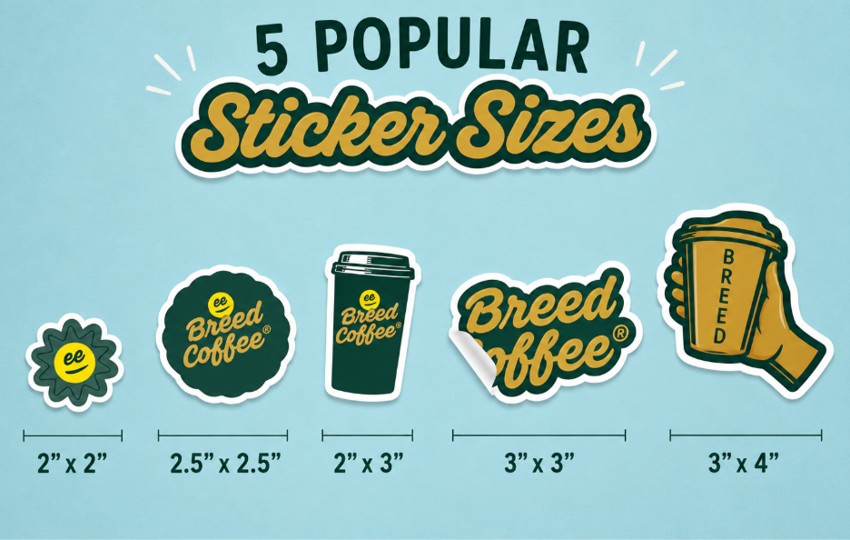
Infographic showing 5 popular sticker sizes.
Many brands look for the right mix of sticker sizes, shapes, and designs to suit their products. Luckily, there are plenty of options available to help each brand stand out.
Popular Sticker Sizes
- 2” x 2” – Logos, seals, giveaways
- 3” x 3” / 3” x 4” – Promotions, bold branding
- 2” x 3” – Designs with more text
When picking a size, consider where you will put the sticker and how noticeable you want the design to be.
Pro tip: Choose larger sizes for visibility; smaller sizes for cost efficiency.
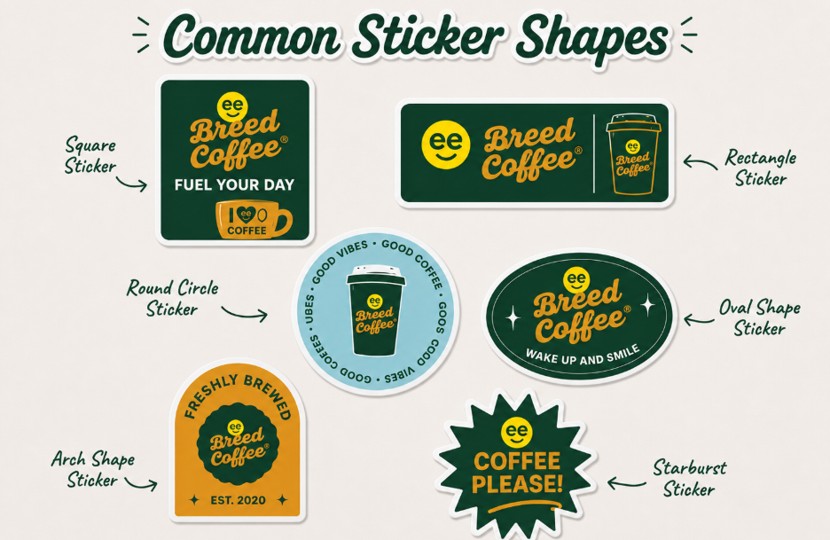
Infographic showcasing common sticker shapes.
Common Sticker Shapes
- Square and rectangular stickers are useful and flexible. They are great for packaging, branding, QR codes, or designs with more text since they offer extra space for your layout.
- Round stickers are often used for logos, packaging seals, and food labels. Their even shape makes them simple to apply and gives a neat look.
- Oval and arch-shaped stickers give a softer, modern style. They are popular for candles, cosmetics, boutique packaging, and lifestyle brands that want to look more high-end.
- Starburst stickers are made to catch the eye, making them perfect for promotions and retail sales. Businesses use them for discounts, limited-time deals, or to highlight special products.
- If you want something different, you can choose custom die-cut stickers that match the shape of your logo, artwork, or original design.
When picking a sticker shape, think about your design and where you will put the sticker. Simple shapes are easier to line up on packaging, while fancier shapes are better for promotions and branding.
Common Sticker Materials
- Vinyl Stickers – Durable, waterproof, outdoor-ready
- Paper Stickers – Affordable, ideal for short-term use, mainly indoor use
- Clear Stickers – Clean, premium look for packaging
- Holographic Stickers – Eye-catching, ideal for promotions
Pro tip: Use vinyl if durability is important.
The Main Functions of a Product Label
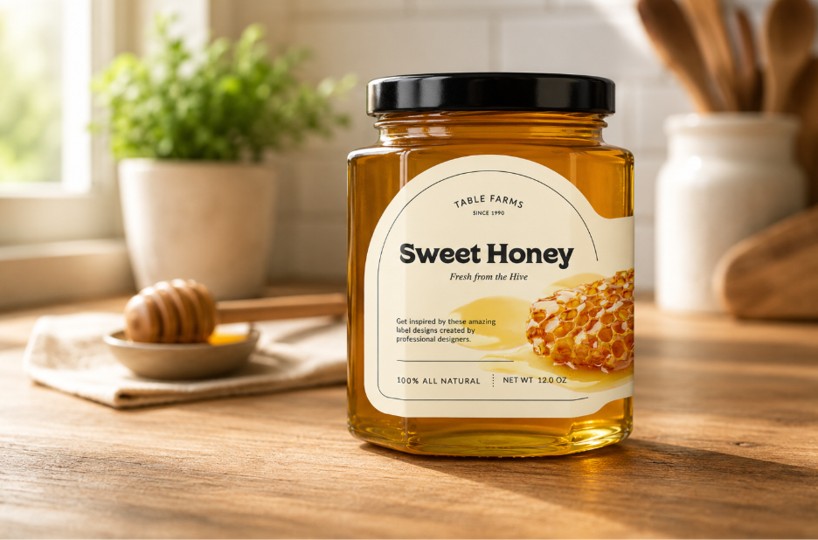
Honey jar with a product label.
Labels are more functional than stickers. They focus on providing clear information and help show a brand’s credibility.
Labels let customers know what a product is, how to use it, what it contains, and where it belongs. Without labels, many products would seem unfinished or unprofessional.
In some industries, labels are also legally required. Food packaging, cosmetics, supplements, and health products often need ingredient lists, expiration dates, warnings, or compliance details. Labels provide this information and still help with branding.
Product labels also help build brand awareness and make products more visible. Many brands use visuals on their labels to attract customers and show they are trustworthy. Sometimes, stickers and labels are used together to finish the packaging.
Product Label Shapes, Sizes, and Applications
To get the most out of your product labels, pick a size, shape, and material that match your brand. Make sure your choices include all the information needed for compliance and help your brand stand out.
Common Label Sizes
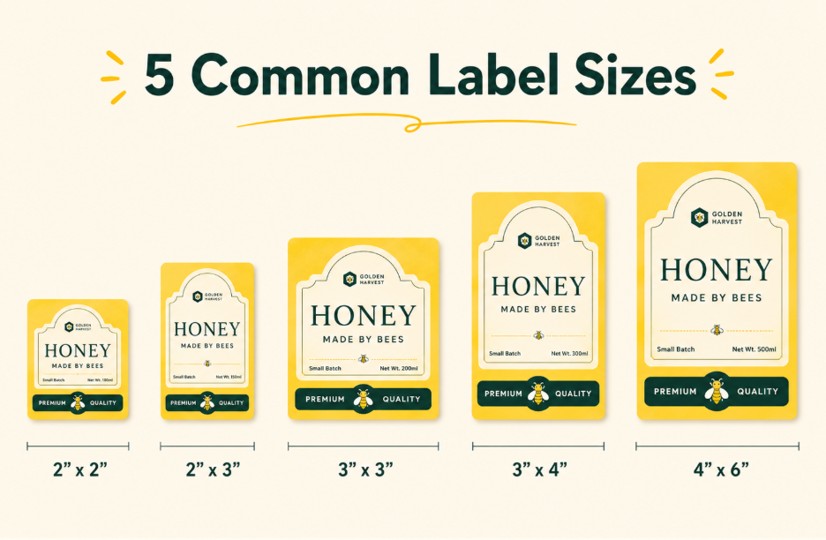
Infographic showcasing five common label sizes.
- 4” x 6” – Shipping and logistics label is the standard choice for shipping and compliance because it easily fits addresses, tracking info, and barcodes. You can also print important details on this label size.
- 2” x 2” / 2” x 3” – Small packaging
- 3” x 3” / 3” x 4” – More space for details
When choosing a label size, consider how much information you need to include so the design stays clear and easy to read.
Popular Label Types
When you order product labels, they usually come in different formats depending on how you plan to use them. You can also choose the type of label based on how many you need.
- Roll Labels
- Roll labels are ideal for high-volume applications due to their quick and easy application.
- They are commonly used for bottles, jars, food packaging, and retail products.
- Choose roll labels if you frequently label products in bulk or use dispensers and labeling machines.
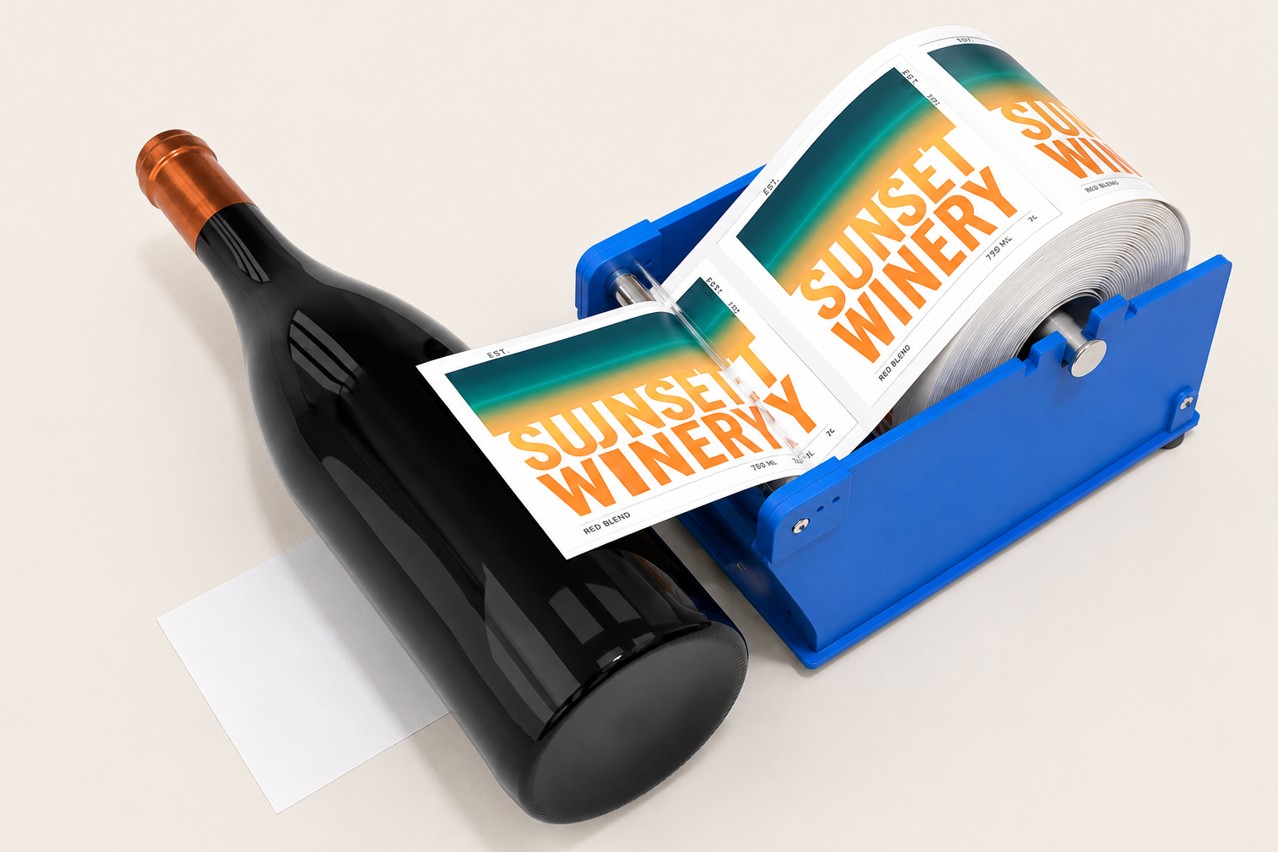
Roll label dispenser applying wine labels.
- Label Singles
- Label singles are individually cut and well-suited for small quantities or manual application.
- They are often the most cost-effective option, making them ideal for small businesses, startups, test packaging, or limited product runs.
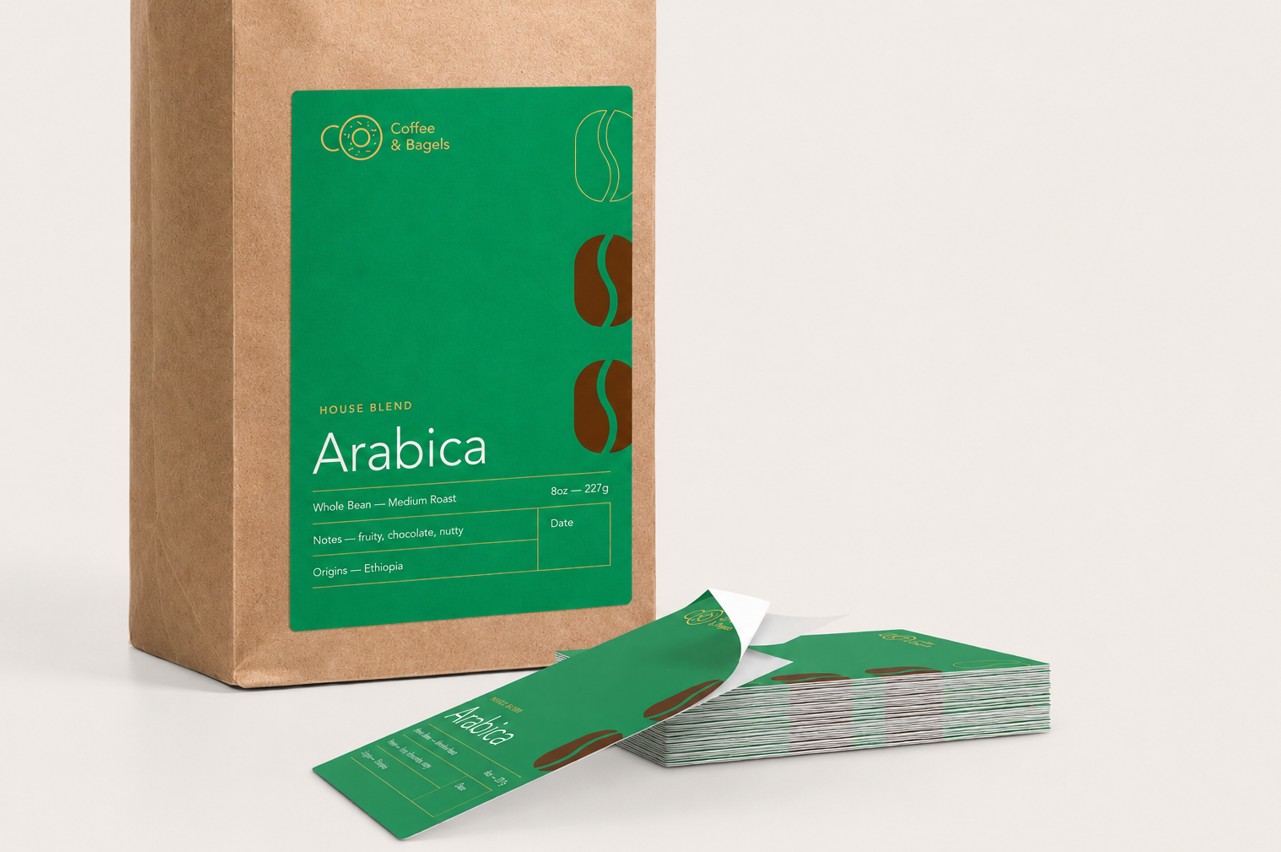
Individual coffee bag with single labels.
- Sheet Labels
- Sheet labels contain multiple labels per sheet and are ideal for organizing various designs or printing smaller batches.
- These are a practical choice for office tasks, mailing labels, product packaging, and DIY projects.
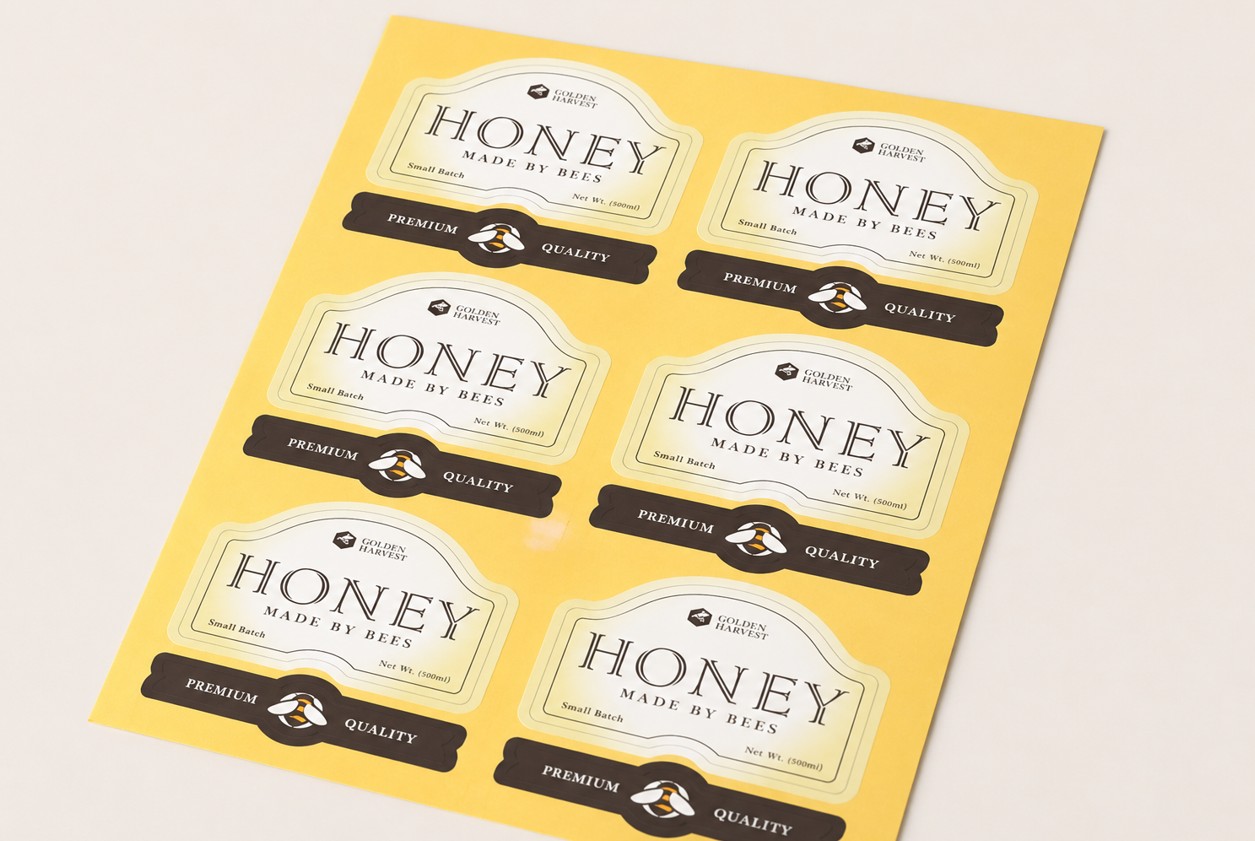
Sheet of yellow honey labels.
Common Label Materials
- Paper labels are a budget-friendly choice, perfect for retail packaging, bakery boxes, inventory tags, and other uses indoors.
- BOPP labels resist moisture and oil, making them a popular option for beverage bottles, beauty products, food containers, and items kept in the fridge.
- Vinyl labels are tough and made for outdoor use, industrial products, or situations where you need them to last a long time.
- Foil labels have a metallic finish that gives luxury packaging, wine bottles, candles, and cosmetics a high-end look.
frequently asked questions
A.
Yes, materials such as vinyl, paper, and clear stock work for both stickers and labels. The main difference comes down to how you plan to use the product.
A.
Labels are best for showing important product details. Stickers are great for adding branding or extra decoration to your packaging.
A.
Yes, both stickers and labels can be made with waterproof materials like vinyl and BOPP.
A.
It depends on how many you need, what material you choose, and how you’ll use them. Paper labels usually cost less for large orders, while stickers can be a smart choice for marketing your brand.
Conclusion
Stickers and labels may look alike, but they have different uses. Stickers help boost your brand, connect with customers, and promote your business. Labels, on the other hand, give important product details, help with organization, and make sure you meet regulations. Many companies use both to get the benefits of clear information and strong branding.
Choosing the right material, size, and design will help you get the best results. UPrinting has customizable stickers and labels in many shapes, sizes, and finishes to fit your business and packaging needs.