The best wedding signage does more than make your venue look picture-perfect — it helps guests navigate the site, find their seats and their way around the facilities, and learn about the menu. In other words, good signage helps run the celebration smoothly while ensuring that your guests are comfortable.
As it turns out, signage and its practical benefits are such an important part of wedding preparations that it has its own Reddit discussion. Users generally agreed that the most helpful signs provide essential information (think: where to park, where to freshen up, etc.) and prevent confusion. Seating charts, food and allergen labels, and directional signs were among the most frequently mentioned examples.
But with so many options available — from decorative welcome signs to seating charts and table numbers — paired with the eagerness to make sure the big day turns out perfectly, it can be tempting to add signage to every part of the venue. A simple rule can help keep things in check: prioritize function first, then have fun with the design.
The Most Useful Wedding Signs for Your Ceremony and Reception
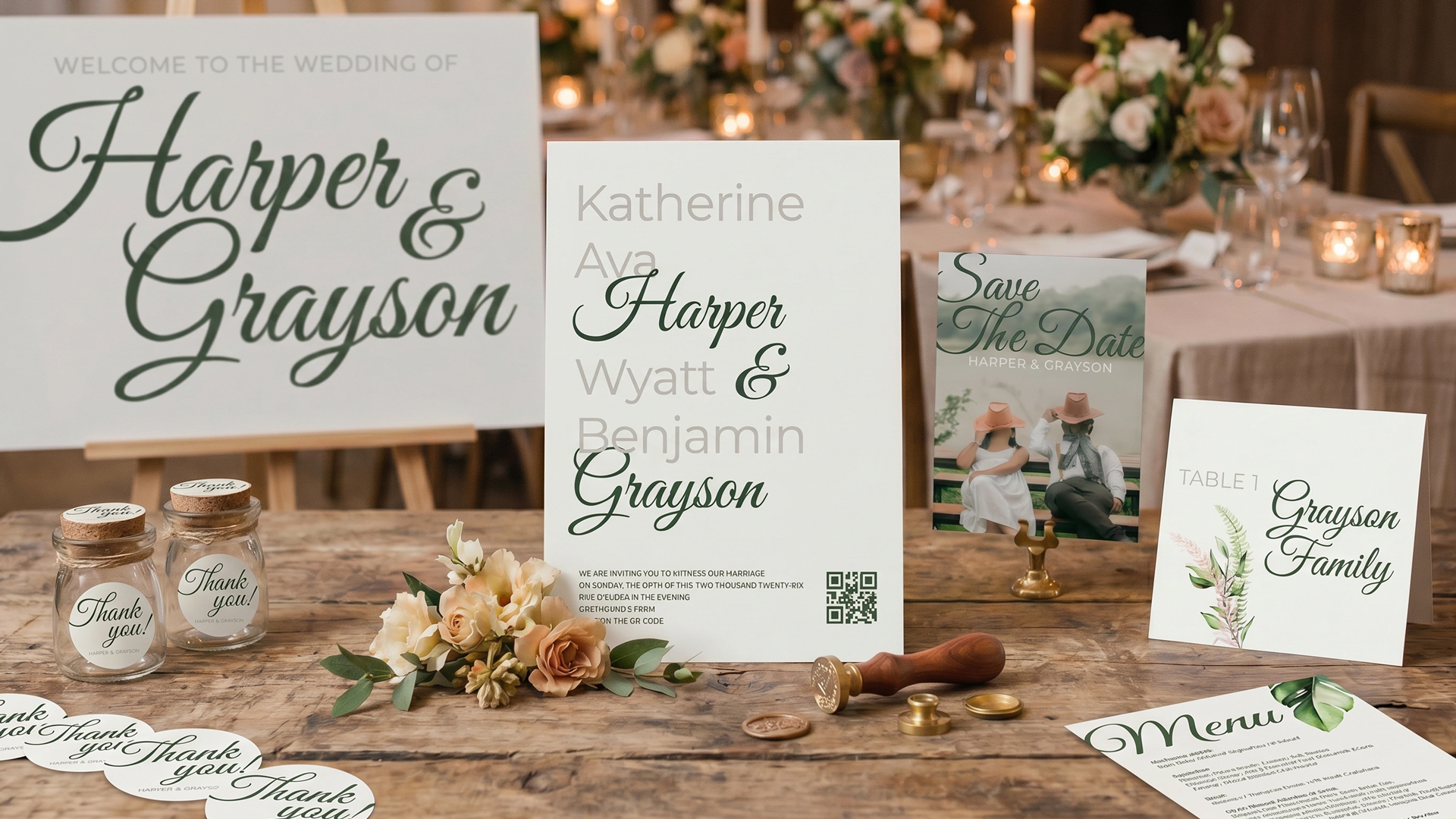
Custom wedding event stationery and signage
The best wedding signs keep the celebration running smoothly and make important information easy for guests to find. Here are the signs worth considering for your ceremony and reception:
1. Seating Charts
For receptions with assigned seating, a seating chart or escort-card display is a must-have. After all, one of the first questions guests will have when they arrive is: Where should I sit? A clear, well-organized seating chart helps guests find their tables while keeping the entrance flowing smoothly.
Placement Tip: Place the seating chart near the reception or cocktail-area entrance, with enough space for guests to stop and check their seats without blocking the way.
Design Tip: Stylish typography is a nice touch, but when it comes to navigation, readability comes first. Use short, clear prompts like “Find Your Seat” or “Please Find Your Name and Table”, and print them in fonts that are easy to read.
2. Table Numbers or Table Names
Table numbers and names can add personality to your décor even if their main purpose is to help guests find their seats. Make them easy to spot from a few feet away — not hidden behind flowers, candles, menus, or glassware.
If you’re using table names, consider naming the tables after the couple’s favorite cities, books, flowers, or places that are meaningful to them.
Placement Tip: Position table signs where guests can easily see them from the aisle. Keep them visible and check that no décor blocks them once the tables are fully set.
Design Tip: Use strong contrast and a legible typeface for the table number or name, saving decorative scripts for accents. Also, match the style of your seating chart to make it easier to find the right table.
3. Directional Wedding Signs
Directional signs are especially helpful at outdoor or multi-building venues where the next stop may not always be obvious to guests or suppliers. Use these signs to direct wedding guests to key areas, including the ceremony, parking, shuttle pickup, cocktail hour, reception, and restrooms. You don’t need a sign for every destination, either. Just focus on spots where guests might need the most so that they don’t get lost around the venue.
Placement Tip: Place directional signs at decision points such as venue entrances, hallway intersections, and elevator exits. For bigger locations or complicated pathways, use multiple signs along the way to reassure guests they’re headed in the right direction.
Design Tip: Use large, high-contrast text, clear arrows, and short messages that guests can understand at a glance, such as “Ceremony →,” “← Reception,” or “Shuttle Pickup →.”
4. Food and Allergen Signage
Straightforward and clear food labels help guests see what’s on the menu and make informed choices, especially if they have dietary restrictions or allergies. These are also highly useful if you’re setting up buffets, dessert tables, and beverage stations. Instead of requiring guests to frequently ask servers, labels put the information right where they need it.
Skip vague labels like “Pasta” and add helpful details, such as “Sicilian Pesto Pasta (Contains Dairy and Nuts).” Always confirm ingredients and allergen information with your caterer, including any risk of cross-contact.
Placement Tip: Place each label directly beside its dish to avoid confusion. For buffets, consider adding a larger menu at the start of the line so guests can browse their options before filling their plates.
Design Tip: Keep labels clear, consistent, and easy to scan. Make dietary information like “Vegetarian” or “Contains Dairy” stand out, and pair any icons with written labels so guests can understand the menu at a glance.
5. Bar and Signature Cocktail Signs
Bar signage is most useful when it highlights wine, signature cocktails, specialty drinks, mocktails, and other nonalcoholic options. Making this information visible to guests also saves bartenders from having to explain the same menu all evening.
Placement Tip: Display the menu where guests can browse it before reaching the bartender, ideally near the start of the line or prominently beside or behind the bar. This gives everyone time to choose while they wait and helps keep the line moving. For larger or multi-sided bars, consider displaying the menu in multiple locations.
Design Tip: Make drink names easy to scan, with ingredient descriptions slightly smaller but still readable. Group options into clear categories, such as Signature Cocktails, Wine, and Beer, rather than a single long list. Additionally, use strong contrast and simple typography, so the menu remains easy to read even in dim reception lighting.
6. Activity and Guest Book Instructions
Whether it’s a Polaroid station, audio guestbook, or a photobooth, clear instructions help guests jump right in without having to ask what to do. A foam board sign works well for displaying these instructions in a clear, easy-to-spot format.
Placement Tip: Place instructions right at the activity where guests will see them before getting started. For activities with multiple steps, arrange the instructions in the order guests will use each item — for example, camera first, guest book second, and pens last.
Design Tip: Keep instructions quick and easy to scan with a clear heading and a few short, numbered steps. If you’re printing QR codes, make them large enough to scan easily and leave plenty of space around them. Be sure to test the code on several phones and from different distances before the big day.
7. Welcome Signs
At a private, single-event venue, a welcome sign is mostly decorative, creating a polished first impression and setting the tone for the wedding. At hotels, resorts, golf courses, or venues hosting multiple events, however, it also serves a practical purpose by confirming that guests are in the right hall.
Placement Tip: Place your welcome sign at the first key arrival point, such as the venue or ceremony entrance. At larger or multi-event venues, ask the venue staff where guests are most likely to need a little direction.
Design Tip: This is your chance to have some fun with your wedding style. Incorporate your colors, typography, florals, monograms, or other design elements, while keeping the couple’s names prominent and easy to read.
Which Wedding Signs Do You Really Need?
Not every wedding needs a sign at every turn. Instead of following a lengthy checklist, think about what your guests actually need to know. From there, you can sort your wedding signage into three simple categories: essential, situational, and decorative.
Essential or Functional Wedding Signs
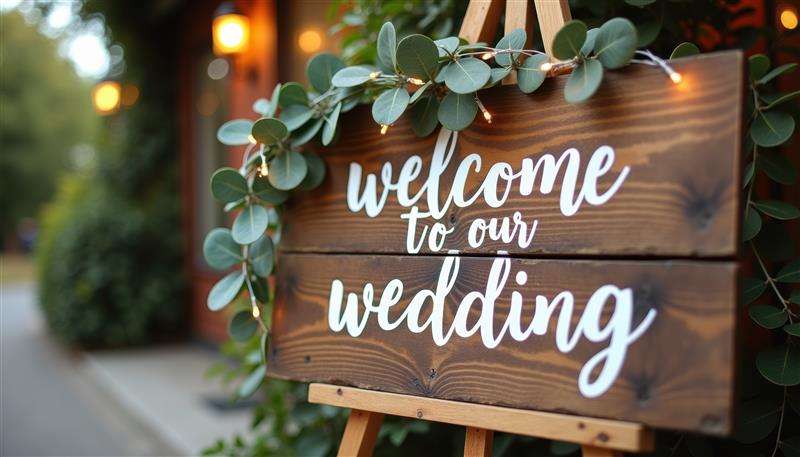
Wedding welcome sign with greenery accents
These are the signs that do the heavy lifting, helping guests navigate the venue, find their seats, and get important information:
- Welcome sign — Confirms guests have arrived at the right celebration, especially at venues hosting multiple events.
- Seating charts or escort cards — Help guests quickly find their assigned table or seat.
- Table numbers or names — Make the right table easy to spot.
- Directional signs — Point guests toward the ceremony, cocktail hour, reception, restrooms, and other areas when the route isn’t obvious.
- Food and allergen labels — Identify dishes and highlight important dietary or allergen information.
- Bar or drink menu — Lets guests browse their options before ordering.
- Shuttle or transportation signs — Point guests toward pickup and drop-off locations.
- Parking signs — Direct guests to designated parking areas.
Useful Depending on Your Wedding Theme
Not every celebration needs these signs, but the right ones can make the guest experience smoother based on your venue, activities, and setup:
- Signature cocktail sign — Introduces specialty drinks and their ingredients.
- Unplugged ceremony sign — Politely reminds guests to put away their phones and cameras.
- Guest book instructions — Explains how to participate in an audio, Polaroid, or other nontraditional guest book.
- QR-code photo-sharing sign — Makes it easy for guests to upload and share their photos.
- Reserved-seat signs — Identify seats set aside for family members or other special guests.
- Activity instructions — Show guests how to enjoy photo booths, games, favors, and other interactive activities.
Primarily Decorative Wedding Signs
These signs are more about aesthetics than practicality. They can tie your décor together and add personality to the celebration, but guests generally don’t rely on them to find their way around:
- Generic “Bar” signs when the bar is already obvious
- “Dessert” signs for an easy-to-spot dessert table
- Decorative quotes or romantic messages
- Signs labeling obvious areas or items
- Extra welcome messages throughout the venue
These categories aren’t hard-and-fast rules. A decorative sign can still be a great addition if it fits your theme or adds a personal touch.
Make Every Wedding Sign Count
The best wedding signage helps guests navigate and enjoy the celebration with ease. Whether it’s a seating chart that quickly directs people to their tables or a directional sign pointing toward the reception, every sign should serve a clear purpose.
A good rule of thumb is to prioritize function first and decoration second. When wedding signs are both useful and thoughtfully designed, they can answer questions, minimize confusion, and create a smoother guest experience from arrival to the final send-off.
Once you’ve decided which signs your wedding needs, bring your ideas to life with UPrinting. Create custom signs and printed materials that complement your theme while keeping important details clear and easy to find. From welcome and directional signs to reception displays, you can create signage that looks polished, feels personal, and helps your celebration run smoothly.