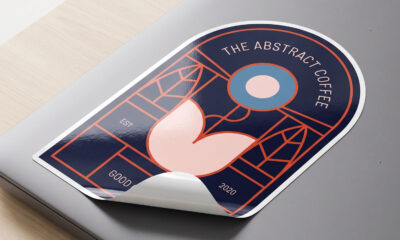
Window clings are a popular way to display store schedules, logos, promotional messages, and decorative graphics on glass surfaces. They’re commonly used on storefronts, office glass panels, and home windows because they’re easy to install, remove, and reposition.
Installing window clings is easy and does not require adhesive. They stick to smooth, flat glass surfaces due to a combination of static forces, micro-suction effect, and surface tension.
To ensure proper adhesion and smooth appearance, there should be no wrinkles and air bubbles between the cling and the glass surface.
Supplies and Materials You Need to Install Window Clings
- Spray bottle with water
- Squeegee or credit card
- Lint-free cloth or paper towel
- Glass cleaner
Step 1: Clean the Glass Surface
Use glass cleaner and lint-free cloth to wipe the surface and remove dust, fingerprints, and grime. Even small particles can create bumps or bubbles beneath the cling. Allow the surface to dry completely before continuing.
Step 2: Lightly Mist the Glass
A thin layer of moisture creates a nice surface adhesion that allows the cling to stick to the glass. Avoid soaking the glass with water; just a light mist is enough.
Step 3: Position the Window Cling
Carefully peel the window cling away from its backing sheet. Next, press it gently against the glass where you want to display it. You may need to adjust it a few times until it is properly aligned.
Step 4: Smooth the Cling from the Center Outward
Apply gentle pressure from the center outward as you go, then remove any remaining bubbles with a squeegee or a credit card. The idea is to release trapped air and moisture between the cling and the glass surface.
Step 5: Wipe and Inspect the Surface
Wipe the surface gently with a clean cloth to remove any moisture or fingerprints. Step back and inspect the graphic from a distance to ensure it is straight and smooth. Your window cling should appear clean and smooth.
frequently asked questions
A.
Yes, window clings can be reused if they are removed carefully and stored properly. Keeping the original backing sheet makes it easier to store the cling for future use.
A.
Window clings work best on smooth, non-textured glass surfaces. Rough or textured glass may not allow for excellent adhesion.
A.
While window clings can be applied to exterior surfaces, they're best suited for indoor use. This would protect your graphics from harsh weather and extend their lifespan.
Proper installation is important because window clings rely on surface contact, not adhesive, to stay in place. When you install them correctly, they will look smooth, last longer, and display your graphics as intended.