Hospitals and clinics are some of the busiest places, with staff at every level working together to care for patients quickly and efficiently.
Clear, well-placed signs are important in healthcare settings. They help answer patients' questions, support compliance, reduce front desk interruptions, and keep patient flow steady, especially during busy times when more people are sick.
This article will highlight the key signs every clinic need, explain why they matter, and show how they can improve patient flow, safety, and the overall experience.
Hospital Signs as Everyday Essentials for Clinic Operations
Signage plays a key role in shaping the patient experience and affects every interaction. It acts as a constant communication tool whenever your clinic is open.
Good medical signage addresses most administrative interruptions, which can reduce staff efficiency by up to 20% during peak hours. Clear labels, wall signs, and easy-to-find check-in signs help outpatient clinics run more smoothly by guiding visitors and answering their questions, allowing front desk staff to focus more on helping patients who need direct support.
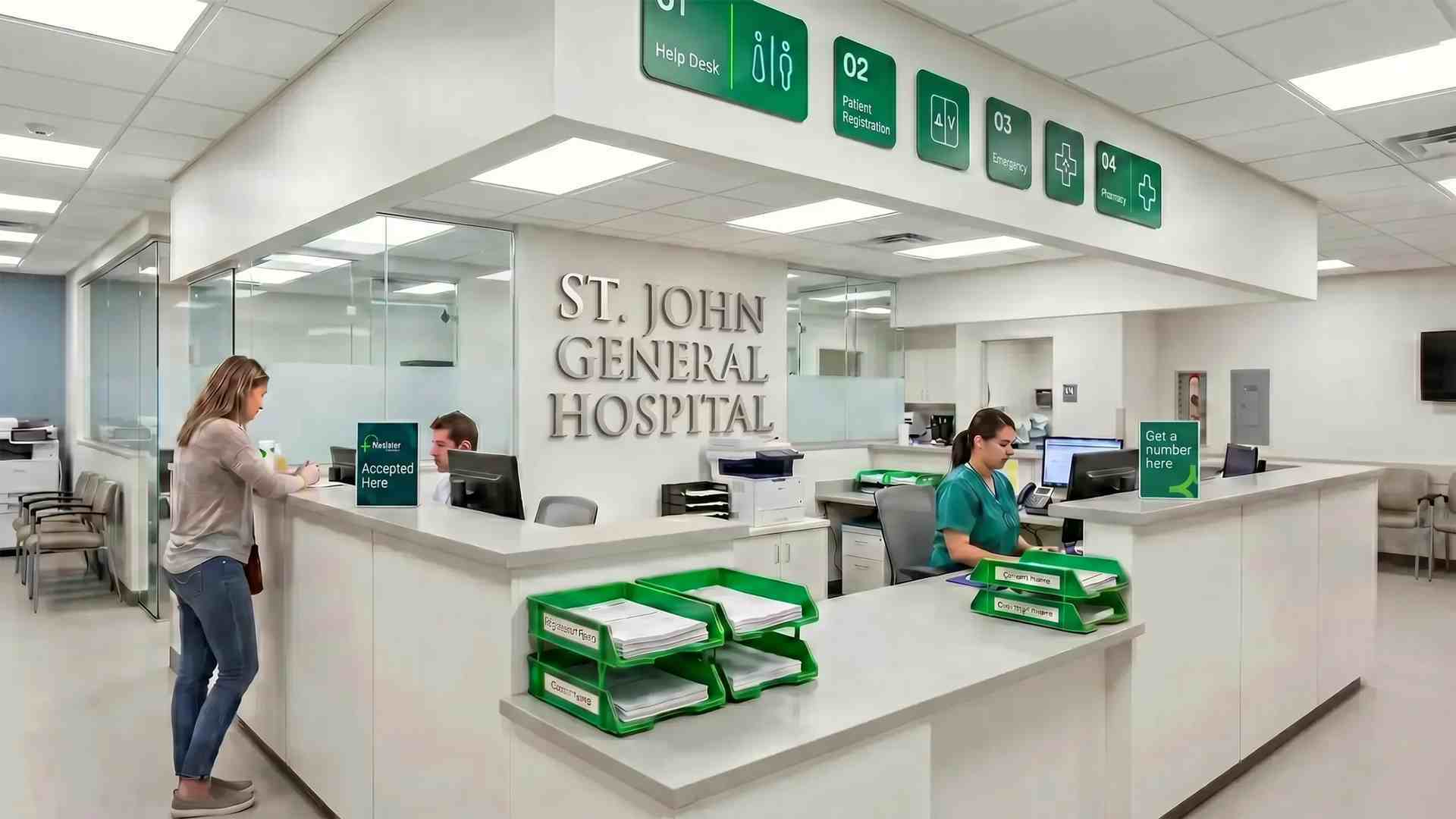
People standing at reception desk.
Planning and implementing proper signage helps clinics:
- Reduce repeated questions from patients.
- Support compliance without needing constant verbal reminders.
- Keep patient flow steady during busy times.
- Create an environment that feels more organized and professional.
Compliance Signage Every Hospital Should Have
Hospital signs do more than guide people—they are essential for meeting compliance requirements. It is important to make sure your signs and labels follow industry standards.
Below are the main types of signage you should review:
Required Signage in Most U.S. Clinics
- HIPAA Notice of Privacy Practices
Must be clearly visible at the check-in area. Patients also need access to a copy upon request. - Patient Rights and Responsibilities
Often required by state health departments or accreditation bodies such as The Joint Commission.
- Non-Discrimination Notice (Section 1557 of the ACA)
Applies to clinics receiving federal funding. This includes language access information. - ADA Accessibility Signage
Covers accessible entrances, restrooms, and parking. Signs must meet ADA guidelines for visibility and readability. - OSHA Safety Signage
Includes biohazard warnings, sharps disposal notices, and emergency exit signs.

People walking outside hospital entrance.
What Constitutes Compliant Signage?
Having signs in your hospital fulfills just half of the requirements. To fully comply with regulations, you also need to consider where you place them and how easy they are to read. Here are some steps you can take:
- Place signage where decisions are made, such as entrances and check-in points.
- Use font sizes that are readable from at least 3 to 5 feet away.
- Avoid overcrowding multiple notices in one location.
- Keep information updated and relevant.
Using Clinic Signs to Improve Patient Flow
Managing patient flow is a daily challenge for medical office managers and staff. Proper directional signage, room labels, and instructional posters help reduce confusion throughout the visit.
Many patients, especially first-time visitors, may have questions about your clinic. Questions like:
- Where do I go?
- What do I do next?
- Am I in the right place?
Your signs can provide answers to these directional questions, or at least help the staff guide their patients to where they need to go.

Medical staff in hospital hallway.
Key Areas to Focus On
Entrance and Wayfinding
- Make sure main entrances and after-hours access points are clearly labeled.
- Add directional arrows in multi-suite buildings to help patients find their way.
Check-In and Check-Out Areas
- Label these areas clearly with signs that say “Check-In” and “Check-Out.”
- Acrylic signs are a good choice here since they last long and are easy to read.
Waiting Areas
- Post simple instructions like “Please check in at the front desk.”
- Remind patients to bring their ID and insurance.
Hallways and Exam Areas
- Use wall decals or mounted signs to help guide patients through the space.
- Support privacy by posting clear signs like “Staff Only” or “Please Wait to Be Called.”
Here’s how this works in practice:
Clinics clearly label key areas and use signs to guide patients, so people move through the space with less worry. This reduces unnecessary movement, protects privacy, and helps staff maintain a steady workflow.
However, signs should not take the place of the courtesy patients expect from nurses, doctors, or staff. Staff should continue to help those who need extra care and use signs to give clear directions to visitors.
Make Medical Signage Easier for Patients to Understand
Hospitals and clinics need clear signage so people can find their way easily. To meet this need, design directional signs and room labels that are simple and easy for patients to understand.
Practical Design Tips
- Use simple language. Choose clear instructions rather than complicated medical terms. For example, use “Check-In” instead of “Patient Registration”.
- Keep messages brief. Give only one instruction on each sign. Save all the in-depth charts and posters for the consultation rooms, where doctors can explain.
- Use high contrast colors. Designing signage with contrasting colors improves readability for all patients, including those with vision challenges.
- Add icons when they make things clearer. Symbols and images can help people understand information more quickly.
- Keep your signage consistent. Use the same fonts, colors, and style on every sign.

Green signs beside white doors.
Strengthening Patient Trust Through Professional Signs
The signs you use in your clinic can influence how patients view your practice. Within minutes of arriving, they notice whether your space looks organized, clean, and professional.

Smiling doctor speaking with patient.
Using consistent, high-quality signs helps create:
- A sense of order and efficiency
- Greater patient confidence
- Better overall experience ratings
To make a strong first impression, keep your signs and visuals consistent. Choosing the right materials and printing methods also demonstrates professionalism, which matters to patients who regularly visit for check-ups and follow-ups.
Practical Upgrades You Can Try
- Swap out temporary paper signs for acrylic or foam board signs.
- Add wall decals to highlight your branding or help guide patients.
- Match your signs to your clinic’s colors and overall look.
A Helpful Insight
Patient satisfaction surveys often show how much the environment matters. Even if your clinical care is excellent, a messy or disorganized space can bring down your overall ratings
Keeping Hospital and Clinic Signs Accurate and Up to Date
Medical staff and office managers should remember that signs can become outdated quickly, especially when policies, insurance details, or public health guidelines change.
Setting up a simple system to manage sign updates helps you handle changes quickly and keeps your clinic running smoothly.
A Practical Signage Management Process

Workers hanging signs on wall.
1. Every quarter, walk through your clinic as if you are a new patient. Then, sort your signs into at least three categories:
- Compliance: These are the essential requirements set by committees and regulatory boards. These signs should not change.
- Operational: These signs guide foot traffic and answer common patient questions. They are semi-permanent and may change during major events like renovations, expansions, or when spaces are reorganized.
- Temporary: These signs need to be updated with every policy change or monthly update. One clear example is the doctor’s directory charts, which can also indicate when doctors or staff join or leave the clinic.
2. Assign someone to review and approve sign updates. Managers usually handle logistics, but doctors and senior nurses can also give helpful feedback when signs are reviewed or changed.
3. Use sturdy materials for all signs instead of printed paper whenever you can. Keeping signs uniform and consistent helps your clinic look professional.
4. Keep a list of all your signs and where they are placed. Update this list when you replace signs, and note the dates when temporary or operational signs are changed.
Quick Tips to Improve Your Signage
If you want to make your clinic’s signage better without a full redesign, try these steps:
- Walk through your clinic and notice where patients pause or ask for help.
- Focus on placing clear signs at entrances and check-in areas first.
- Swap out handwritten or paper signs for permanent ones.
- Use simple language so patients can understand instructions right away.
- Plan to review your signs every three months.
These small steps can make a big difference in how smoothly your clinic runs and how patients feel about their visit.
In Summary
Good medical signage helps clinics run more smoothly and improves the patient experience. Signs support compliance, make it easier for people to find their way, and help patients feel confident about where to go. For office managers, it is important to ensure every sign is clear, easy to read, and serves a real purpose. When signage is part of the daily routine, it helps everyone work more efficiently and keeps things consistent. Work with UPrinting to create signage systems that help clinics and hospitals build trust, keep things organized, and support reliable daily operations.