Choosing the right postcard material isn’t just about design — it also involves strategy. The stock you pick shapes the overall impression your postcard makes, from its durability and color vibrancy to its writability and cost. All of that matters for direct mail, promos, events, and anything where the card needs to earn attention fast.
So, how do you know what postcard stock fits your needs? Read on as UPrinting compares various postcard thickness and finishing options to help you find the best match.
Understanding Cardstock Thickness: 14 pt., 16 pt., and 17 pt.
Cardstock thickness plays a big role in how a postcard feels and how well it handles the trip through postal equipment.
Thin and flimsy postcards can bend easily, while thick ones feel more durable and premium. Below are the three most common options of cardstock thickness:
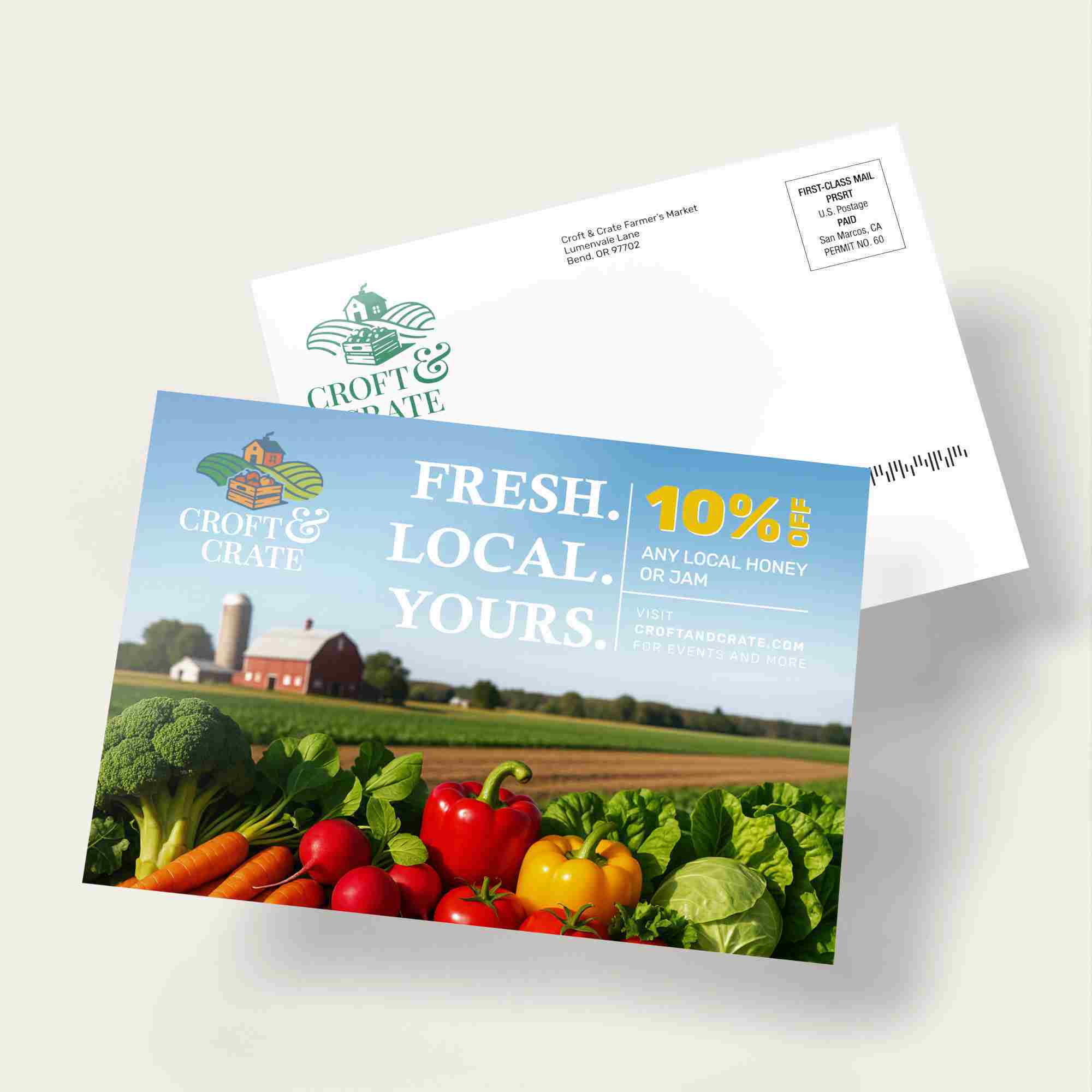
14 pt. Cardstock — Best for High-Volume Mailing
This is the lightest option most printers offer for postcards. It’s sturdy enough for mail, but it keeps costs down when you’re printing in bulk, or don’t really need a premium feel for your postcards.
Why It Works
- Cost-effective for large quantities
- Flexible enough for a glossy front and writeable back
- Lightweight, which means lower costs
Best for
- Running a big promo or sale
- EDDM and direct mail campaigns
- Freebies at events or trade shows
- Smaller budgets
- Designs that you want to shine, but still need space to write on the back
16 pt. Cardstock — Reliable, Premium Feel
If you want to impress clients without going over your budget, this thickness hits the sweet spot for most brands. It’s sturdier than the 14 pt., feels substantial without being too heavy, and holds up better to mailing and frequent handling.
Why It Works
- Premium feel without premium pricing
- Offers better durability
- Versatile with gloss and matte finishes
Best for
- Promoting a professional service or appointment-based business
- Real estate listings
- Product launches and professional promos
17 pt. Uncoated — Ideal for Writing and Minimalist Designs
If you want a natural, uncoated texture, this is the thickest standard option. It absorbs ink well, is easy to write on, and gives your card a soft, understated look.
Why It Works
- Works with pen and pencil beautifully
- Soft, natural texture
- Premium thickness that stands out
Best For
- Handwritten notes or appointment times
- Muted, minimalist styles
- Postcards going for ashine-free finish
- Personalized branding that requires writing
Coatings: Gloss, Matte, and Uncoated
Your finish determines how your colors will look and how the card performs day to day. It also affects whether ink smudges or pen marks stick.
High Gloss UV — Bright and Hard to Ignore
High gloss UV gives you intense shine and strong protection. Every color looks bold, and the surface is scratch-resistant.
Best For
- Photo-heavy designs
- Retail promotions or anything meant to grab attention fast
- Product postcards
- Mailers or handouts that need extra durability
Regular Gloss — Softer Shine, Still Vibrant
Regular gloss boosts color without the heavy shine of UV. It’s more affordable than UV gloss, good for everyday marketing, and is a great middle ground for product cards, events, or businesses.
Best For
- Promos where you want brighter colors
- Restaurant menus or coupons
- A lower-cost alternative to UV
- Designs that benefit from a clean, polished look
- Small businesses that send mail regularly
Matte Coating — Smooth, Modern, and High-End
Matte coatings reduce glare and give you a soft, non-reflective finish. Colors stay vibrant, text is easy to read, and the card feels more refined.
Best For
- Minimalist and high-end branding
- Services targeting a professional or upscale audience
- Designs where readability matters
Uncoated — Natural and Fully Writable
Uncoated stock has the most writable surface. It gives you a true paper feel, and it’s great for notes, quick writing, and subtle designs.
Best For
- Appointment cards
- Personalized or handwritten messages
- Soft, light-colored layouts
Lamination Options for Extra Durability
Your booth space may be limited and renting a larger one can be costly. To save on additional costs, use materials that maximize your visibility without taking up too much space.
Lamination adds a protective film that changes the feel and extends the lifespan of your postcards. It’s considered an upgrade, as it’s often used when you want something more substantial.
Gloss Lamination
Gloss lamination adds shine, thickness, and strong protection for your postcards, and creates a dense and polished feel to them.
Use this for:
- High-profile promotions
- Pieces that will be handled repeatedly
Matte or Silk Lamination
If you want your postcards to feel upscale, choose matte or silk lamination. This type of lamination features a velvety texture that’s smooth in hand, making it perfect for premium and exclusive promotions.
Use this for:
- Luxury or premium marketing
- Invitations, VIP passes, or high-end retail promotions
Enjoying this article?
Get more design ideas, print inspo, and expert tips straight to your inbox.
How to Choose Based on Your Goal
If you’re trying to pick a stock quickly, remember to match it to your goals to maintain branding consistency.
Budget-focused campaigns – Choose the 14 pt. Gloss (Front Only). This option is the most affordable while keeping your design vibrant. Make sure to keep the back lighter on ink so it’s easy to write on.
High-end or professional branding – Pick the 16 pt. Matte or 16 pt. Gloss for high-end or professional branding. Skip heavy gloss if your layout relies on small text.
Handwritten notes or appointments – For postcards where writability is a must, choose the 17 pt. Uncoated or 16 pt. Uncoated stock. Darker ink prints are best on these materials since they absorb more ink.
Mailers that can handle rough handling – Pick High Gloss UV or 16 pt. Gloss. These coatings help protect against scuffs during sorting, and the stock is thick and durable enough for rough handling.
Quick Recommendations
Need a quick and easy guide? Here’s what UPrinting recommends based on your budget, design style, and mailing needs:
- Best budget option: 14 pt. Gloss Front Only
- Best premium feel: 16 pt. Matte
- Best for writing: 17 pt. Uncoated
- Best for bold graphics: High Gloss UV
- Best durability: Laminated finishes
Wrapping It Up
When choosing postcard stock, consider how you want your audience to feel once they see and hold your message. Whether you’re mailing in bulk or sending a more personal message, the right thickness and finish can instantly make an impact even before your customers read a word.
frequently asked questions
A.
If you want something that feels solid and affordable, 16 pt. cardstock is the safest choice. It withstands mail handling and feels more premium than 14 pt.
A.
Not necessarily. It’s lighter and more affordable, making it ideal for large campaigns or bulk orders. It won’t feel as premium as 16 pt., but it’s still durable enough for most mailers when paired with a gloss coating.
A.
High Gloss UV gives you the most shine and vibrant colors. It’s suitable for photo-heavy designs or bold graphics.
A.
You can write on the back of a gloss-front-only postcard. However, writing on full gloss can be tricky. If you need to write often, choose uncoated or matte finishes.
A.
Uncoated stocks like 17 pt. uncoated are best. They absorb ink well and don’t smudge at all.
A.
Choose lamination for extra durability or a higher-end feel. Gloss lamination adds shine and thickness, while matte/silk lamination creates a soft, velvety texture.
A.
Matte coatings and matte or silk laminations give postcards a clean, sophisticated look that feels more premium compared to high gloss.
A.
It can. Extremely thick or laminated postcards may cost more, but 14 pt. and 16 pt. cardstocks usually mail at standard postcard or letter rates, depending on size.
A.
High Gloss UV or 16 pt. Gloss has better resistance to scuffing during the sorting process and while in transit.