Durable signage that stands up to sun, wind, and rain—while keeping costs low
Farmers' markets can be busy and unpredictable, with lots of people and changing weather. To stand out, you need signage that catches the eye, gives clear information, and helps customers decide quickly. The main challenge is finding signs that look professional, hold up outdoors, and are simple to update each week.
Fortunately for you, UPrinting shares five practical, weather-proof signage ideas, along with tips on sizes, materials, and layouts. These suggestions are designed to help your stall get noticed and boost sales, regardless of the weather.
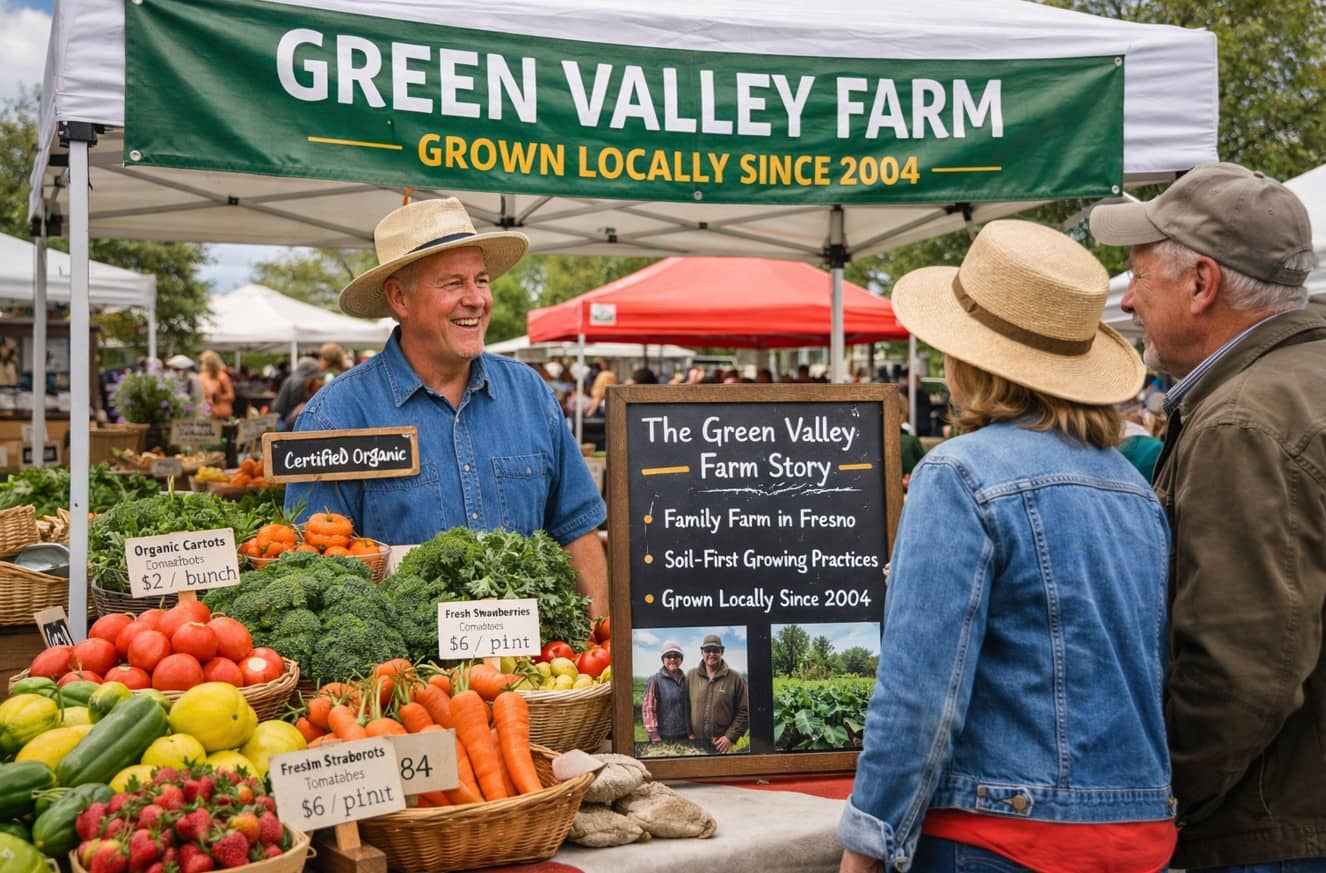
1. Use a Banner That Makes Your Stall Easy to Find
If customers can’t see your farm name until they’re right in front of your table, you’re missing out on visibility. Most shoppers choose which stalls to visit from 30 - 40’ away.
What works best in outdoor markets
Recommended banner sizes:
- A 2’ x 6’ sign works well for a standard 10’ x 10’ tent.
- For corner stalls or open-air markets, use a 3’ x 8’ sign.
Text size:
- Farm name lettering should be at least 4 - 6” tall, so it remains readable at a distance.
Banner material options:
- Solid vinyl works well in sheltered markets.
- Mesh banners are better for windy or open areas since air can pass through them.
Mounting height
- Hang your banner about 6 - 7’ above the ground so people can see it over the crowd.
What to include:
- Add your farm name and a location cue, like “Grown in California.”
- Include one trust signal, such as “certified organic” or “spray-free.”
- Avoid listing products or adding long explanations.
A clear, simple banner helps returning shoppers find you quickly and gives new customers context before they reach your table
2. Replace Paper Price Lists With Reusable Price Boards
Clear pricing has a big effect on whether people buy. If customers can't spot prices in three to five seconds, many will pause, ask questions, or leave.
What’s the ideal board setup?
Board sizes:
- A3-size signs are good for showing prices of single products.
- A1-size boards work well for displaying a full price list.
Thickness:
- Choose rigid boards that are 3 to 5 millimeters thick. They won't bend easily in heat or humidity.

Finish:
- Matte or chalkboard-style surfaces help prevent glare when the sun is bright.
A layout that speeds decisions
Use a simple layout. Put the product name at the top, the variety underneath, and always put the price in the same spot.
For example:
Roma Tomatoes
Organic
$3.50 per bundle.
Keep your layout the same on every sign so customers can find information quickly and easily.
3. Use Produce Tags That Do Not Smear, Tear, or Blow Away
Print tags that can handle frequent use and stand up to moisture and wind.

Some tips for durable tags
Typical sizes:
- Use 3” x 5” tags for baskets and bins.
- Pick 2” x 3” tags for smaller items or when space is tight.
Materials:
- Synthetic stock lasts longer when exposed to water and frequent handling.
- Laminated tags also resist water and give extra protection.
Attachments:
- Clips work better than string or tape and help keep tags in place.
What to include on each tag:
- Include the basics: product name, variety, and price.
- Add a quick tip, like 'sweet,' 'good for grilling,' or 'limited harvest.'
- Keep information brief so the price stands out.
Optional additions, such as a small QR code, can be useful, but they should never compete with pricing visibility.
4. Tell Your Farm Story in 10 Seconds
Market shoppers care about food origins, but moving customers during busy hours means brief explanations work best.
The ideal signs to tell your story
- Size: A2 signs are big enough to read without slowing people down.
- Material: Use sturdy boards with a matte finish to reduce glare and prevent bending.
- Reading time: Make sure your whole message can be read in less than 10 seconds.

Use the three-line story framework.
Write a short, catchy story for your brand by answering these questions:
- Step 1: Who are you? Give a short, clear introduction to your farm or brand.
- Step 2: What makes you unique? Share what you do differently or what values make your brand special.
- Step 3: What can customers expect? Tell people what they’ll get or experience when they buy from you.
Example:
Family-run Farm in Oregon
Spray-free and Soil-first Growing.
Weekly Harvests and Seasonal Produce.
Adding a couple of real farm photos helps build trust right away. You can list certifications in a low-key way, and one QR code lets interested customers find out more later.
5. Build a Weather-Ready Signage System
When the weather keeps changing or starts to get worse, it helps to have a setup that you can adjust quickly.

A basic signage kit
- Canopy weights of at least 10-15kg per leg
- Adjustable hooks, ties, or bungee cords
- One-fold, flat A-frame sign
- Clear protective sleeves for temporary notices
- A dry cloth and spare markers
The 90-second adjustment rule
If rain or wind begins, follow the 90-second rule:
- Lower your promotional banner.
- Move the price boards closer to the table.
- Quickly secure or sleeve smaller signs.
- Try to finish these steps in less than two minutes.
When your stall stays organized in bad weather, customers see you as professional and reliable, which can help build trust and increase sales.
Frequently Asked Questions About Weather-Proof Branding Your Market Stall
A.
Price numbers should be around 1 - 1.5” tall for table-level signs.
A.
Laminated signs hold up better in humid or windy weather. Plastic sleeves are best for short-term notices.
A.
If customers need to step back or hunt for prices, try to simplify things. Usually, one main price board and clear product tags are enough.
A.
Consistency is more important than perfect branding. Use the same layouts, colors, and structure to help people recognize your signs.
A.
Use strong contrast so your signs are easy to read in bright sunlight. Try grouping signs vertically instead of spreading them out across the table.
A.
Pick one or two colors and use them throughout your signs. Try to stick to just two font styles to keep things tidy.
A.
Store boards flat, and roll up banners instead of folding them.
A.
Check your signs every month and remove any old prices or claims.
Adapt Weather-Proof Designs to Your Farmers’ Market Tags and Signage
Weather-proof branding at the market means using sturdy materials, simple layouts, and smart placement so your stall stands out and looks reliable. When shoppers can easily find your farm, see what you offer, and trust your business, they’re more likely to make a purchase. Good signs also mean less time spent on repairs, giving you more time to talk with customers and boost sales. With the right setup, your branding will look good and work well in any weather, helping your stall stay professional and welcoming every market day.