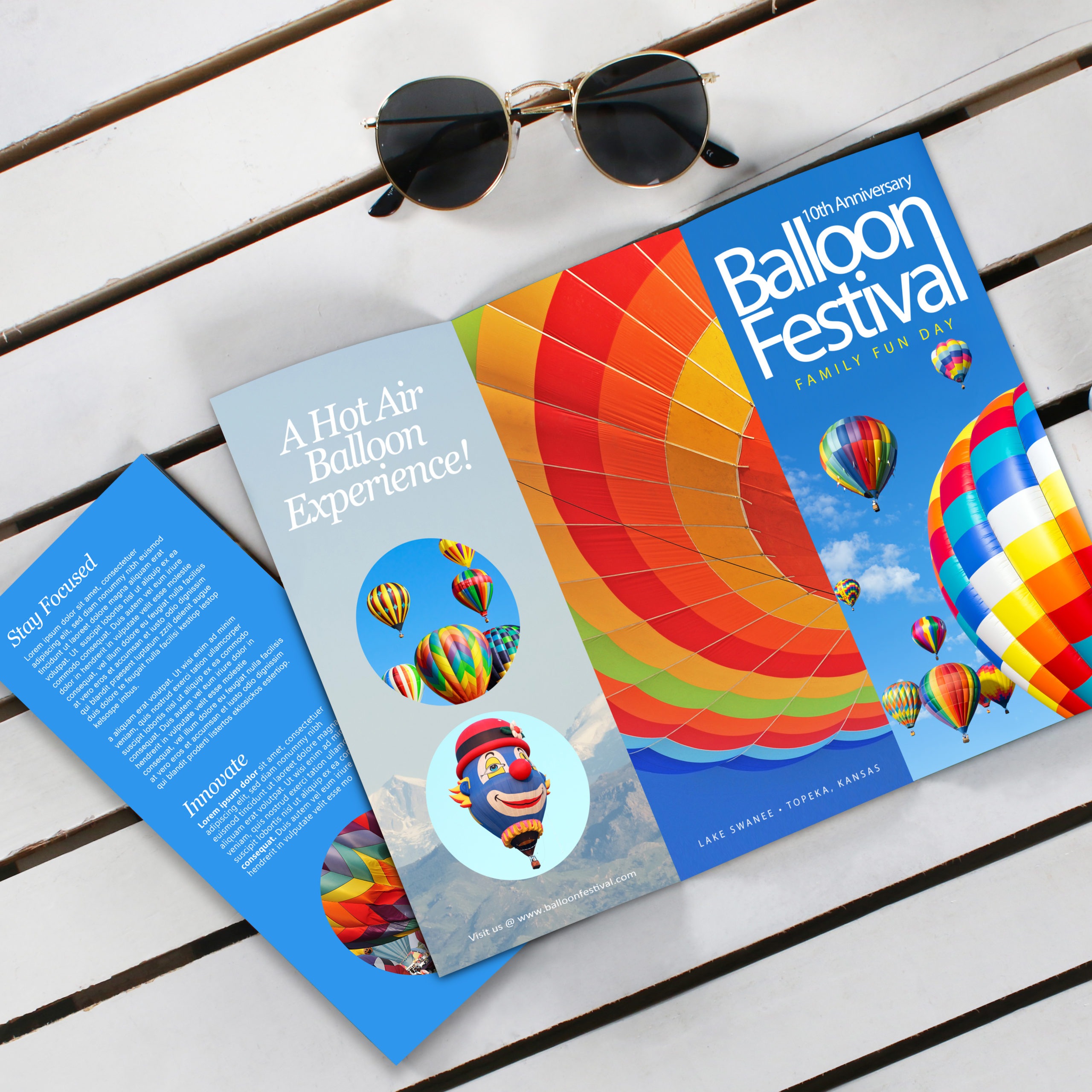
Travel brochure design with vibrant tourism and adventure imagery.
Riffling through travel brochures and imagining delightful destinations will always have its allure even in this day and age of digital. These printed canvases, brimming with vibrant images and evocative descriptions, serve not just as informational guides but as gateways to far-flung adventures and undiscovered gems. Crafting the perfect travel brochure is both an art and a science—melding design aesthetics with practical details to ignite the traveler’s imagination. In this guide, we fly through the essential elements of travel brochures and the best folds to showcase those stunning locations.
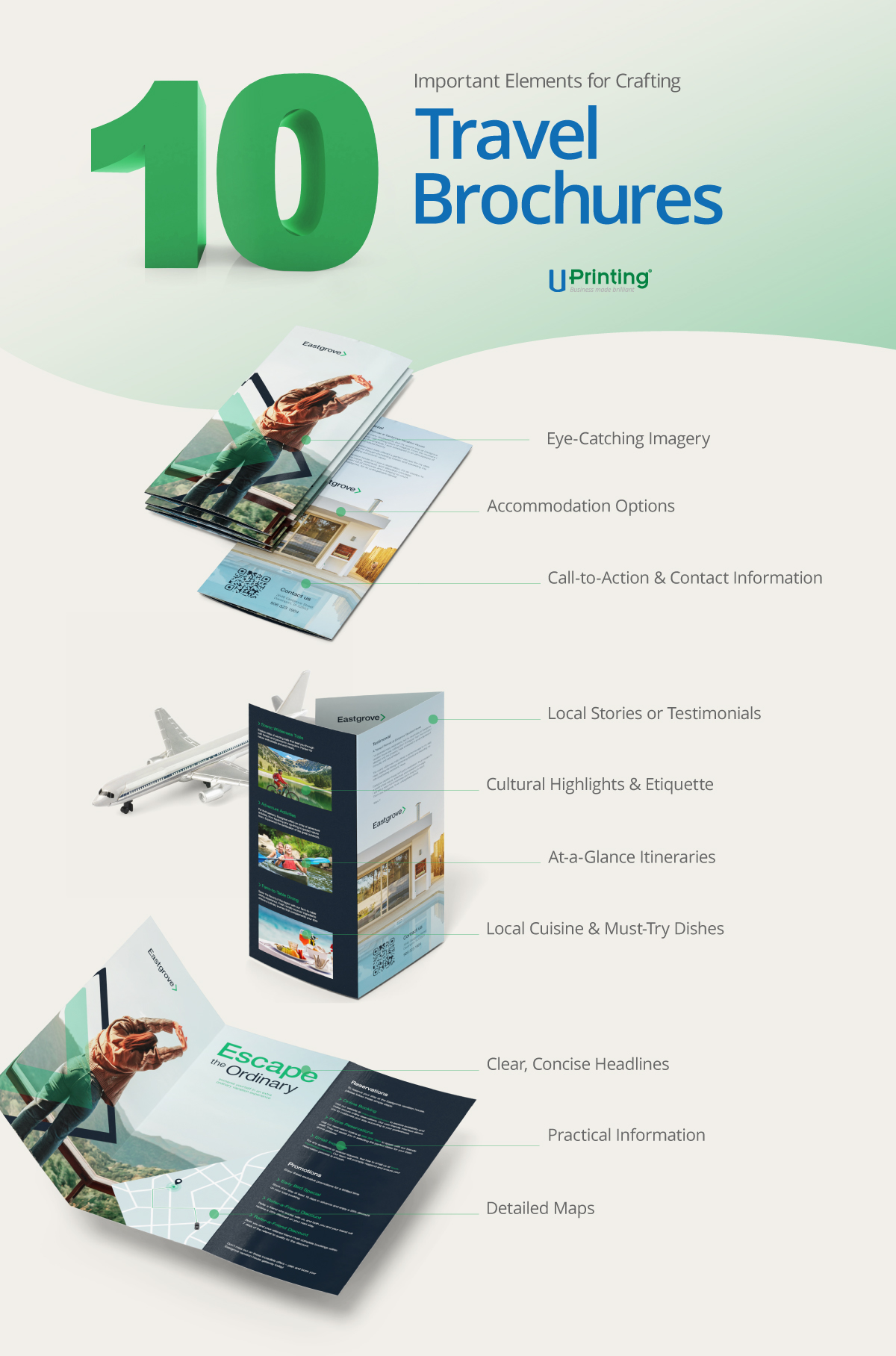
Travel Brochures Elements Infographic
People are visually driven. High-quality, evocative images of destinations can spark the wanderlust in potential travelers. It gives them a glimpse of what they can expect, making them more likely to want to experience it in person.
Travelers often skim through brochures. Clear headlines allow them to quickly find information relevant to their interests, whether it’s about local cuisine, historical sites, or adventure activities.
Maps provide travelers with spatial awareness of a destination. They can see proximity between attractions, hotels, and transport hubs, aiding in planning and navigating their trip.
Giving travelers insight into the local culture and customs ensures that they interact respectfully and prevent any faux pas. It also enriches their travel experience by offering deeper engagement.
Suggested itineraries can help travelers maximize their time, especially if they’re on a tight schedule. It gives them a starting point for planning their own journey.
Food is often a major highlight of travel. Introducing travelers to unique local dishes can be a strong draw, enticing them to visit and taste for themselves.
Travelers need to know where they can stay, whether they’re looking for luxury hotels, budget hostels, or unique local accommodations. Offering a range can cater to different budgets and preferences.
This includes details on local transportation, currency, language spoken, visa requirements, and safety tips. Such information is crucial to help travelers prepare adequately and navigate smoothly.
Personal stories or testimonials provide an authentic touch. Hearing from locals or past travelers can give insights that aren’t available in generic travel guides and can add depth and trustworthiness to your brochure.
After being enticed by your brochure, travelers should know the next steps, whether that’s booking a tour, contacting a local guide, or visiting a website for more information. Providing clear CTAs and contact details facilitates this process.
The charm of a well-designed brochure stands as a testament to the power of print. While digital media offers immediacy, a travel brochure offers depth, tangibility, and a keepsake that evokes memories. By harnessing the essential elements we’ve delved into, designers and travel aficionados can craft brochures that are more than just informational leaflets; they become invitations to experience, explore, and embrace the wonders of travel.
