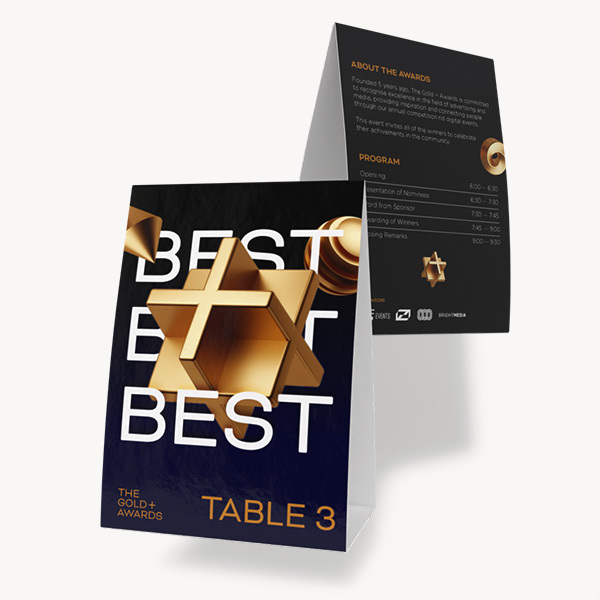
Table tents are a simple but effective way to promote menu items, highlight specials, or share information directly at the table. Because they sit within a guest’s immediate view, they can quickly draw attention to promotions without requiring additional signage around the room.
The most widely used table tent sizes are 4.25" × 6", 4" × 8", and 7" × 5". These formats are popular because they offer enough space for a clear message while still fitting comfortably on restaurant and event tables.
Restaurants often use table tents to promote drink specials, featured dishes, loyalty programs, or digital menus through QR codes. Event organizers may use them to display schedules, sponsor promotions, or quick announcements for guests.
Since table space is limited, selecting the right size helps ensure the message remains visible without cluttering the table. Some formats are ideal for quick promotions, while others allow more room for imagery or multiple pieces of information.
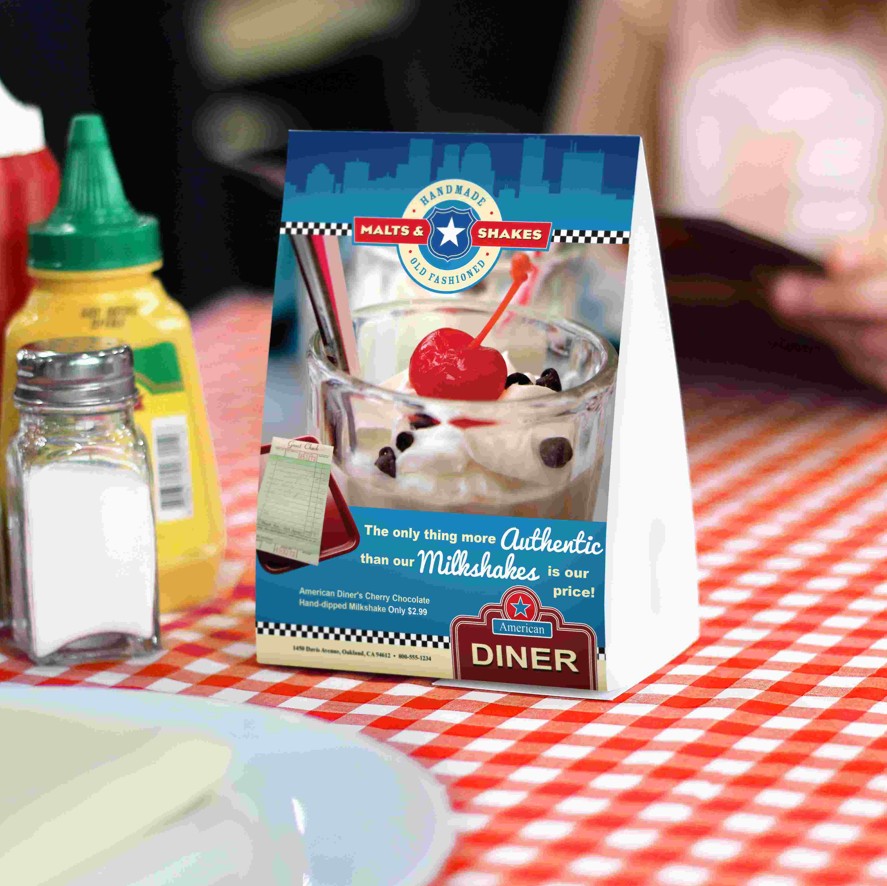
A tabletop tent sign advertising milkshakes
Popular Table Tent Sizes
he following sizes are commonly used because they balance visibility, design flexibility, and practical table space.
| Table Tent Size | Orientation | Common Uses |
|---|---|---|
| 4.25" × 6" | Vertical | QR codes, menu highlights, simple promotions |
| 4" × 8" | Vertical | Drink specials, featured menu items |
| 7" × 5" | Horizontal | Event announcements, wider promotions |
Each format supports a slightly different design approach, so the best choice often depends on how much information you want to include.
4.25" × 6" Table Tents for Everyday Promotions
The 4.25" × 6" table tent is one of the most commonly usedmost used formats because it delivers a clear message without taking up much table space.
Restaurants frequently use this size for QR codes linking to digital menus, ordering systems, or online promotions. It also works well for highlighting limited-time offers, loyalty programs, or a featured menu item.
Because the design area is compact, this size performs best when the message stays focused. A strong headline, a short description, and a clear call to action are usually enough to guide customers toward the promotion.
4" × 8" Table Tents for Drink Specials and Featured Items
The 4" × 8" format provides additional vertical space, making it easier to organize promotional content visually.
Restaurants often choose this size when showcasing drink specials, combo meals, or seasonal offerings. The taller layout works well for designs that include a product image along with pricing or promotional details.
For example, a restaurant might place a photo of a featured cocktail or dessert near the top of the card, followed by the name of the item and its price. This structure helps customers understand the promotion at a glance without needing to read large blocks of text.
7" × 5" Table Tents for Wider Promotions and Announcements
The 7" × 5" table tent uses a horizontal layout that provides more width for design elements.
This format is useful when the promotion includes multiple items or visual components. Restaurants may display two menu items side by side or combine an image with a short promotional message.
It’s also a popular choice for events and conferences, where the table tent may include a logo, event announcement, sponsor message, or QR code.
Because the layout spreads horizontally, the message can often be easier to read from across the table.
How to Choose the Right Table Tent Size
Selecting the right size typically depends on table space, message length, and design elements.
Consider the available table space
Restaurant tables already hold menus, utensils, glasses, and plates, so the table tent should fit comfortably without getting in the way.
For example, if a dining table is approximately 24 inches wide, placing a 4.25" × 6" table tent in the center occupies only a small portion of the space. This leaves plenty of room for dishes and drinks while still keeping the promotion visible.
Because of its compact footprint, this size is often a dependable choice for restaurants that want to promote an item without overcrowding the table.
Match the size to your message
Short, simple promotions work well on smaller table tents. Designs that include images, pricing, or multiple offers may benefit from a slightly larger format.
For instance, a QR code promotion fits neatly on a 4.25" × 6" card, while a 4" × 8" or 7" × 5" format offers more flexibility when combining images, product descriptions, and pricing.
Keep the design easy to read
Customers typically view table tents from one to three feet away, so text should be large enough to read without picking up the card.
A typical layout for a 4.25" × 6" table tent might include:
- 36–48 pt font for the headline (Example: “Try Our New Summer Drink!”)
- 18–24 pt font for supporting text or short descriptions
- A clearly visible QR code or price positioned near the center or bottom
Using a simple layout also helps improve readability. One image, one headline, and a short description often perform better than trying to fit multiple promotions onto a small card.
frequently asked questions
A.
A widely used size is 4.25" × 6", which works well for QR codes, menu highlights, and simple promotional messages.
A.
Yes. Most table tents are printed on both sides so the promotion is visible from either direction on the table.
A.
Table tents are frequently used in restaurants, cafés, bars, hotels, and event venues to promote menu items, highlight specials, or share announcements.
A.
Vertical layouts are commonly used for QR codes and short promotions, while horizontal layouts work well when the design includes multiple images or wider visual elements.
Conclusion
Table tents offer a convenient way to promote menu items, highlight limited-time offers, or share announcements directly at the table. Choosing the right size helps ensure the promotion stands out without interfering with the dining experience.