Sustainable packaging is no longer just a thoughtful extra; it's becoming a core part of how consumers evaluate the brands they support. In a recent study we conducted with 1,000 Americans, we found that packaging plays a far greater role in shaping perception and trust than ever before.
Today, packaging isn’t just functional, it's emotional and intentional. From the materials chosen to the clarity of labeling and design, consumers are looking for signals that a brand shares their values. For companies, this shift represents not just a challenge but a powerful opportunity to connect through purpose-driven design.
- 68% of Americans have changed how they shop to reduce plastic waste
- 50% of consumers choose the more sustainable-looking product when prices are equal
- Minimalist, right-sized packaging is now preferred over bulky, glossy, or overdesigned formats
- 77% say they trust brands more when packaging appears eco-friendly
- 53% of Gen Z have stopped buying from brands due to excessive plastic packaging
- 21% of Gen Z always check for sustainability labels when evaluating packaging
- 49% of parents associate eco-packaged products with higher quality
- 32% of Americans are willing to pay 6–10% more for sustainably packaged products
Americans Are Shopping With Sustainability in Mind
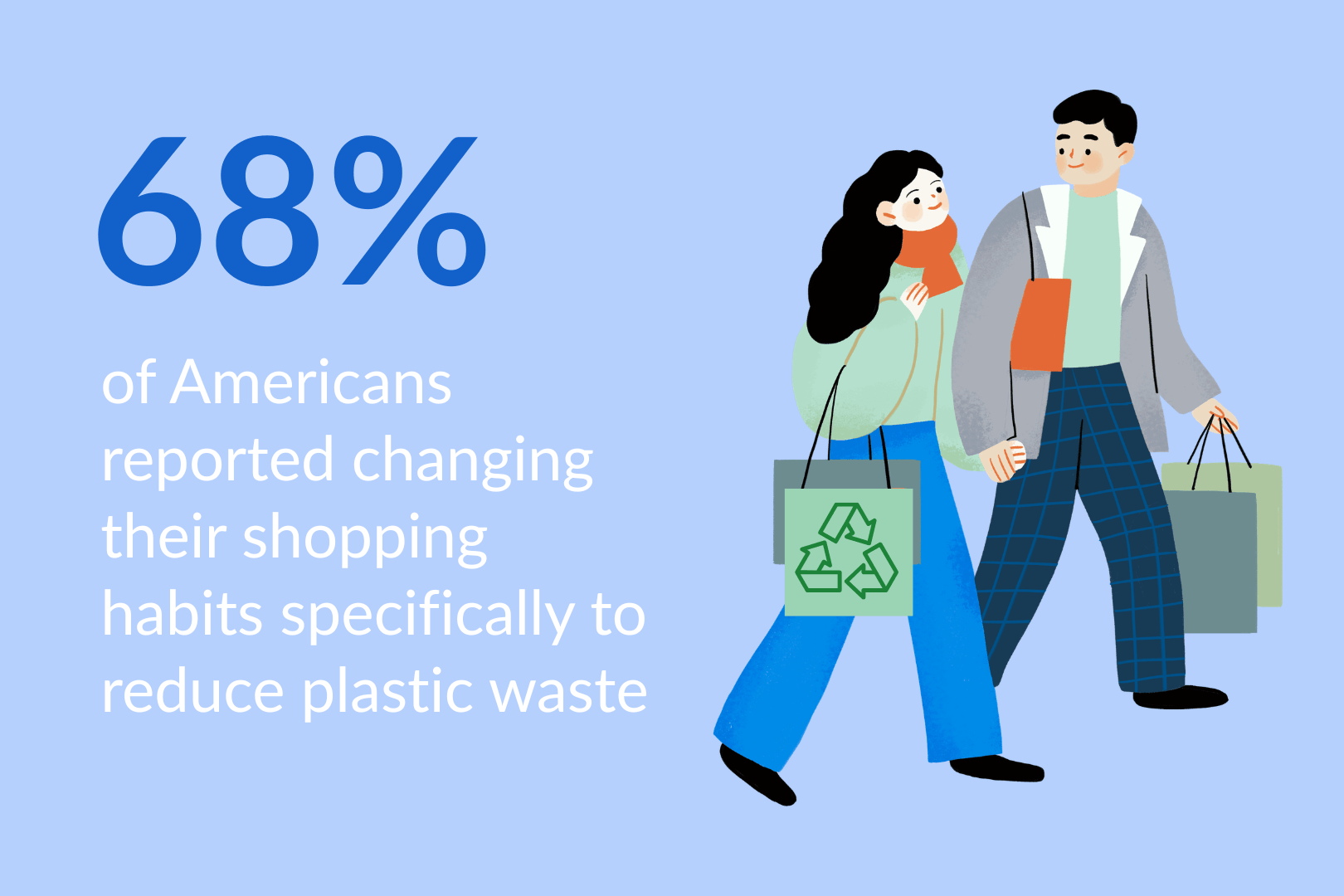
In our recent survey, 68% of Americans reported changing their shopping habits specifically to reduce plastic waste, a strong signal that sustainability is now influencing daily purchase decisions at scale. But it’s not just about values, it’s about what catches the eye and builds trust in the moment.
When price is no longer a deciding factor, 50% of consumers choose the more sustainable product, according to our findings. That means visual cues, not just messaging, are shaping outcomes on the shelf and in the cart.
“Sustainability is now a design signal,” explains a Uprinting brand strategist. “Minimalism, honest labeling, and the use of eco-conscious materials are speaking louder than traditional marketing ever could.”
Packaging Is Becoming a Visual Test of Brand Integrity

Lush uses material reduction to minimize environmental impact.
In today’s market, packaging does more than protect a product; it protects your reputation. According to our survey, 77% of Americans say they trust brands more when packaging appears eco-friendly, and that trust is no longer built solely on bold claims or sustainability buzzwords. It's built visually in seconds through the cues embedded in packaging design.
Consumers now treat packaging like a silent spokesperson for the brand. They’re scanning for signals that say, "This company walks the talk." And they’re quick to spot the difference between meaningful design and greenwashed marketing.
One of the clearest examples of sustainability functioning as a trust signal is Lush, a brand that has embedded material reduction directly into its packaging strategy. Beyond its well-known “naked” products, Lush has redesigned its remaining packaging to minimize environmental impact in visible, measurable ways.
According to the company, its pots and bottles are made from 100% post-consumer recycled plastic, saving roughly 65 tons of carbon dioxide and 90 tons of virgin plastic each year, equivalent to about 800 barrels of oil. Carrier bags are made from 100% recycled paper, saving an additional 100 tons of carbon dioxide annually, while gift packaging uses recycled paper and biodegradable Eco Pops made from potato starch. Rather than relying on sustainability claims alone, Lush allows its material choices to serve as proof, reinforcing trust through restraint and transparency.
Gen Z Is Setting the New Standard

This generation isn’t just aware of sustainability, they're acting on it. According to our survey, 53% of Gen Z shoppers have actively stopped buying from brands that use excessive plastic packaging, sending a clear message. If your packaging doesn't reflect your values, people will walk away.
And they’re not making these decisions lightly. 21% of Gen Z consumers say they always check for sustainability disclosures on packaging, looking for clear, honest indicators that a brand is truly committed to reducing its environmental footprint. But it's not just what’s written, it’s how it’s presented.
Gen Z evaluates packaging through a dual lens of design and values. They’re not just glancing at labels, they’re interpreting:
- Typography choices
- Layout clarity
- Iconography and certification presence
- Material feel and construction
- The overall cohesion between the product, the message, and the experience
They’re visually fluent and highly skeptical, able to spot greenwashing and performative branding at a glance. For them, design isn’t decoration, it's proof of intention.
Eco-Packaging Is the New Premium Standard
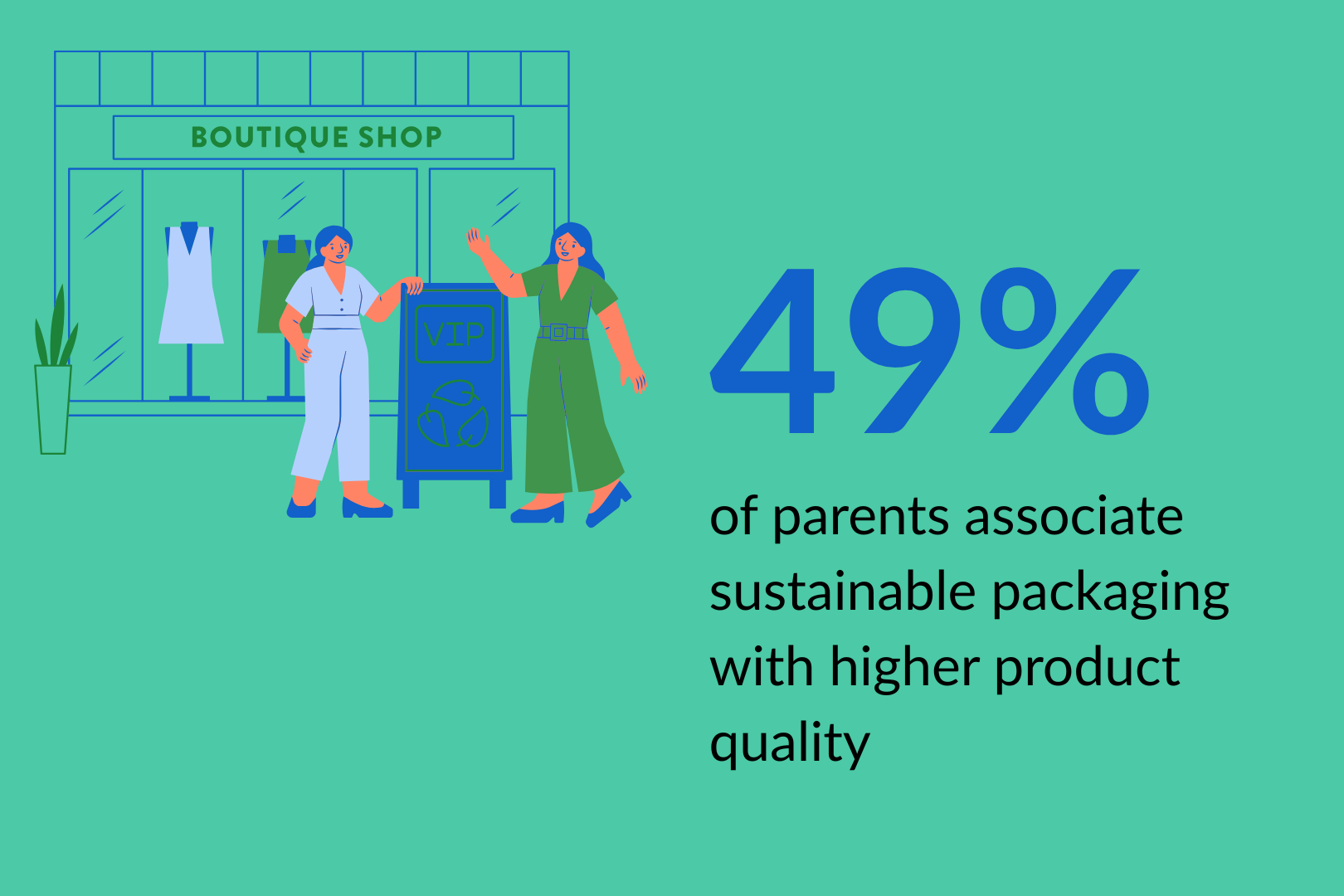
Based on data we gathered, 49% of parents associate sustainable packaging with higher product quality, linking eco-conscious materials and design directly to perceptions of craftsmanship, care, and brand integrity.
Our findings show a clear evolution in what today’s consumers view as “premium.” Instead of glossy finishes, heavy plastics, or elaborate embellishments, shoppers are responding to a new aesthetic built on simplicity, transparency, and environmental responsibility.
According to our analysis, sustainable packaging is no longer just a signal of ethical intent; it's become a visual cue for quality, reshaping how products are judged and valued from the moment they appear on the shelf.
Sustainable packaging principles are not limited to niche or premium brands. IKEA has demonstrated how right-sized, minimalist packaging can be implemented at a massive scale without sacrificing efficiency. The company began replacing plastic fitting bags with paper-based alternatives across its product lines, a shift it estimates will reduce plastic use by roughly 1,400 tons per year.
Consumers Will Pay More for Packaging That Feels Right

Continuing this trend, our research found that 32% of Americans are willing to pay 6–10% more for products that come in sustainably made, well-designed packaging. This reinforces the idea that eco-conscious design doesn’t just elevate perception, it adds tangible value.
From our study, it's clear that packaging is no longer viewed as a cost to minimize, but rather as a strategic investment that can boost both brand equity and margin. When design and sustainability align, consumers recognize and are willing to pay for the added thoughtfulness and quality.
For brands, this presents a powerful opportunity: sustainable packaging isn’t just the right thing to do environmentally; it's a smart commercial move.
The Responsibility Has Shifted, and It’s Now on Brands

According to our assessment, most Americans no longer view reducing packaging waste as the sole responsibility of individuals or policymakers. In fact, 57% of respondents in our recent survey believe that brands and manufacturers should take the lead in addressing the environmental impact of packaging.
This shift signals a growing expectation: companies are not just being asked to produce quality products, they're being held accountable for how those products are packaged, presented, and disposed of. From our analysis, it's clear that consumers now view sustainable packaging as a baseline standard, not a brand differentiator.
Smart, responsible packaging is no longer a “nice to have”; it's a prerequisite for remaining relevant in a values-driven marketplace.
Design Takeaways for Brands
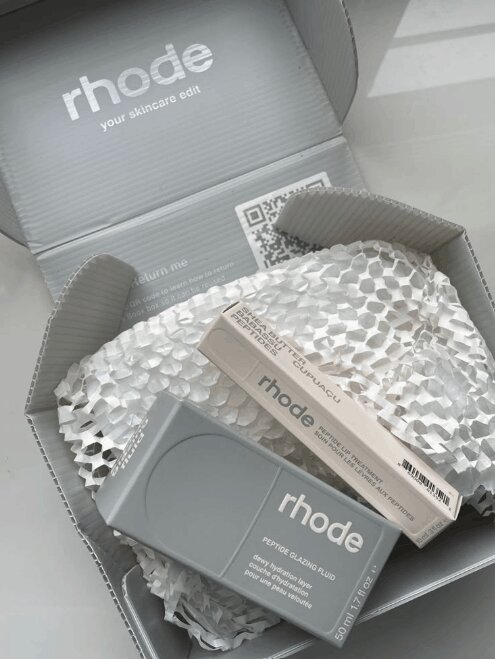
Rhode Skin uses minimalist packaging to emphasize product clarity.
If you’re designing product packaging in 2026 and beyond, your audience expects more than just a functional wrapper; they expect a clear expression of your brand’s values. Packaging and custom boxes have become key touchpoints for building trust, communicating responsibility, and visually signaling quality.
In the beauty industry, where packaging often leans toward excess, Rhode Skin has taken the opposite approach. The brand’s neutral color palette, uncluttered typography, and restrained use of materials reflect a minimalist packaging strategy that emphasizes product clarity and intentional design over ornamentation.
That restraint has coincided with rapid commercial success. In 2024, parent company e.l.f. Beauty projected Rhode would generate approximately $260 million in annual net sales, highlighting how minimalist, value-forward packaging can support scale rather than limit it. While packaging alone isn’t responsible for growth, Rhode’s design approach aligns closely with consumer preferences for simplicity, credibility, and reduced excess—signals that today’s shoppers increasingly associate with quality and trust.
Here’s what today’s consumers, especially Gen Z and eco-conscious shoppers, are looking for:
- Minimalist, clean aesthetics
- Packaging that fits the product (no extra bulk)
- Honest messaging and clearly visible sustainability labels
- Materials that feel responsible, not excessive
- A visual alignment between values and design
Looking Ahead: Packaging as a Promise
Our research paints a hopeful and exciting picture for the future of packaging, one where design and responsibility work hand in hand. The data is precise: consumers are no longer passive observers. They’re paying attention, making choices, and expecting more. From Gen Z's design-literate demands to parents’ growing trust in eco-conscious materials, people are signaling that sustainability isn’t just a preference, it’s a priority.
But this shift is more than a challenge for brands; it’s an opportunity. By embracing sustainable, well-designed packaging, companies can strengthen trust, command greater value, and take meaningful steps toward a less wasteful future. Packaging has become more than what a product comes in; it's what a brand stands for. And in that, there’s real potential for lasting impact.
Methodology
To understand how Americans approach reducing plastic waste and choosing sustainable alternatives, we surveyed 1,000 adults across the United States via Pollfish in October 2025. Participants answered a series of questions about their concern around plastic waste, whether they’ve changed purchasing habits to reduce plastic use, their willingness to switch to sustainable or plant-based alternatives, and the key factors influencing trust, motivation, willingness to pay more, and perceptions of quality and performance for sustainable products and packaging. Demographic groups analyzed responses to identify trends and disparities.
Fair Use
Users are welcome to utilize the insights and findings from this study for noncommercial purposes, such as academic research, educational presentations, and personal reference. When referencing or citing this article, please ensure proper attribution to maintain the integrity of the study. Direct linking to this article is permissible, and access to the source of information is encouraged.
For commercial use or publication purposes, including but not limited to media outlets, websites, and promotional materials, please contact the authors for permission and licensing details. We appreciate your respect for intellectual property rights and adherence to ethical citation practices. Thank you for your interest in our research.