Everyone has a dedicated package opener, whether it be scissors, a box cutter, or a knife. That reality has become so normalized it barely registers as frustration anymore. But when you step back and look at the scale of it, the picture is damning.
According to new survey data from Uprinting, 78.8% of American consumers have needed a tool to open packaging at least a few times a month, and 40.6% deal with it almost every week. Brands have been treating this as background noise. Consumers have been treating it as a deal-breaker.
The tension is real and it’s been building. In an era when unboxing videos get millions of views, when TikTok’s #packaging hashtag has ballooned into a cultural force, and when Gen Z is making purchasing decisions at least partly based on a brand’s environmental footprint, the container has become just as loaded as the product inside it. Consumers aren’t just annoyed by packaging, they’re drawing brand conclusions from it.
The survey tells a story that the industry has been too comfortable ignoring: packaging isn’t a supply chain variable. It’s a brand trust variable, and right now, most brands are losing.
Key Findings
- 78.8% of consumers have needed a tool to open packaging at least a few times a month; 40.6% fight it almost every week.
- 48.1% have stopped buying a product specifically because of its packaging, not the product itself. Among Millennials, that figure climbs to 55.7%.
- 70.6% say frustrating packaging makes them think less of a brand, 27.1% immediately conclude the brand is “cheap or low quality.”
- 51.9% have been physically injured by hard-to-open packaging.
- 52.7% of consumers are willing to pay more for easy-open, resealable packaging, 60.9% of Gen Z leads that willingness.
- 35% say fixing bad packaging would make them buy from a brand more often, the top consumer loyalty response by a clear margin.
- 30.4% of Gen Z small business owners said they’d spend a $500 marketing budget on upgrading packaging or labels, vs. just 5.1% of Boomers.
The Package Opener in Every Home Is a Product Design Failure at Scale
For years, hard-to-open packaging has been treated like a nuisance, annoying but not actionable. Brands have rationalized it as a safety requirement, a cost constraint, a structural necessity, while the consumer has been expected to adapt.
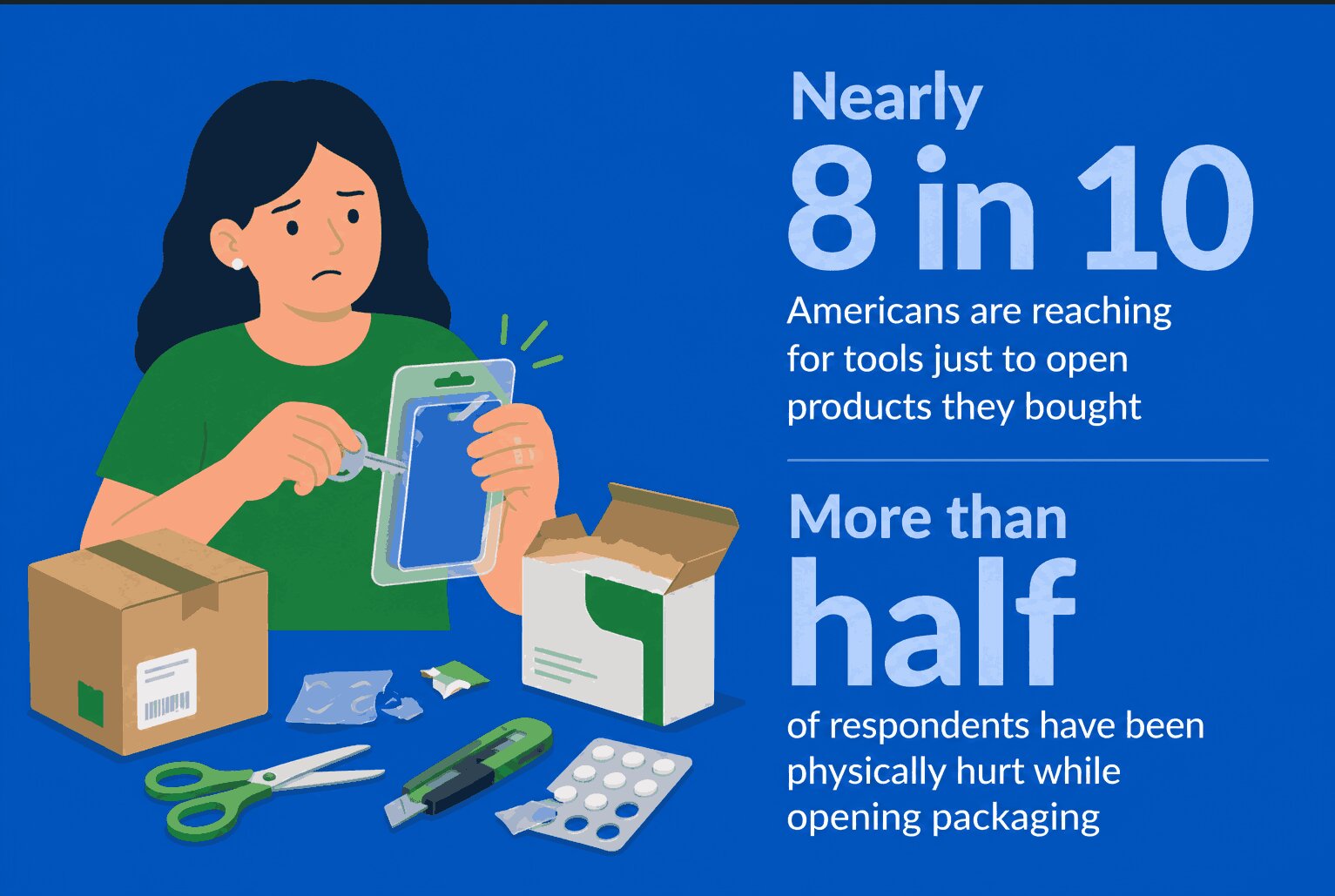
Nearly 8 in 10 Americans are reaching for tools to open products they bought
That arrangement is no longer holding. When nearly 8 in 10 Americans are reaching for tools just to access the products they bought, and when more than half have been physically hurt in the process, the problem has moved from “annoying” to “operational failure.”
Postgraduate-educated consumers, a high-income, high-influence demographic, lead weekly packaging battles at 47%. That’s a core consumer being handed a broken experience, repeatedly.
The physical injury data puts an exclamation point on it. 29.5% of respondents have cut themselves. Another 27% say they’ve come close. That dedicated package opener sitting in every home isn't a household quirk. It’s a design failure that repeats itself billions of times a year, and brands still aren’t talking about it as a business problem.
Consumers Are Breaking Up With Brands Over Boxes.
There’s a widespread assumption in product development that consumers will forgive packaging if the product itself is good enough. The survey data says that’s no longer a safe bet.
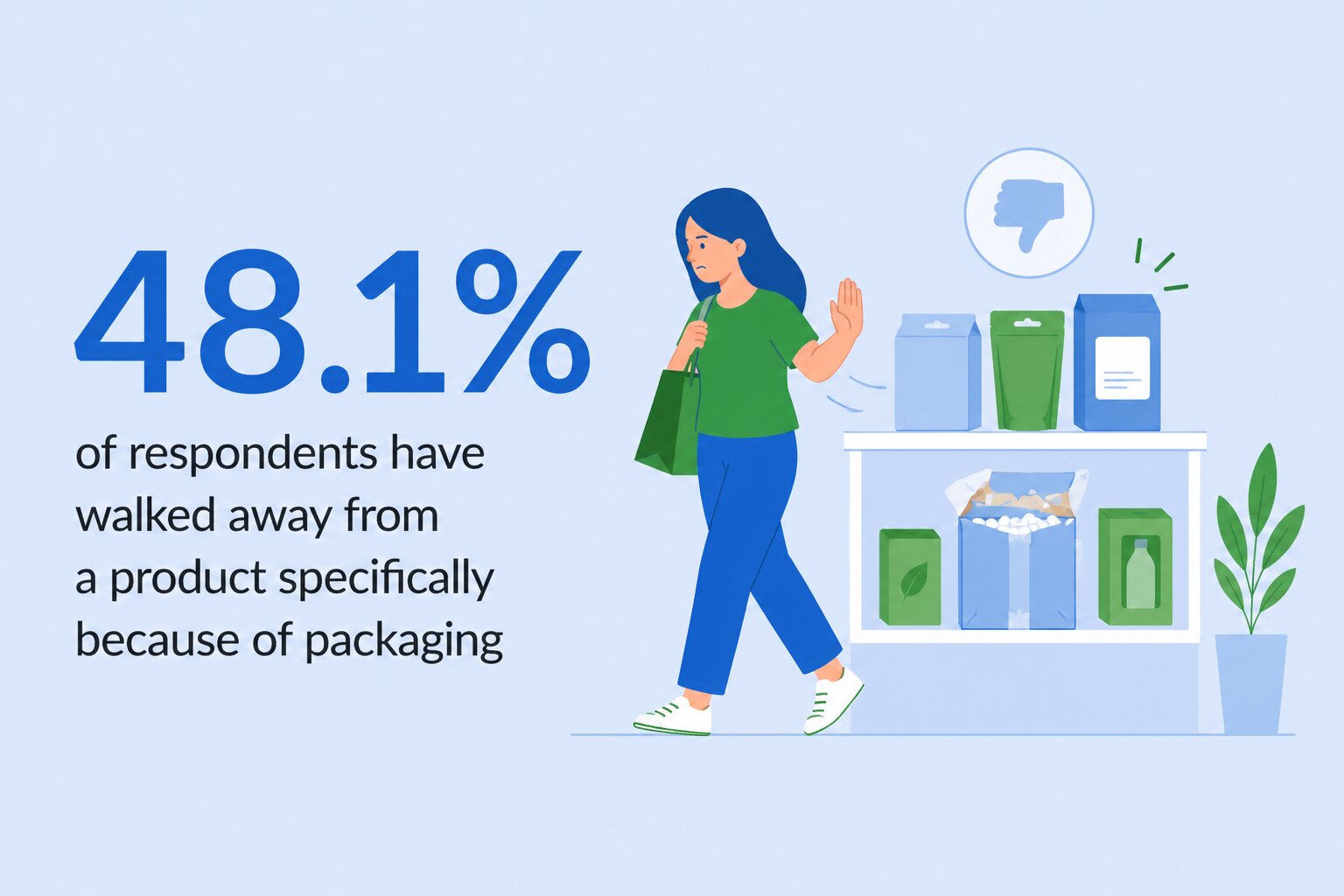
48.1% of respondents have walked away from a product specifically because of packaging
48.1% of respondents have walked away from a product specifically because of packaging, not flavor, not price, not quality. Among Millennials, that number hits 55.7%. Add the 30.7% who say they’ve seriously considered it, and you’re looking at nearly 79% of the consumer base either already acting on packaging frustration or primed to.
That’s an active attrition driver hiding in a line item most brands aren’t watching. And the most brand-conscious consumers, marketing and communications professionals, are the harshest judges of all. Among that group, 57.1% say packaging that leaks or makes a mess is most likely to end their relationship with a brand entirely, nearly double the overall rate of 31.7%. The people who understand brand equity best give the least grace for packaging failures.
The Container Is the First Impression, and Most Brands Are Failing It
When a package is hard to open, spills, or feels unnecessarily complex, consumers don’t just get frustrated, they update their opinion of the brand. Immediately.
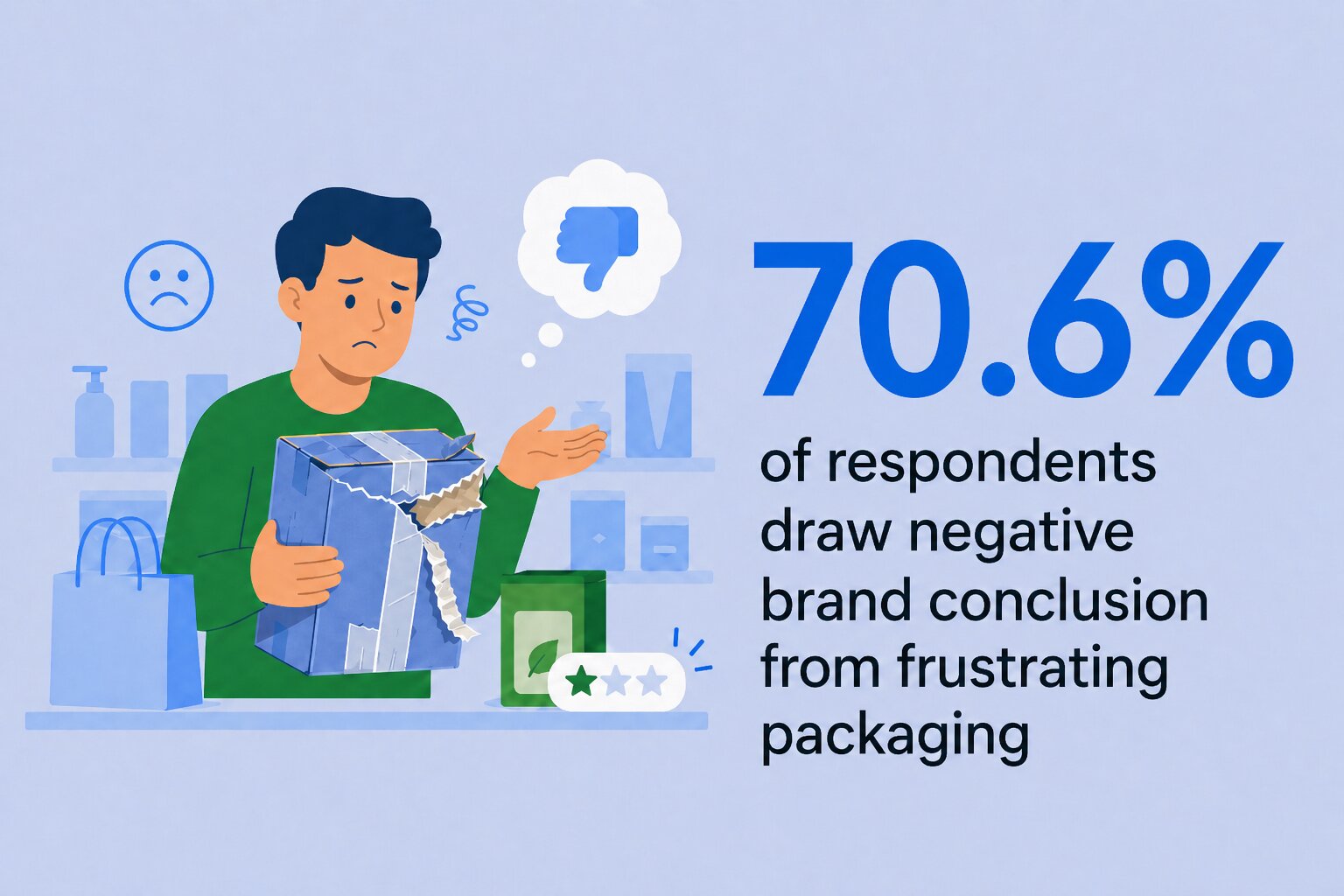
70.6% draw some negative brand conclusion from frustrating packaging
The survey found that 70.6% draw some negative brand conclusion from frustrating packaging, with the most common verdicts being “cheap or low quality” (27.1%), “cutting costs” (22.2%), or “doesn’t care about customers” (21.3%).
Among Gen Z, 33.7% immediately equate bad packaging with low quality. For a generation already primed to make brand judgments at scroll speed, the box a product comes in isn’t secondary to the product, it is the product’s first communication. That shift has real implications for how brands should be thinking about packaging budgets.
Walmart’s recent overhaul of its Great Value store brand packaging signals that even the largest retailers have read the room: visual clarity and ease of use have become competitive differentiators, not just aesthetic choices. The brands that nail the physical experience of getting into their product are building a memory before the product even delivers, and it starts with how that product is packaged. For small businesses, that can mean investing in packaging like mailer boxes that reflects the same brand intentionality that the bigger businesses are finally waking up to.
Chaos Packaging Is Hot Right Now, But Is It Backfiring?
One of the biggest packaging trends of the last few years has a fitting name: “chaos packaging.” The concept, coined by marketing consultant Michael Miraflor and covered in The Wall Street Journal, describes brands that put products in completely unexpected containers to create shelf disruption. Think sunscreen in a whipped cream can (Vacation SPF), tampons in an ice cream tub (Flo), or water in a beer-style can (Liquid Death). The idea is cognitive dissonance as a marketing strategy.
It’s clearly working for the brands that do it well. Liquid Death hit a $1.4 billion valuation. Vacation generated millions of weekly TikTok views without paid media. According to a 2024 Ipsos survey, 74% of U.S. consumers say packaging design directly influences their purchasing decisions, and chaos packaging weaponizes exactly that.
But here’s the tension the trend glosses over: consumers will notice a great package. They’ll also absolutely punish a dysfunctional one. The data shows that when packaging “causes confusion” or “makes a mess,” brand perception tanks fast, and 39% of Asian consumers (the fastest-growing consumer demographic in the country) say excessive or wasteful packaging is most likely to make them quit a brand entirely. The lesson isn’t that chaos packaging is wrong, it’s that the spectacle of the container can’t come at the cost of the experience of opening it.
Playing it safe with packaging is its own kind of risk, as bland boxes disappear on shelves and scroll feeds alike. But the Uprinting numbers make clear the flip side is equally true: packaging that chases spectacle at the expense of function gets noticed for the wrong reasons.
The Generational Packaging Wars: Boomers vs. Gen Z vs. Everyone in Between
The survey data makes clear that packaging frustrations are not one-size-fits-all. The most hated packaging in America depends almost entirely on which generation you ask.
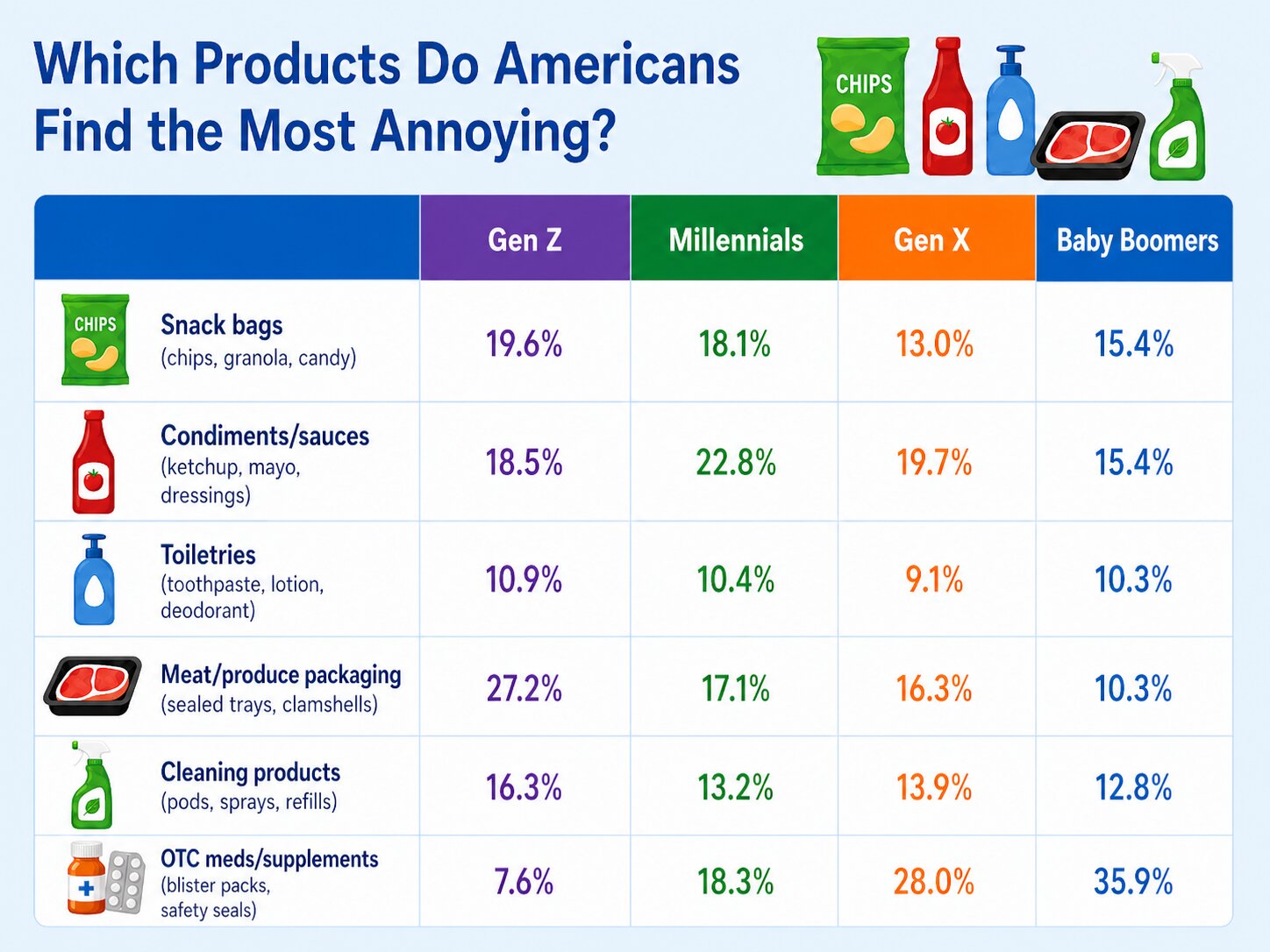
Product packaging that Americans find annoying
Among Baby Boomers, 35.9% name OTC medications and supplement blister packs as their top packaging grievance. Gen Z is most frustrated by meat and produce packaging (27.2%), which maps directly to sustainability concerns. For their part, Millennials detest condiment packaging (22.8%). Three generations, three completely different packaging pain points, and one industry largely designing for none of them deliberately. Gen X sides with Baby Boomers on medication and supplement packaging (28%).
Boomers are also simultaneously the generation most likely to stop buying a product type entirely after packaging frustration (20.5%) and the most likely to just power through anyway (33.3%). Brands have been reading Boomer patience as satisfaction. The survey data says otherwise. When Boomers finally hit their limit, they’re gone for good.
The generational differences don't stop at what frustrates consumers. They extend to what consumers do about it. Millennials are the most likely to switch brands after a bad packaging experience (31.3%), while Gen Z takes it online, leading all generations in leaving a bad review (17.4%). Gen X is most likely to vent to friends and family or on social media (10.8%), and Boomers are the most likely to return the product entirely (10.3%). Same frustration, four completely different responses, and most brands aren't designing their recovery strategy around any of them.
The Silent Quitters Brands Never Hear From
One of the study’s more quietly alarming findings is about who leaves and why brands never find out. Operations professionals, people who manage procurement and purchasing for businesses, are the most likely to stop buying a product type entirely after packaging frustration (17.8%), nearly double the rate of business owners (10.8%). They’re also among the least likely to leave a review or complain on social media.
They just leave. No complaint, no review, no chance for the brand to course-correct. The packaging failure never gets registered. The customer is simply gone.
Hispanic consumers present a complementary dynamic: they’re the most brand-loyal group in the study despite packaging frustrations (44% willing to pay a little more for easy-open, resealable packaging), but they’re also the most responsive to any competitor that fixes the problem first. Highly loyal under current conditions, yet highly switchable if given a better option.
The Fix Is Obvious, So Why Isn’t It Happening?
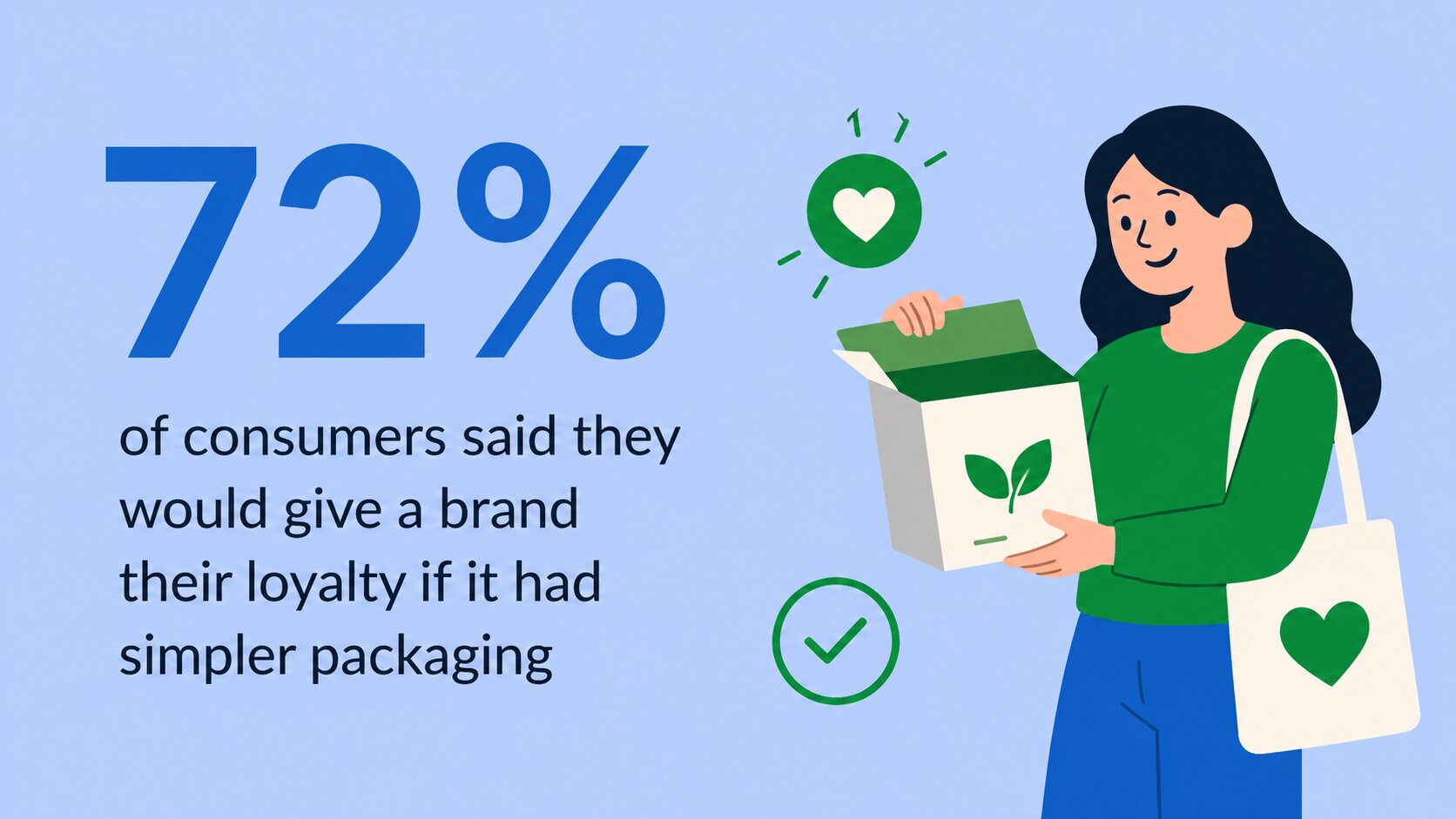
72% of consumers said they would give a brand their loyalty if it had simpler packaging
When consumers were asked how they would respond if a brand fixed their bad packaging, loyalty won by a clear margin. 35% say they’d buy more often. 22.3% would recommend the brand to others. 14.7% would switch from their usual brand. Combined, that’s 72% of consumers that would give a brand their loyalty if they had simpler packaging. The packaging fix doesn’t just solve a problem, it generates loyalty, word-of-mouth, and new customer acquisition simultaneously.
Among business owners and finance roles, “buy more often” as a response to better packaging tops 38–41%. The ROI calculation is clear. But the action gap remains wide because packaging is still being managed as a cost line rather than a revenue lever. That mindset can cause brands to overlook smaller upgrades, like clearer labels, that make packaging easier to understand, use, and trust.
The sustainability angle accelerates the argument. McKinsey’s packaging practice data shows that consumer interest in sustainable packaging is significant, though waning slightly from its peak, but among younger demographics with growing spending power, it remains a genuine purchase driver. The Uprinting data adds texture:
52.7% of consumers will pay more for easy-open, resealable packaging. When you pair ease-of-use with waste reduction, the premium market expands further, and the brands that get there first are building durable loyalty advantages, not just quarterly wins.
Summary
Packaging frustration has been one of the most universal experiences in American consumer life for years. What’s changed is that consumers have stopped shrugging it off. The data makes the causes clear:
- Packaging that leaks or makes a mess
- Excessive or wasteful materials
- Designs so difficult to open that more than half of Americans have been physically hurt trying
And the consequences are hard to ignore:
- Nearly half walk away from a brand
- 70.6% think less of a brand
- Brands never get feedback because consumers leave quietly and never say why
The Uprinting Packaging Pain Survey lays out a straightforward truth: when a brand makes its packaging genuinely easy to get into, use, and reseal its product, people buy more, tell their friends, and stay loyal. When it doesn’t, they leave quietly and never say why. The brands winning the next decade of consumer trust won’t just have better products, they’ll have better packaging.
Methodology
To understand how Americans approach packaging as a factor in brand trust and purchasing decisions, we surveyed 1,000 adults across the country who work in small business environments, including owners, founders, managers, and professionals across marketing, operations, finance, and administrative roles. Participants answered a series of questions about their packaging frustrations, purchasing behaviors, brand perceptions, and willingness to pay for improved packaging experiences. Responses were analyzed by demographic groups, including generation, gender, household income, education level, and ethnicity, to identify trends and disparities across the consumer landscape.
Fair Use Policy
Users are welcome to utilize the insights and findings from this study for noncommercial purposes, such as academic research, educational presentations, and personal reference. When referencing or citing this article, please ensure proper attribution to maintain the integrity of the research. Direct linking to this article is permissible, and access to the original source of information is encouraged.
For commercial use or publication purposes, including but not limited to media outlets, websites, and promotional materials, please contact the authors for permission and licensing details. We appreciate your respect for intellectual property rights and adherence to ethical citation practices. Thank you for your interest in our research.