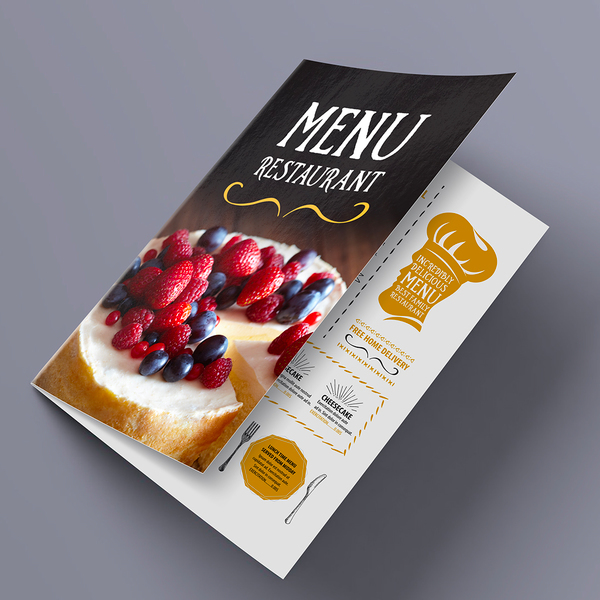
Restaurants rely on well-sized menus to present their offerings clearly while keeping the dining experience comfortable for guests.
The two most widely used menu sizes are 8.5" × 11" and 11" × 17", which provide enough space to organize menu sections while remaining easy for customers to handle at the table.
Smaller formats such as 5.5" × 8.5", 4.25" × 11", and 3.5" × 8.5" are often used for drink lists, limited menus, or promotional inserts. Some restaurants also distribute pocket menus, typically printed at 4" × 10" and folded down to 4" × 2.5", allowing customers to keep a copy for future orders.
Selecting the right menu size helps ensure that items are easy to scan, sections are well organized, and customers can comfortably browse while dining in or ordering takeout.
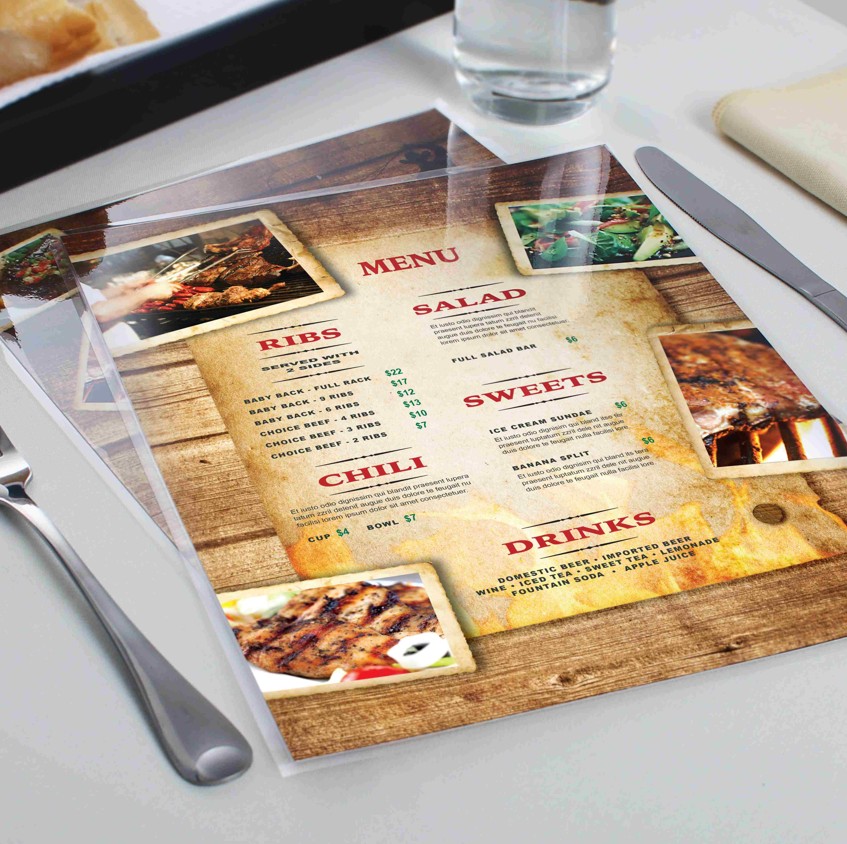
A laminated restaurant menu placed on a table
Popular Restaurant Menu Sizes
The following formats are among the most commonly used for full restaurant menus.
| Menu Size | Common Use | Why Restaurants Choose It |
|---|---|---|
| 8.5" × 11" | Dine-in menus, takeout menus | Balanced layout with enough space for multiple menu sections |
| 11" × 17" | Large dine-in menus | Extra room for extensive menus or multiple categories |
These sizes give restaurants flexibility to display their menu clearly while keeping the overall layout manageable and easy to read.
8.5" × 11" Menus for Everyday Dine-In and Takeout
The 8.5" × 11" menu is often the default choice for many restaurants because it offers a practical balance between space and usability.
This size works particularly well when a menu includes several categories but still needs to remain easy to browse. A typical layout may divide items into sections such as:
- Appetizers
- Main dishes
- Beverages
- Desserts
Limiting the number of items within each category helps prevent the page from feeling crowded. Restaurants offering around 15 to 25 menu items often find this format provides enough room for clear headings, pricing, and brief descriptions.
Many restaurants also print double-sided menus in this size. For example:
- One side for food items
- The other side for drinks or desserts
This layout keeps the menu organized while allowing customers to see the full selection without flipping through multiple pages.
Another benefit of this format is its versatility. 8.5" × 11" menus are easy to include with takeout orders, making them useful for encouraging repeat visits or future orders.
11" × 17" Menus for Larger Restaurant Selections
Restaurants with more extensive offerings often choose 11" × 17" menus because the larger format provides additional space to organize many items without overcrowding the page.
This size is especially helpful for menus that include multiple sections such as:
- Starters and appetizers
- Salads or lighter dishes
- Main courses
- Specialty items
- Beverages
- Desserts
One effective way to use this larger format is by folding it into panels. Folding divides the menu into manageable sections and guides customers through the menu more naturally.
For example, a folded menu might be arranged like this:
- Panel 1: appetizers and starters
- Panel 2: main dishes
- Panel 3: specialty items
- Panel 4: drinks and desserts
Breaking the menu into panels helps customers browse comfortably instead of facing a long list of items all at once.
Other Menu Size Options Restaurants Use
While larger formats are common for full menus, many restaurants also use smaller sizes for specific purposes.
| Menu Size | Typical Use |
|---|---|
| 5.5" × 8.5" | Compact restaurant menus |
| 4.25" × 11" | Drink menus or cocktail lists |
| 3.5" × 8.5" | Menu inserts or promotions |
These formats work best when the menu highlights a smaller selection of items.
For example, cafés and bakeries often prefer 5.5" × 8.5" menus because their offerings may include only a few drinks, pastries, and light meals. A compact menu can make ordering feel quicker and more straightforward.
Tall, narrow menus such as 4.25" × 11" are commonly used for drink lists or cocktail menus. The vertical layout naturally guides the reader from one option to the next.
Restaurants also use 3.5" × 8.5" inserts to promote seasonal specials or limited-time items. Inserts allow restaurants to update promotions without redesigning or reprinting the entire menu.
Pocket Menus for Takeout and Local Promotions
Pocket menus are designed to be portable and easy for customers to keep.
A common format is 4" × 10", which folds down to 4" × 2.5". Once folded, the menu becomes compact enough to fit into a pocket, wallet, or small bag.
Restaurants often distribute pocket menus through:
- Takeout orders
- Neighborhood mail campaigns
- Local marketing promotions
Because space is limited, the design usually focuses on essential information such as:
- Popular menu items
- Contact information
- Ordering instructions
- Website or delivery links
This format makes it easy for customers to keep the menu and refer back to it when they want to order again.
How to Choose the Right Menu Size for Your Restaurant
Selecting the best menu size becomes easier when you consider how customers will interact with it.
Start With the Number of Menu Items
Restaurants with larger menus often need additional space to organize categories clearly. If your restaurant offers many dishes, a larger format such as 11" × 17" can prevent the menu from feeling crowded.
Restaurants with fewer items can often use 8.5" × 11" or smaller formats while still keeping the layout clean and readable.
Consider the Dining Environment
Table space also plays a role in menu design. Large menus may feel awkward on small tables, while compact formats are easier to handle in tighter dining areas.
Cafés or casual restaurants where customers may be holding drinks, phones, or laptops often benefit
from smaller, more manageable menus.
Plan for Menu Updates
If your restaurant frequently introduces seasonal dishes or limited-time promotions, using menu inserts or smaller promotional menus can make updates more cost-effective.
Instead of reprinting the entire menu, restaurants can simply replace the insert when items change.
Prioritize Readability
Regardless of size, a menu should always be easy to scan and understand. Clear headings, logical sections, and comfortable spacing help customers quickly find what they want.
A well-organized menu can even speed up ordering and improve the overall dining experience.
frequently asked questions
A.
One of the most used restaurant menu sizes is 8.5" × 11" because it provides enough space for multiple menu sections while remaining easy to hold and read.
A.
Many dine-in restaurants use 8.5" × 11" or 11" × 17" menus depending on the number of items they offer.
A.
Takeout menus are often printed in 8.5" × 11" because they provide enough space for menu items while remaining easy to distribute or include with orders.
A.
A pocket menu is a small, folded menu designed for portability. For example, a 4" × 10" menu folded to 4" × 2.5" can easily fit into a pocket or small bag.
Conclusion
Restaurants use a variety of menu sizes depending on how the menu will be used and how many items it needs to display. Choosing the right menu size helps ensure the layout stays organized, readable, and well suited to the overall dining experience.