Event tents are a key part of outdoor gatherings like trade shows, festivals, markets, and community events. They provide shade, protect from light rain, and help organize spaces for booths, displays, or seating. While these tents offer the best visibility for outdoor use, they also often face challenges like strong winds and uneven ground.
With proper preparation and a careful setup, you can install an event tent quickly while ensuring it remains secure throughout your event. Let UPrinting guide you through the right setup process and offer other quick tips so you can assemble them properly and check their safety and stability.
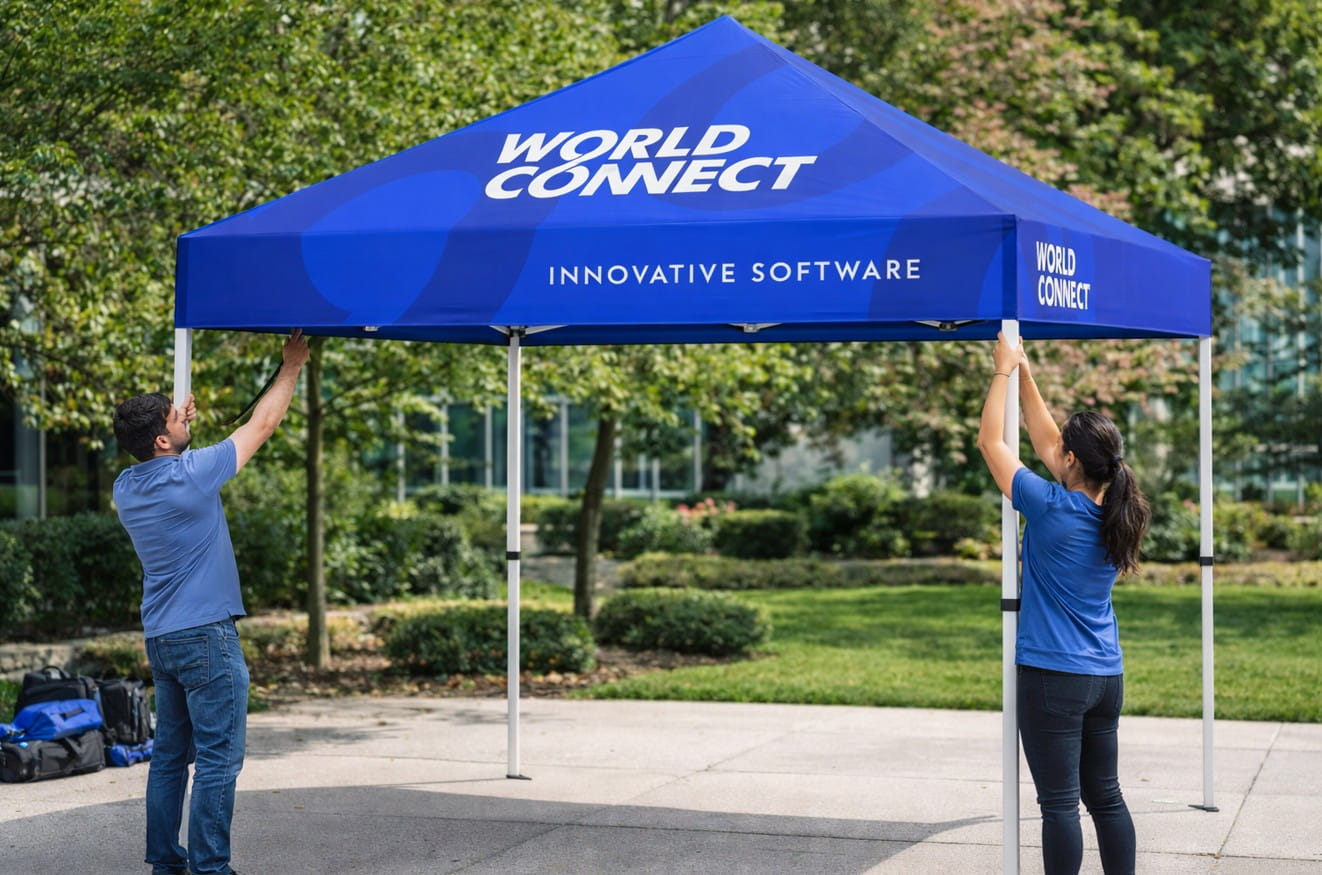
What You Need Before Setting Up an Event Tent
At UPrinting, you can get a complete event tent setup for outdoor activities and promotional events. When your custom tent set arrives, check that you have all the parts and equipment you need. Most event tents include:
- Tent frame: the collapsible metal structure that holds up the tent
- Canopy top: the printed fabric cover that attaches to the frame
- Leg poles: adjustable legs that set the tent’s height
- Stakes or weights: sturdy bases that help anchor the tent securely
- Carrying bag or case: used for storage and transport
If you have all the parts, you can start setting up your tent in a wide, clear area. It also helps to have at least two people for setup, especially with larger tents.
Step 1: Choose a Safe and Stable Location
After making sure you have all the materials, you can start setting up the tent. Before you begin, pick a spot that will give your tent a safe and steady base.
Choose an area that meets these conditions:
- Flat and level
- Free of overhead obstacles such as branches or power lines
- Clear of sharp objects or debris that could damage the canopy
- Does not block walkways or people passing by.
Also, avoid placing the tent in areas prone to flooding if it rains.
Step 2: Expand the Tent Frame
Stand the large tent frame upright on the ground. Have one or two people stand at the corners and gently pull the frame apart.
Keep expanding the frame until it forms a square. Be careful, as it may snap open quickly.
Do not lock the frame completely yet. Leave it partially open to make attaching the canopy easier.
Step 3: Attach the Canopy Top
Drape the canopy fabric over the frame while it is partially expanded.
Make sure each corner of the canopy lines up with a corner of the frame. Most tent tops have Velcro straps, clips, or pockets to help secure the canopy in place.
Attach the canopy to the frame. Check for any sagging or spots where the fabric is caught on the frame and adjust it to prevent tearing.
Step 4: Lock the Frame Into Position
Once the canopy is properly attached, you can continue expanding the frame.
Push the frame outward until it is fully open. Then, use the locking sliders or push buttons to keep them in place.
Make sure all the locking mechanisms click securely into place.
Step 5: Adjust the Tent Height
Raise the tent until it reaches the height you want.
Most event tents include adjustable legs with push-button height settings.
To change the height:
- Gently lift one of the tent’s legs.
- Slide it up until it clicks into the next height setting.
- Do the same for the other legs.
Adjust the height slowly and evenly to keep the tent stable.
Step 6: Secure the Tent With Stakes or Weights
The last step is to make sure your event tent is secured outdoors. Anchor the tent to the ground based on where you are setting up.
You can use these options to secure your tent:
- Ground stakes work well for grass or soil.
- Use weighted sandbags or water weights on pavement or other hard surfaces.
Attach a weight or stake to each tent leg and make sure they are firmly in place. This will help keep your tent steady if it gets windy.
FAQs
A.
Usually, two people can put up a standard event tent. If the tent is larger, you might need a few more people to help set it up safely.
A.
The time it takes to set up a tent depends on its size and the number of people assisting. Most standard event tents can be set up in about 15 to 30 minutes with a small team helping.
The time it takes to set up a tent depends on its size and the number of people assisting. Most standard event tents can be set up in about 15 to 30 minutes with a small team helping.
A.
Yes, you should check the tent from time to time while it’s in use. Check if the frame is stable, the fabric is secure, and the weights haven’t moved. Watch for any bent parts or legs that aren’t lined up. It’s a good idea to double-check everything if the weather changes.
A.
Yes, most tents will keep out light rain. If there is heavy rain or a storm, it’s best to take extra care by lowering the tent or taking it down until the weather improves.
A.
It’s usually recommended to use 20 to 40 pounds of weight on each tent leg, depending on the size of your tent and the weather. If it’s windy, you may need to reinforce the legs with more weight to keep the tent secure.
Conclusion
Setting up your event tent safely helps keep your display area stable and secure during the event. Pick a good spot, put the frame together carefully, and anchor the tent well to lower the chance of it tipping or getting damaged by wind or bad weather.
If you set up your tent properly and check it regularly, it will stay safe and dependable for booths, promotions, and outdoor events.