The food truck industry is fast-paced and ever-changing, and it’s not just about location. Menus get updated, and prices change with ingredients. Seasonal specials and deals also attract more customers.
Because of these factors, your menu will need to change often. Printing new boards each time can get costly, especially if you make changes regularly. Luckily, there are ways to update your menu without reprinting. These flexible options make updates simple, keep things clear for your customers, and save you money on printing.
Use a Three-Tier System to Structure Your Menu
A simple way to keep your menu current without reprinting it all the time is to split it into sections based on how often items change. With a three-layer system, you can group your meals by how often you update them.
Here’s an example of how a three-layered menu could look:
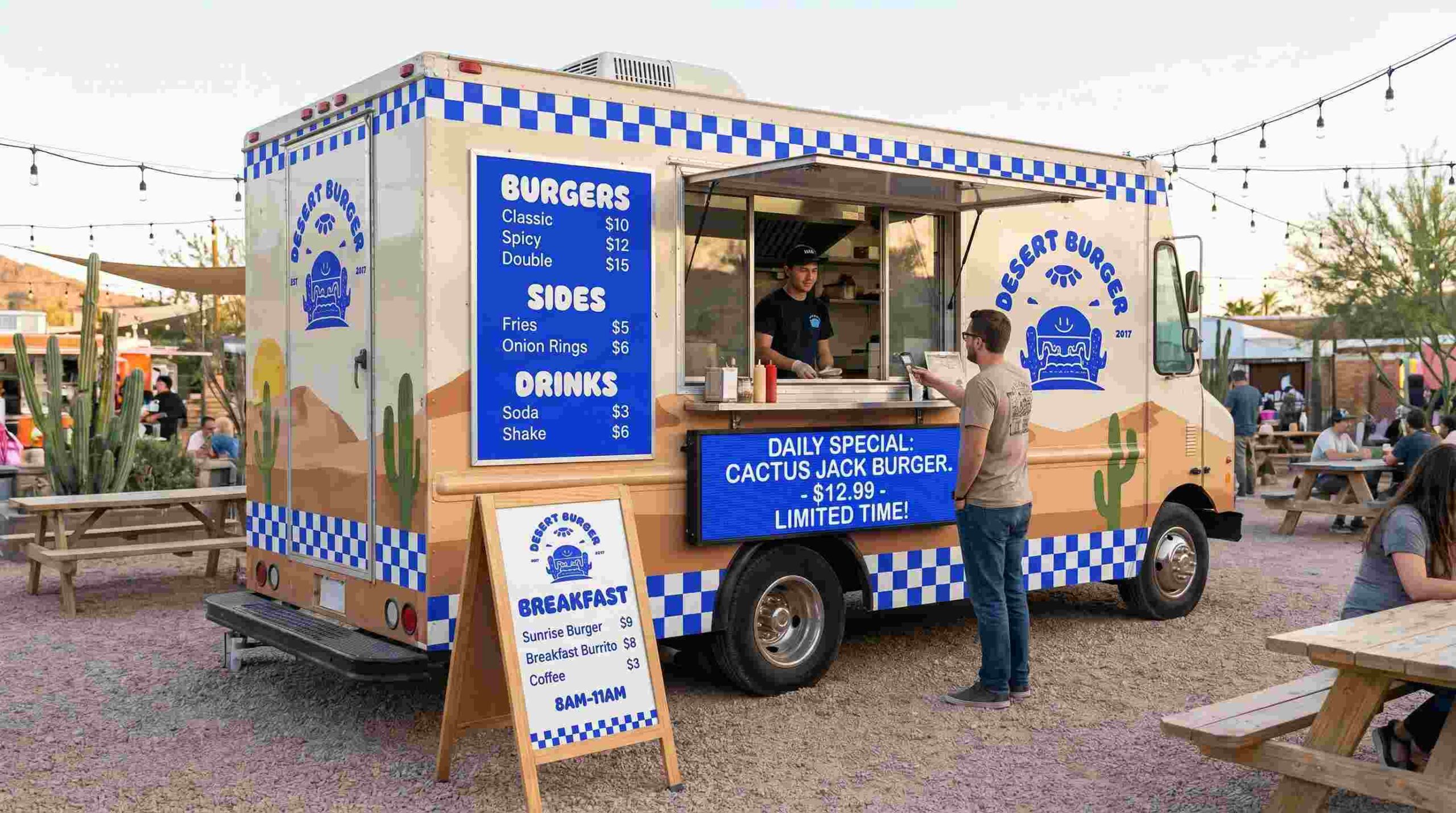
Customer ordering at a burger food truck
1. Your Stable Core
These are the items that stay the same and rarely change. They include:
- Your signature dishes and best-selling items—essentially, your specialties.
- Top sellers and other familiar dishes.
- Anchor prices that almost never change.
2. Semi-Flexible Prices
These are items that often change, either in price or in the options you offer. For example:
- Prices for upgrading meals or drinks to larger sizes.
- Add-ons, like the amount and type of side dishes.
- Product bundles, such as the price for turning snacks into full meals.
3. Seasonal or Changing Promotions
These are temporary offers available during special occasions.
- The daily specials, promotional items, and add-ons.
- Time-based combos, including lunch menus or breakfast options.
- Event or seasonal offers, such as Christmas flavors, summer specials, or discounts.
This three-layered design helps organize your menu and makes it easier to read. You can also use different signs to quickly update your menu.
1. Laminated Core Menus With Writable Areas
Laminated menus keep your main design safe and make it easy to update. Print your main menu, then leave clear spots for handwritten changes, like prices or add-ons. This way, your menu stays consistent, and you can make quick adjustments without changing the whole look.
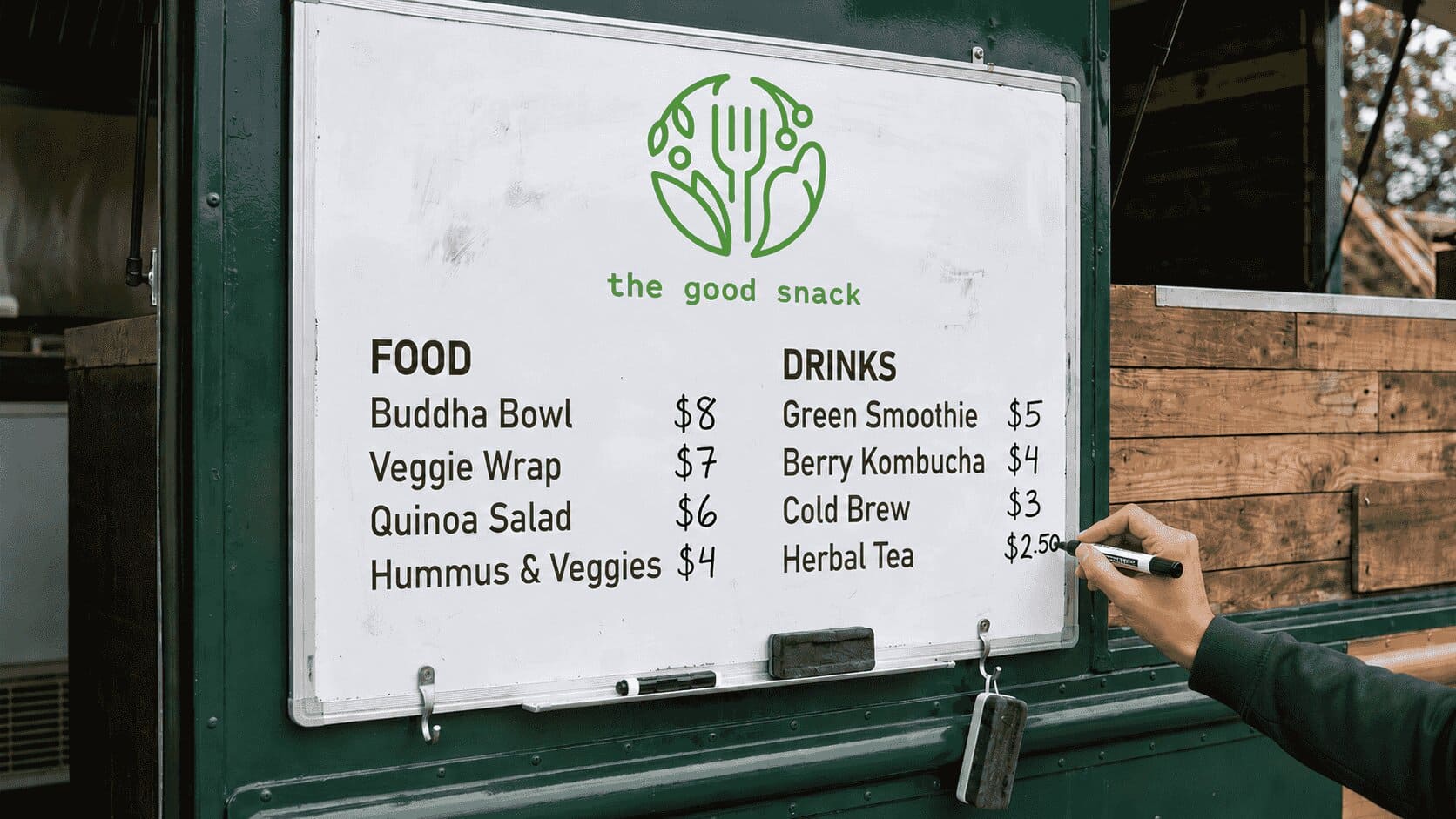
Hand writing on a food truck whiteboard menu
2. Erasable Menu Boards for Specials and Combos
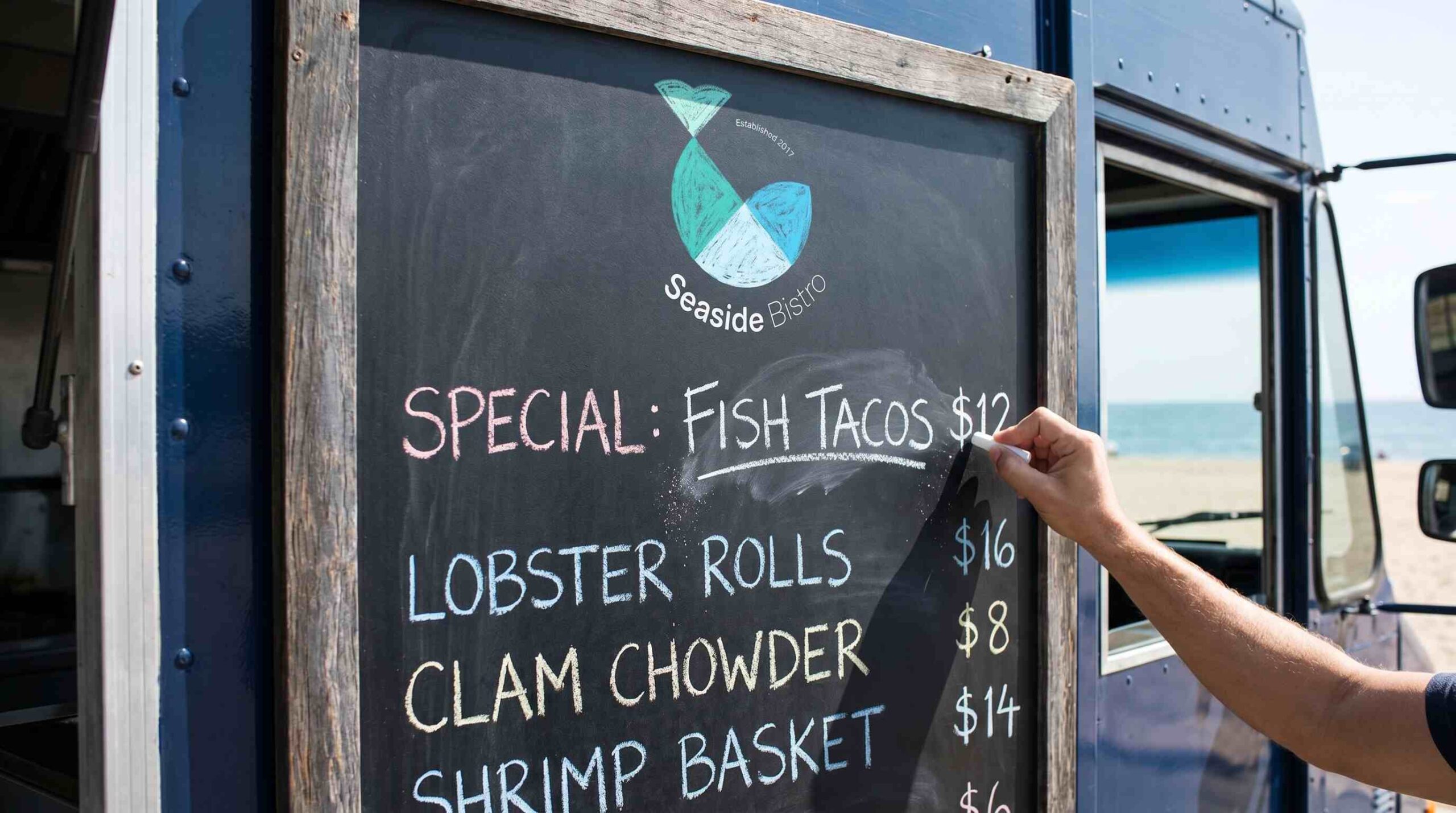
Hand writing specials on a chalkboard menu
Erasable boards let you feature rotating specials in their own spot, which you can erase and update, while your main menu stays tidy. When you keep offers limited and post them near the order area, customers decide faster, staff repeat themselves less, and you can update the board easily before each shift.
3. Modular Price Strips and Removable Stickers
Separate price strips or removable stickers make it easy to update prices without reprinting your entire menu. This method is especially useful for items with changing prices, so you can stay flexible while keeping your main menu neat.
Modular strips also work well for seasonal promotions, since you can adjust prices and reuse the same design. This way, you won’t even need to print new temporary menus each time.
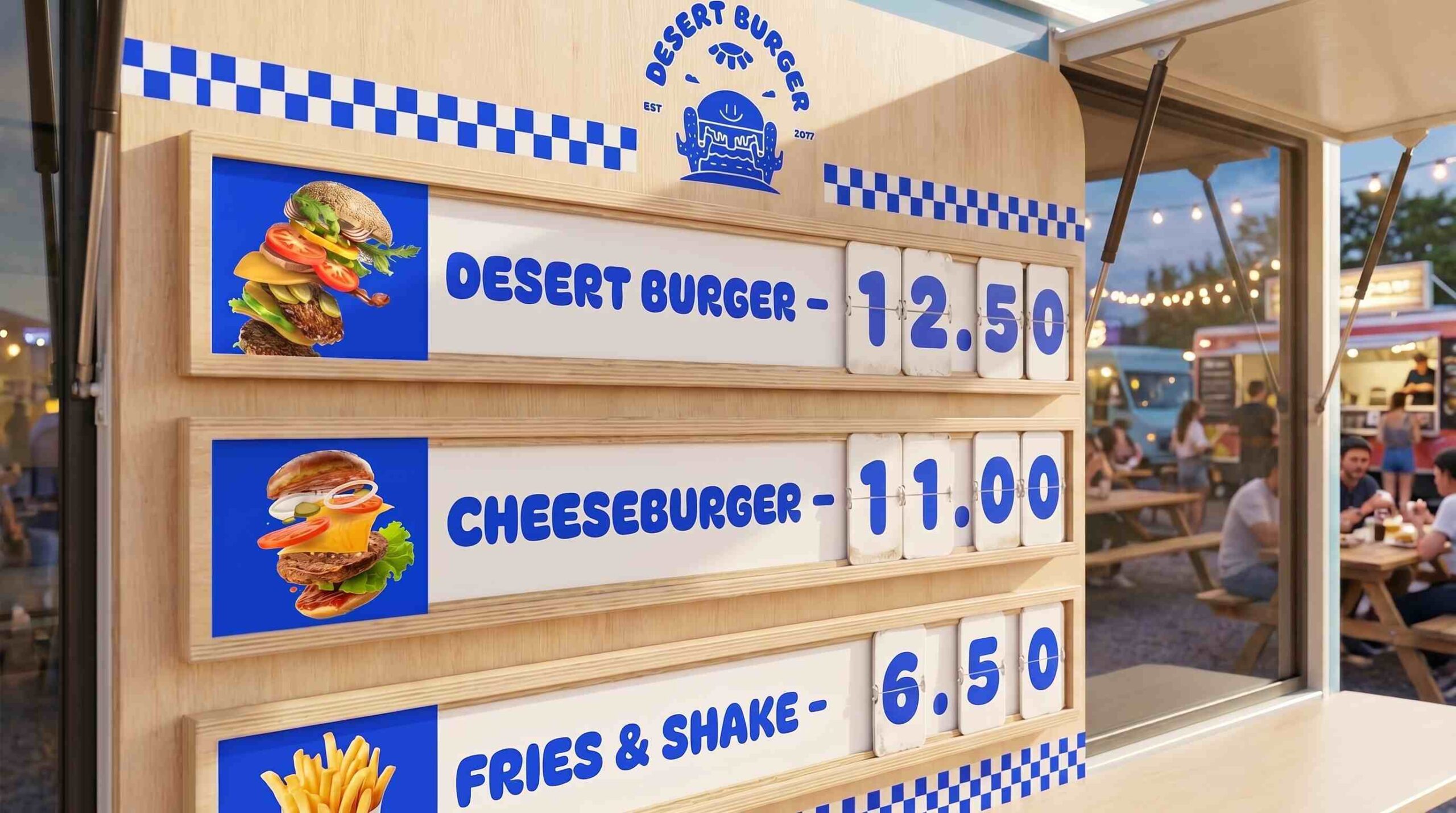
Wooden food truck menu board
4. Small Upsell Prompts That Do the Talking for You
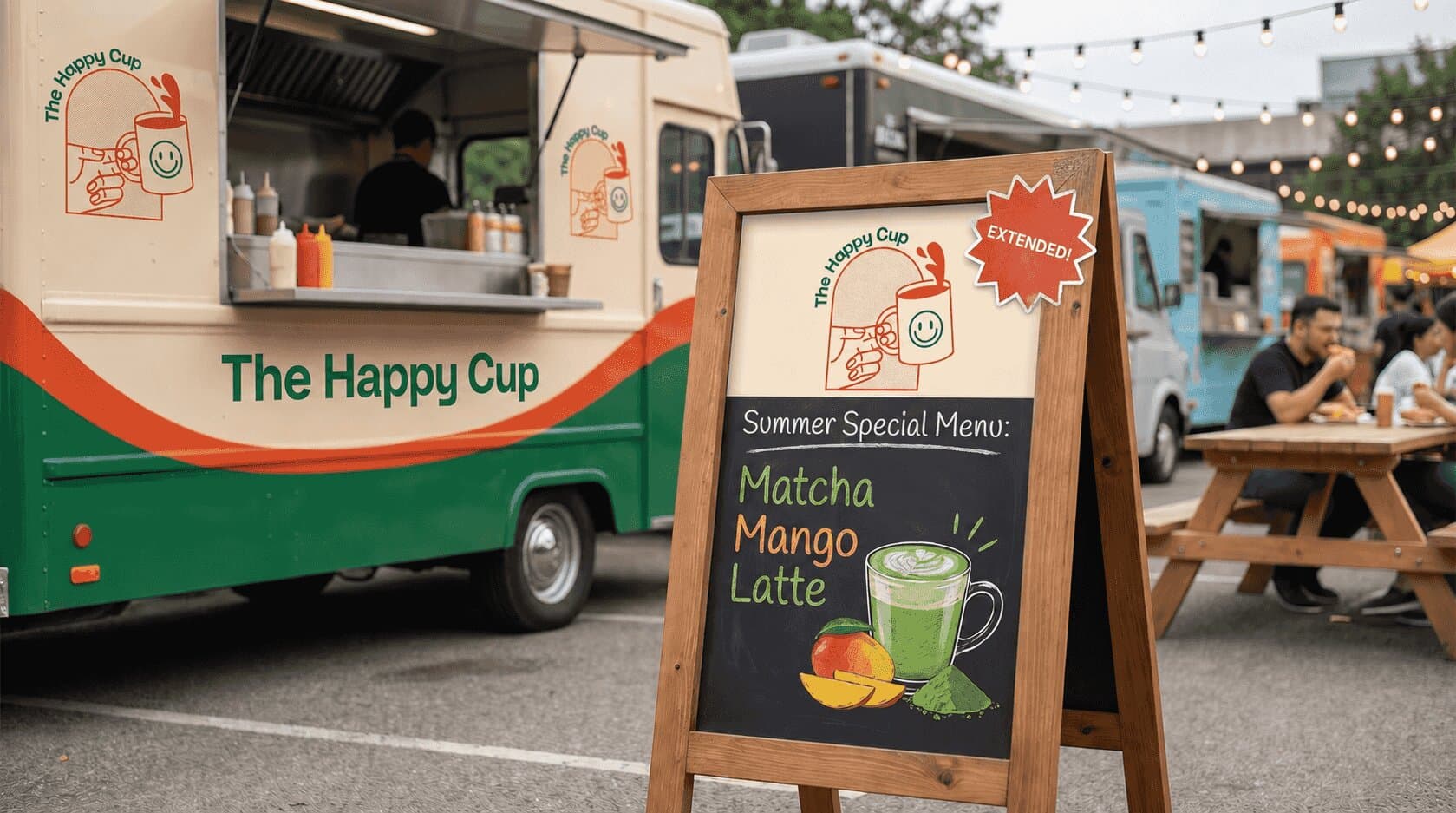
Sidewalk sandwich board sign for a coffee truck
Placing small upsell signs next to your standard menu items helps highlight add-ons for customers. These signs keep your messaging clear and consistent, so staff don’t have to keep suggesting extras. Since you can easily swap or update them, it’s simple to run new promotions or new combos without changing your main menu.
Design With Speed and Clarity in Mind
Menu boards can make busy days much easier by helping customers see their choices while they wait in line. If you are creating one for your food truck, consider these tips:
- Make sure each section of your menu has a clear purpose.
- Add helpful details in spots where customers often have questions.
- Choose simple words instead of trying to be too clever.
Food Truck Replaceable Menu Board Setup Checklist
Use this checklist before ordering or redesigning your replaceable menu to keep updates simple, clear, and cost-efficient:
- Figure out which items are your long-term best sellers and keep those fixed on your main menu.
- Decide which items or prices change often, and set up flexible sections for those.
- Create specific areas on your board for writing or swapping out items, instead of spreading updates all over.
- Show only one or two specials at a time so customers don’t feel overwhelmed.
- Always have extra stickers, labels, and markers on hand and easy to reach in your truck.
- Make sure your staff checks and updates the menu board before every service to keep things accurate and consistent.
Build a Menu That Moves With You
Your food truck thrives when you stay flexible, quick, and ready to adapt. Your menu should do the same.
A rewritable menu system helps you separate the items that rarely change from those that do. This gives you a clear checklist to:
- Reduce printing costs you do not need.
- Make it easier to promote upsells every day.
- Keep your service window tidy and your menu easy to read.
- Quickly adjust to changes in pricing, inventory, or customer demand.
You do not need more food truck signs. You need a menu system that supports your business. When it is time to print, update, or refresh your menu, choosing flexible options from UPrinting will make every change easier later.
Frequently Asked Questions
A.
Update only when it improves clarity or sales. Daily specials are fine. Core menus should change far less often.
A.
Not when they are planned. Clean writing in designated areas reads as fresh, not sloppy.
A.
Digital menus can work, but they introduce power, glare, and maintenance issues. For many trucks, flexible print is more reliable.
A.
Trying to show everything at once. Clear focus almost always performs better.