For custom cake designers, baking is both a business and an art. When it comes to special occasions like weddings, anniversaries, or big events, a well-designed cake lookbook is the best way to show off their work.
These portfolios give sponsors and hosts the key information and visuals they need to make decisions. They also help bakers show their skills and build trust with impressive designs.
If you see yourself as a cake artisan, creating your first cake lookbook is a great way to grow your craft and show what you can do. In this article, we’ll cover the basics of a lookbook and explain why offering one to your top customers is so valuable.
Defining a Cake Lookbook: What Makes it Valuable?
Cake lookbooks are unique print materials that help boost boutique bakery sales by connecting with customers and attracting VIP clients. While this catalogue features ingredients and selections, it is not a menu, recipe guide, or cookbook.
Instead, it should prominently communicate the following:
- The baker’s background, work structure, and ethics.
- Cake design details, craftsmanship, and process.
- Viable selections, differences between choices, selection, and value.
The aim is to offer customers cake options, prices, and a clear idea of what they’ll receive when they order a cake design.
Most of the time, the cake lookbook answers many of the customers’ questions before they request a custom cake for their events.
Creating Your First Cake Lookbook: What are the Essentials?
Making a cake lookbook is more than just putting together a single publication. It’s something that grows and develops as you add more to it. The best way to begin is by documenting your cake creations as you make them. If you’re new to baking, try recording your process, taking great photos, and showing how you improve over time. This is especially helpful if you want to impress clients.
Here are some key things to include in your lookbook.
1. Signature Design Styles
Organize your cake designs into a few clear styles you want to promote. This makes it easier for clients to see what they like without getting overwhelmed. Select 10 to 20 strong designs and then group them into four or five style sections.
Some helpful tips you can do include:
- Show one main image on each page.
- Keep lighting and backgrounds consistent.
- Make sure each style is clearly separated from the others.
Clients usually react well when they can say, “This section feels like us.”
2. Detail and Texture Close-Ups
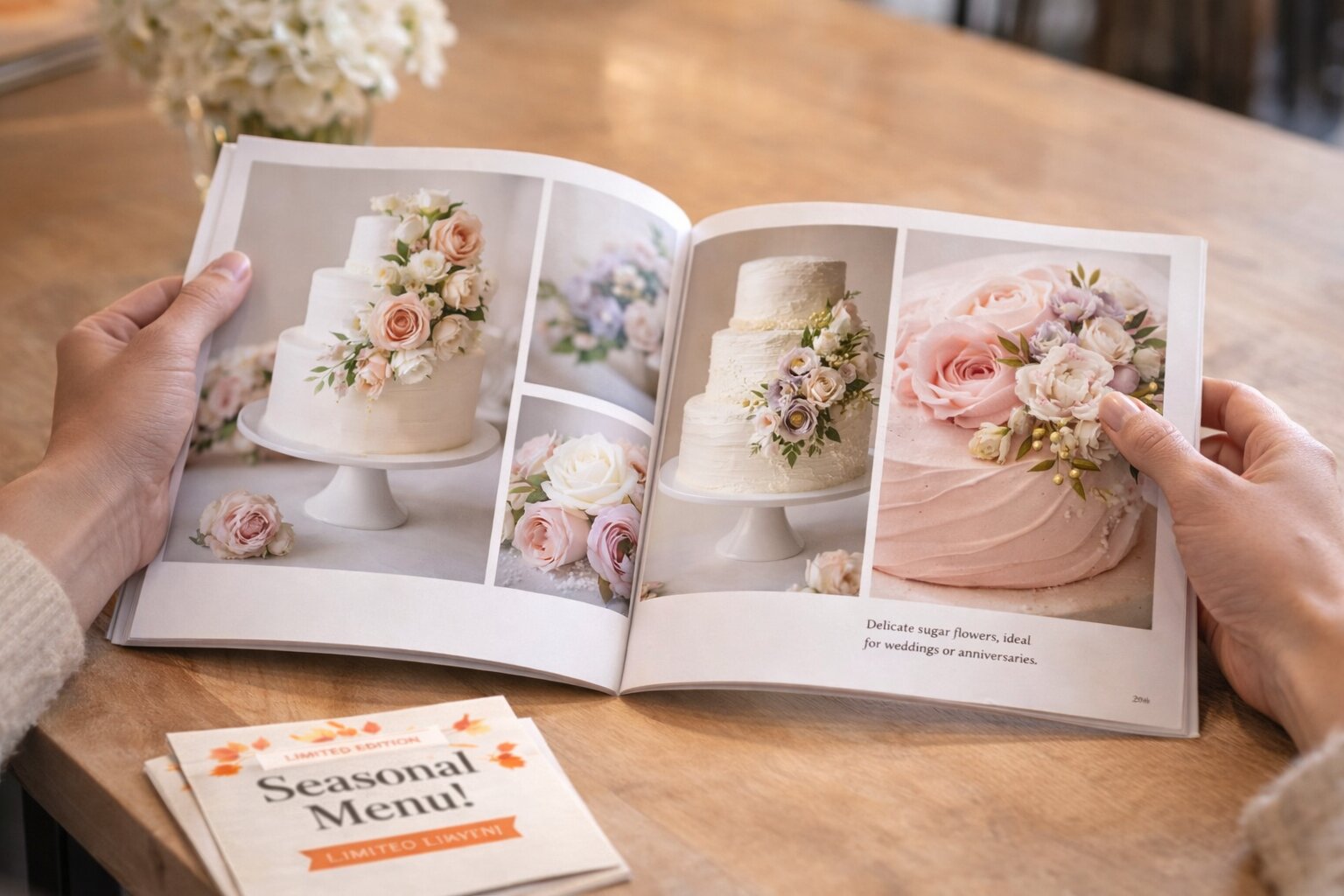
Printed images are great for showing texture. Use high-quality photos to highlight buttercream finishes, brush strokes, and sugar flowers on premium paper with a nice finish.
This section shows clients the level of craftsmanship and explains why some designs are considered premium. Add short captions to point out what makes each detail special, along with suggestions for the best occasions for each cake.
3. Enhancements and Finishing Touches
The final step is to highlight both your growth and opportunities for upselling. Add a section that explains the value of certain enhancements and how they can be used with your cake options.
Share tips on the best angles for photographing the cake. Let clients know how different finishes work in various venues and how enhancements can change the overall look and feel of the cake.
Write brief, helpful captions that show you can also upgrade the existing cakes in your repertoire and offer real benefits to your clients.
Using the Lookbook Throughout the Client Journey
Creating your first signature cake lookbook is an exciting milestone! Your portfolio shows beautiful creations for your clients, and using it properly makes every consultation feel special. When a client asks about a custom cake for their event, have your lookbook ready so you can enjoy a creative meeting together.
For In-Person Consultations
- Try to introduce the lookbook early on and allow your clients to quietly browse before discussion.
- Also, pay attention when clients pause or revisit pages.
- When they have questions that the lookbook can answer, courteously guide them to the appropriate page so they can see it.
- You should also try discussing touchpoints not mentioned in the lookbook.
For Virtual Consultations
- Send your clients one of your copies days before the call. Also, have one on your end so you are aligned.
- Try to reference page numbers during the discussion, so they can follow.
- Have digital images ready in case clarification is needed. Ensure these correspond appropriately to the printed examples.
Post-Consultation Support
- Sending clients a copy of your lookbook is the best way to keep your services top of mind.
- You should also include flavor lists or care instructions alongside the lookbook.
- Give clients something tangible to revisit while deciding.
Updating Your Lookbook: What Happens After Printing Your First Copies?
Printing your first set of lookbooks is just the beginning. Many professionals print several editions, so customers have more choices for future events. Your lookbook also highlights your progress and lets you compare your early cake designs with your latest ones. Consider releasing more lookbooks in the future, and keep these tips in mind:
- Include only a few standout cakes in each lookbook. Try to keep it to 20 or less items, grouped into five styles. This way, you give customers choices without making it too much to take in.
- Consider organizing your lookbooks by season. If you have extra cake samples, group them by the times of year they’re most popular and release separate lookbooks for each season.
- It’s okay to repeat or update your entries. If some cakes in your lookbook seem outdated, you can feature their styles, photos, and process again in future editions, and add a note about how you’ve improved them. You could even make a special edition that shows your cakes side by side, highlighting how your skills have grown.
Let Print Do Quiet, Meaningful Work for You
A printed cake lookbook does more than just market your business. It helps clients connect with your work at the moments that matter most.
When you use printed lookbooks to show value, guide choices, and explain upgrades, it becomes easier for clients to pick designs that match their vision and highlight your skills. Presenting your work clearly and thoughtfully builds trust. With that trust, clients are more likely to place higher-value orders.
Frequently Asked Questions
A.
Once or twice a year works well for most designers. Seasonal inserts can keep it current without a full reprint.
A.
Most designers find it more effective to focus on visuals and design tiers. Pricing can remain flexible and conversational.
A.
Yes. Print complements your digital presence by supporting decisionmaking when clients are ready to commit.
A.
Starting with three to five copies is common. You can expand once you see how it fits your process.