A practical, vendor friendly guide for selling homebased artisan foods
If you sell honey, jam, baked goods, or small-batch snacks at a farmers' market, your products likely count as cottage foods. In the United States, cottage foods are low-risk items made in home kitchens or other non-commercial spaces, following state rules.
These foods usually share a few key traits:
- They are shelf-stable or considered low risk.
- They are made in small batches.
- They are sold directly to customers.
- They are clearly labeled before sale.
Labeling is especially important when selling at farmers’ markets. First impressions count, and customers want to know every ingredient and how your product was made. They might also ask about other details.
This article will cover standard labeling strategies that meet food safety and allergen guidelines, as well as how customers judge products at farmers' markets.
What Makes Food Labeling Different for Home-Based Food Vendors?
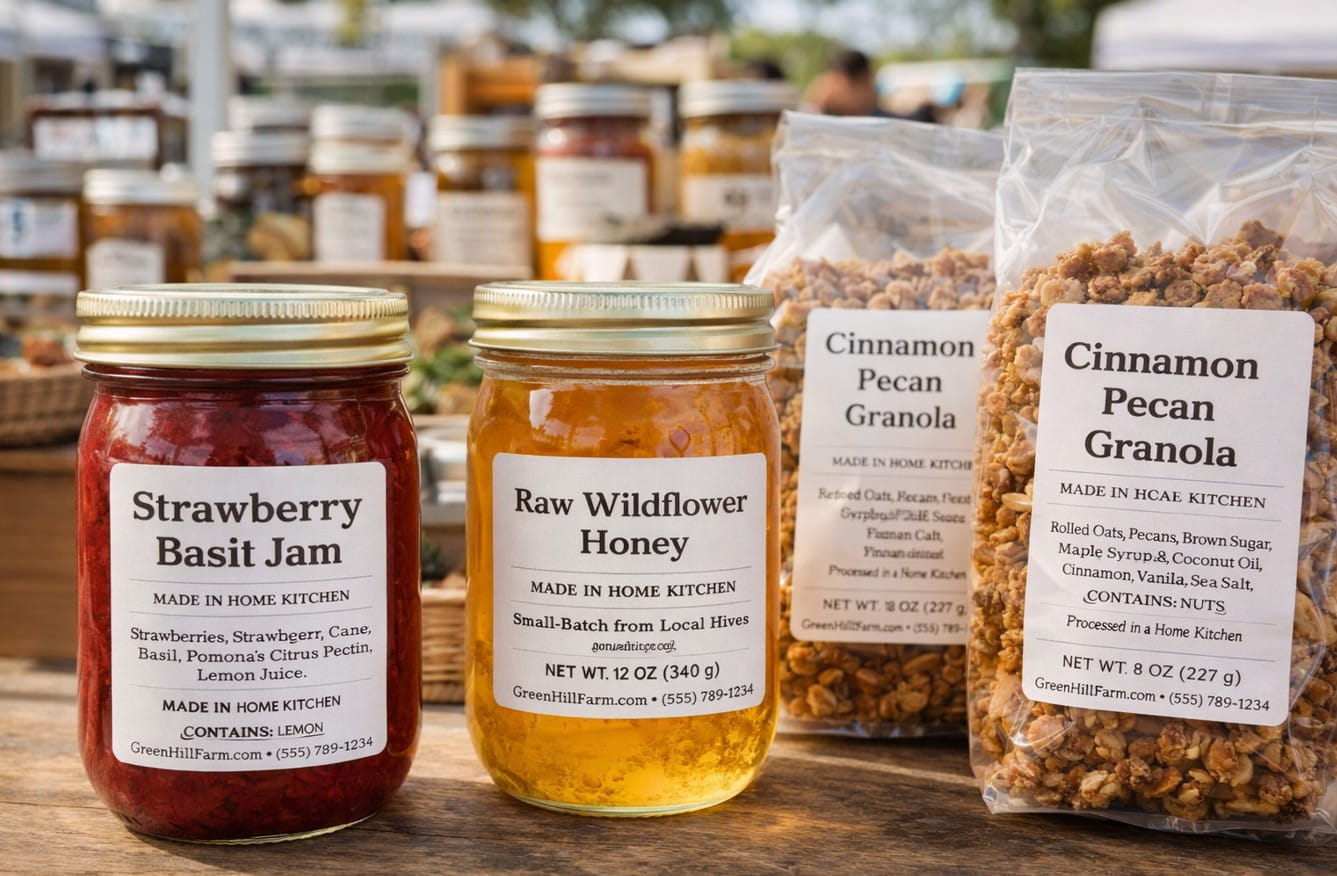
Before you label your home-made food products, consider first one key difference between farmers’ markets and regular stores.
Big brands often sell their products just by using their name. Customers see the brand or logo and already know what they will get.
If you are a small or home-based food producer, you need to make it clear to customers what they are buying. Your labels should list the ingredients, mention any allergens, and include your contact details.
Farmers’ markets can also be a busy place, so vendors need to grab customers’ attention, answer their questions, and encourage them to buy before they move on.
Knowing these differences can help you design labels specifically for a lively, energetic audience.
Cottage Food Label Essentials (Branding Checklist)
Given the nature of most farmers’ marketplaces, your label should focus on what customers and market staff expect to understand quickly. Some of the elements you need to add for your labels include:
1. Clear product name
A shopper should know what the product is without asking.
Examples:
- Raw Wildflower Honey
- Strawberry Basil Jam
- Cinnamon Oat Granola
Note: Brand names may support recognition, but a clear product name should always come first.
2. Net weight or quantity that is easy to find
Customers often compare products based on size and perceived value. Good practices include:
- Using the same format across similar products.
- Placing quantity information in a consistent location.
- Keeping it visible without rotating the package.
Note: Always check your labels for missing or inconsistent quantity information to avoid this common issue.
3. Ingredient lists that feel transparent and organized
National labeling standards emphasize transparency. Customers also expect to see these clearly.
When listing your product's ingredients, you should:
- Start with the product's main component.
- Use familiar, straightforward ingredient names.
- Remain consistent across flavors.
Test your ingredient list by explaining it to someone unfamiliar with your product. Revise until it matches this practical approach.
4. Allergen information that answers questions upfront
Food allergen awareness is a high priority among farmers' market shoppers. When labeling allergens and other food warnings:
- It should use plain language (or at least include images).
- The information should be easy to spot.
- It should reduce the need for verbal explanations at the marketplace.
Note: Clear allergen callouts protect customers and build trust.
5. Clear disclosure that food is home-based
Many customers value local, small-scale producers and cottage food programs. Having clear labels that showcase your business as one is a great boon when disclosing home-based food practices:
- Use straightforward language.
- Keep placement consistent across products.
- Avoid hiding information in small or crowded text.
Remaining transparent with your production and ingredients supports customer confidence.
Readability Matters with the Cottage Food Labels
Food labeling often focuses on branding, design, and aesthetics. But in farmers’ markets, labels should consistently emphasize that information should be easy to see and understand.
Label problems arise when:
- Fonts are decorative but are difficult to read.
- The texts are squeezed to fit a limited space.
- The contrast between the text and the background is low.
This doesn’t mean design is less important. In fact, you can cultivate your creativity to enhance your products and make them stand out, while avoiding common readability pitfalls.
Farmers’ Market-Specific Label Design Tips
1. Use a two-way label system.
Split your cottage food labels into two parts. Place your product name and net quantity on the front, and include ingredients, allergen information, and other details on the back. Be flexible with this approach. Consider which of the five essentials pair well together for your label.
2. Use clear fonts and sizes.
Prioritize readability. Sometimes, a simple design with clear, readable text is better than an overly designed label.
3. Know your brand colors.
Make your small business’s signature colors work for you. Choose color combinations that best represent your products and use them consistently, so customers recognize you.
4. Lean on your home-based story.
Most cottage foods are homemade, so there are often special stories behind them. Maybe you use a secret recipe, a unique ingredient, or your food is all organic or vegan. These stories can be great selling points to highlight on your labels.
Designing Signs for Outdoor Markets: What Actually Lasts
To make sure your outdoor market signs stay visible and reliable, use materials and designs that work well in all kinds of weather.
Weather poses one of the biggest threats to signage, but you can address it easily by choosing the right materials.
Pick sturdy materials like coroplast, PVC board, or matte laminate so your signs can handle moisture, heat, and frequent use. Rounded corners help prevent peeling and make your signs last longer.
Stay away from poster paper, shiny finishes, and small fonts, since these make signs harder to read outside.
Switching to weather-resistant signs helps you save money by reducing the need to reprint them each season.
Labels Should Support Your Business
Food labeling standards, allergen awareness, and cottage food programs help customers make informed decisions and support small vendors. Clear labels mean fewer repeated questions, simpler inspections, and more customer trust. Over time, clear labeling increases repeat buyers and strengthens your brand. Good labels become a helpful routine, not a hassle. With the right approach and UPrinting's help, labeling becomes a business asset that will push your small business forward.