The materials you choose influence how your booklet looks on day one and how it holds up over time. Paper weight affects how sturdy the pages feel. Finishes change how readable your text is and how vibrant your graphics appear. Binding controls how easy the booklet is to flip through, store, and use. When all three elements work together, your booklet looks intentional and communicates your message clearly.
Different projects need different setups. A product catalog, a training workbook, and an event program all call for specific paper and binding choices. Once you understand how each option behaves, it becomes much simpler to create a booklet that fits your goals and your budget.
Cover Materials: How They Perform and When to Use Them
80 lb. Paper (Gloss)
A lightweight cover that keeps costs low.
Tips:
- Works well for large quantities and short-lived booklets.
- Best for handouts and event materials that will not be kept long.
100 lb. Paper (Gloss)
A thicker paper stock with better color depth.
Tips:
- Ideal for covers that rely on strong imagery.
- An easy way to upgrade the look and feel without adding too much weight.
10 pt. Cardstock
A solid mid-range cover option.
Tips:
- Ideal for slimmer catalogs and marketing pieces.
- Adds durability while keeping the booklet easy to carry.
14 pt. Cardstock
A more rigid stock suited for heavy use.
Tips:
- Often used for menus, brochures, and recurring reference materials.
- Delivers a premium impression without stretching the budget.
16 pt. Cardstock
A thick, premium cover for high impact pieces.
Tips:
- Best for luxury catalogs or presentation materials.
- Choose this when durability and visual weight are priorities.
Inside Page Materials: How to Choose Based on Content
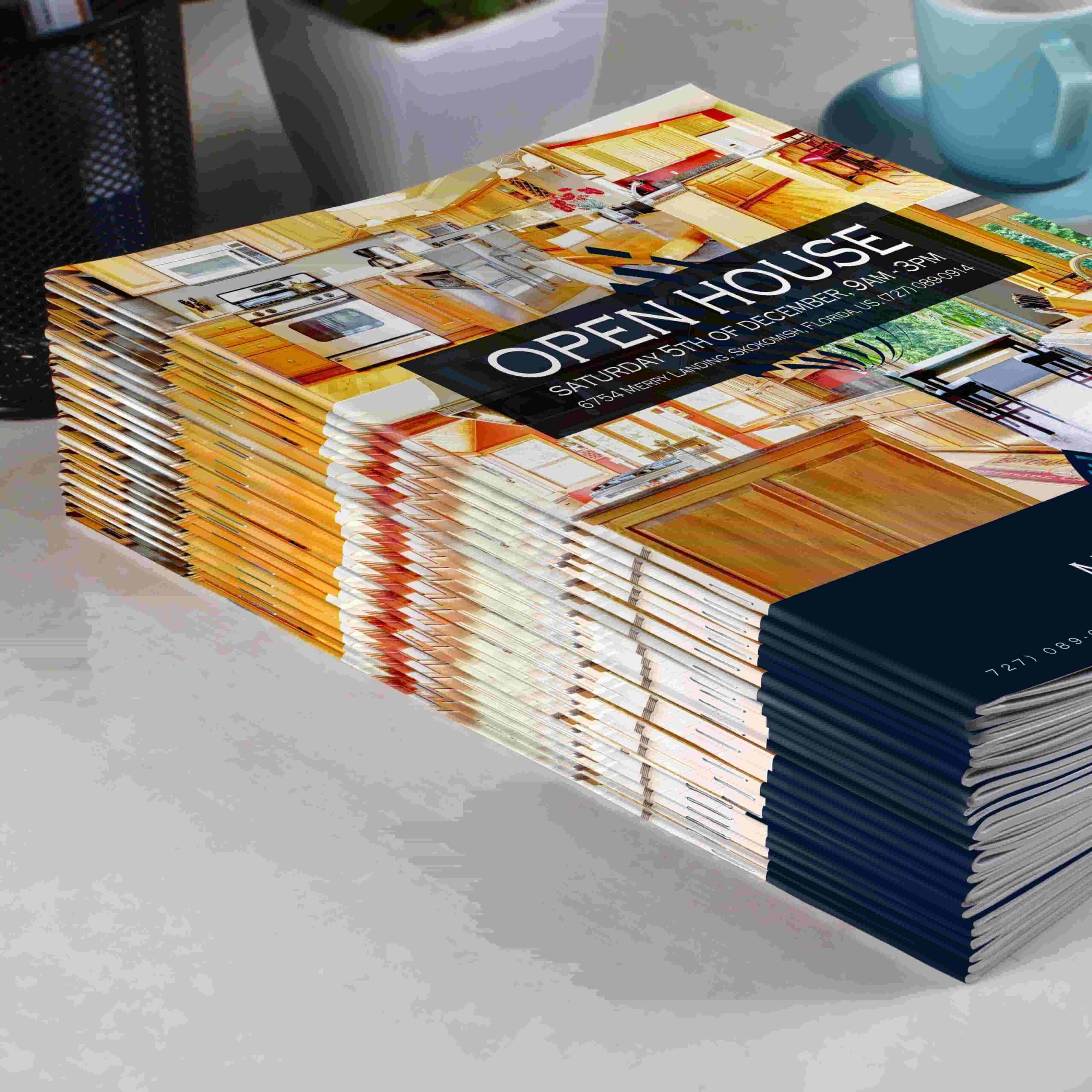
70 lb. Paper (Uncoated)
A natural matte finish that is easy to write on.
Tips:
- A smart choice for manuals, worksheets, and instructions.
- Ideal when users need plenty of room for notes.
80 lb. Paper (Gloss or Matte)
A dependable everyday interior stock.
Tips:
- Gloss gives images stronger contrast and brightness.
- Matte keeps glare low and maintains a smooth, clean look.
100 lb. Paper (Gloss or Matte)
A thicker interior option for a polished feel.
Tips:
- Suits catalogs, presentations, and premium marketing booklets.
- Provides a substantial page feel without switching to cardstock.
10 pt. Cardstock (Gloss or Matte)
A rigid interior upgrade.
Tips:
- Works well for limited editions or high-end promotional pieces.
- Best for short booklets where added structure enhances the design.
Binding Types: Pick Based on Use and Page Count
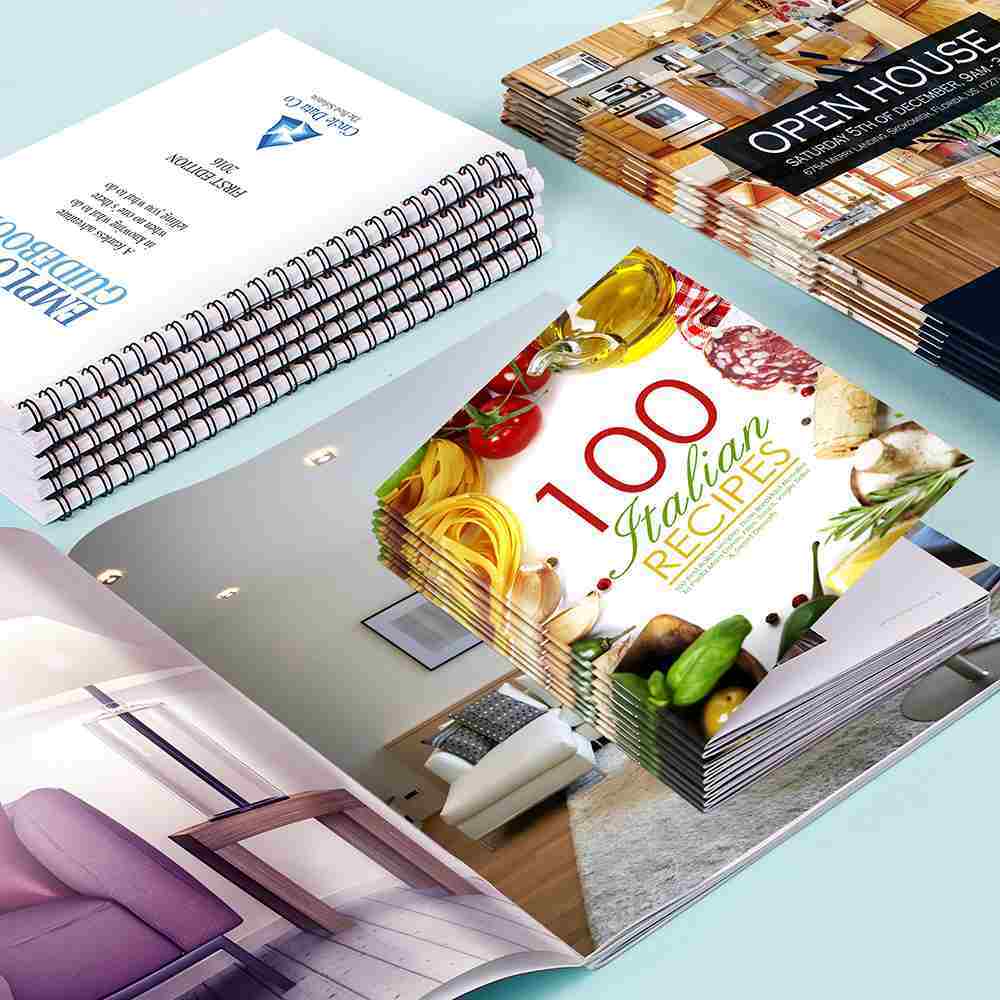
Saddle Stitch
Pages are folded and stapled along the spine.
Tips:
- Fits booklets up to 64 pages.
- Great for event programs and slim promotional pieces.
- Opens easily and browses smoothly.
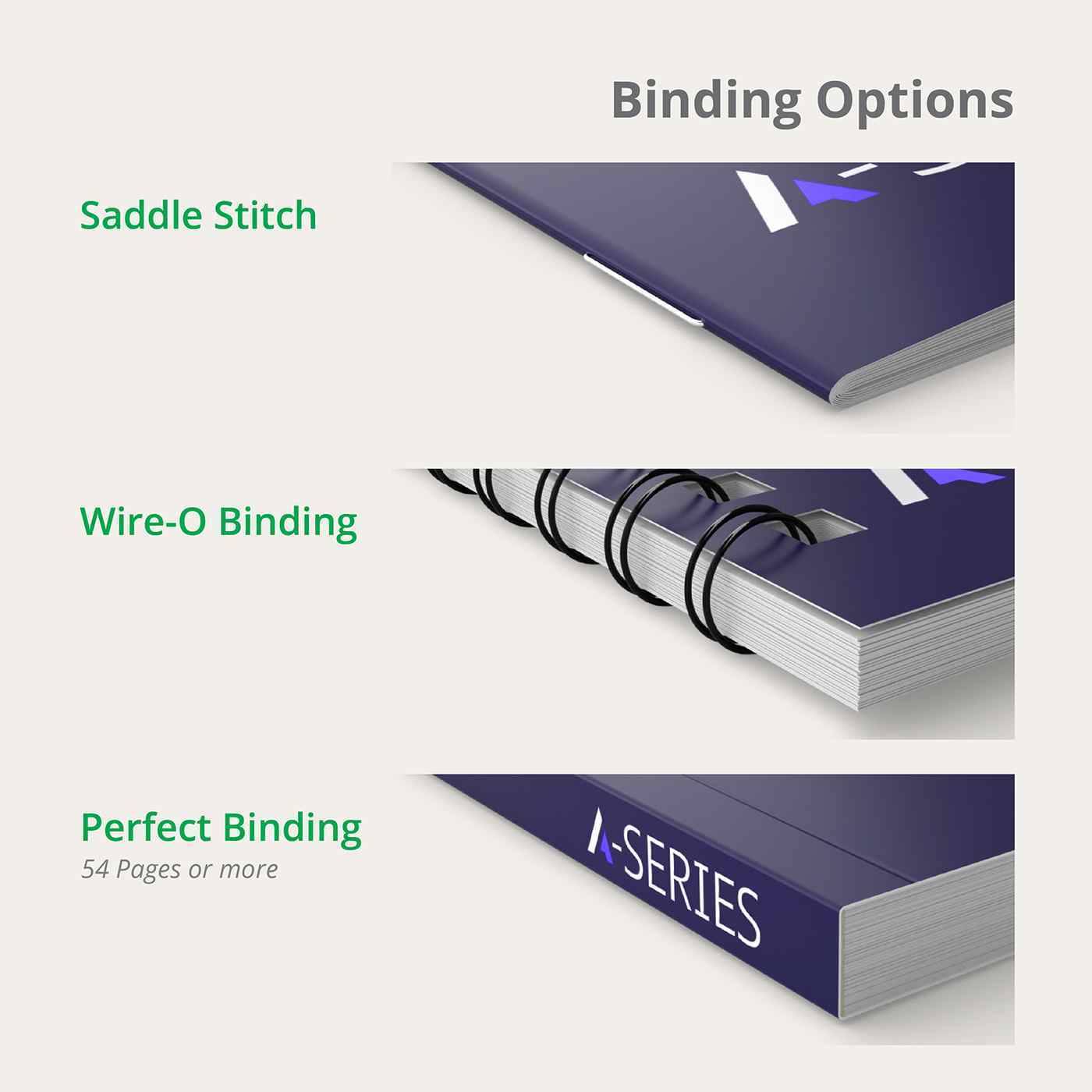
Wire-O Binding
Sturdy metal loops keep pages aligned and completely flat.
Tips:
- Excellent for workbooks, recipe books, and training materials.
- Perfect when hands-free reading or note taking is important.
- Holds up well to constant flipping.
Perfect Binding
A glued spine that creates a clean, professional finish.
Tips:
- Ideal for thicker booklets, catalogs, and magazines.
- Allows spine printing for easy identification.
- Delivers a retail style appearance.
Matching Materials to Common Use Cases
Product Catalog
- Cover: 14 pt. or 16 pt. cardstock
- Inside: 100 lb. gloss
- Binding: Perfect binding
Training Manual
- Cover: 10 pt. cardstock
- Inside: 70 lb. uncoated
- Binding: Wire-O for a flat, easy to use format
Event Program or Short Promo
- Cover: 80 lb. gloss
- Inside: 80 lb. gloss
- Binding: Saddle stitch
Portfolio or Visual Showcase
- Cover: 100 lb. gloss
- Inside: 100 lb. gloss
- Binding: Perfect binding or Wire-O
Tips for High Print Quality
- Use high resolution images. A minimum of 300 dpi is recommended.
- Extend your artwork to the proper bleed requirement. One eighth inch on all sides is standard.
- Match finish to the style of your booklet. Gloss emphasizes color while matte offers a calm, clean look.
- Review your PDF proof to check margins, alignment, and page flow.
frequently asked questions
A.
80 lb. or 100 lb. is a reliable starting point. For a more premium feel, choose one hundred pound gloss or matte.
A.
Choose cardstock when the booklet is handled often or stored for long periods. Lighter covers are fine for short-term uses.
A.
An 80 lb. gloss cover with matching inside pages and saddle stitch binding is one of the most economical combinations.
A.
Use 70 lb. uncoated text for writing and select Wire-O binding so the pages stay flat during use.
A.
Most saddle stitched booklets should stay under 64 pages to avoid bulky edges and alignment issues.
A.
Gloss provides bright, high contrast color. Matte offers a softer, glare-free result. Both look good depending on the design style.
A.
Use perfect binding for thicker catalogs, magazines, or presentation booklets. We recommend this for high page counts – 48 pages and more.
A.
Yes. Only perfect binding supports spine printing.
In Summary
The right combination of paper, finish, and binding makes your booklet easier to read, more durable, and more visually effective. Think about how readers will handle it, how long it must last, and the impression you want to create. Once you match your materials to your purpose, you get a booklet that feels complete and looks professionally made.