
Healthcare brochure design guide for medical marketing materials
In the medical field, a well-designed brochure is just what the doctor ordered. Whether it’s introducing groundbreaking pharmaceutical advancements, detailing intricate treatment processes, or inviting readers into the holistic embrace of a wellness program, the brochure becomes the silent spokesperson. Navigating the delicate balance between aesthetic appeal and crystal-clear information dissemination is both an art and a science. In this guide, we go through the most important information every medical brochure should have, and the best ways to present them.
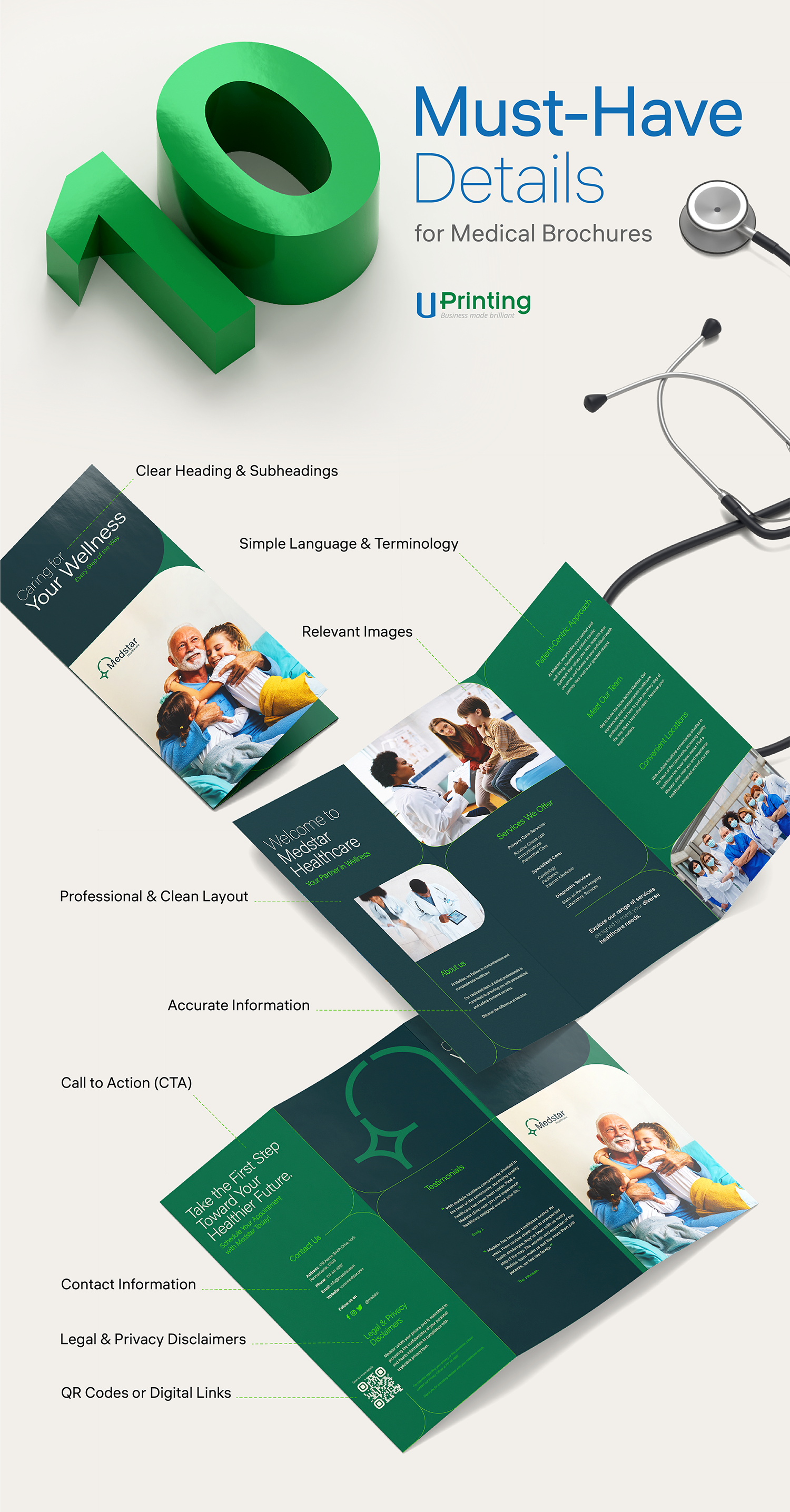
Medical Brochure Must-Haves Infographics
This allows readers to quickly identify the content and navigate through it. In a medical setting, people often seek specific information, and headings/subheadings streamline this process.
Incorporate high-quality, relevant images that depict the medical condition, treatment, or facility being described. Visual aids can help simplify complex information and make the brochure more engaging.
Remember, not everyone is familiar with medical jargon. Always aim to simplify complex terms and use plain language. This makes your message and information accessible to your intended audience helpful for anyone outside the medical field to understand the material.
This can’t be stressed enough. Make sure that all information, statistics, and details are accurate and up-to-date. Providing misleading or outdated information can have serious consequences in a medical context.
A well-organized layout not only looks professional but also improves readability. Utilize whitespace, align text and images properly, and ensure there’s a logical flow to the content.
Always include relevant contact information – phone numbers, email addresses, physical addresses, and websites. If the reader wants more information or has specific queries, your brochure should indicate whom they should contact.
Clearly define what you want the reader to do after reading the brochure. It might be scheduling a check-up, getting a vaccine, or simply being more aware of a medical condition.
If possible, include testimonials from satisfied patients or endorsements from medical professionals. This builds trust and credibility in the service or information being presented.
This is especially important if you’re discussing treatments, drugs, or medical procedures. Ensure that there are clear disclaimers about potential risks, side effects, and that not all results are guaranteed. This protects both the issuer of the brochure and informs the reader.
Given the digital age, consider integrating QR codes or URLs linking to supplementary videos, articles, or the official website. This allows readers to delve deeper into the products, treatments, or services you offer.
When it comes to medical businesses, pharmaceuticals, and wellness, it’s essential to have brochures that can effectively convey complex or detailed information while also appealing to consumers’ interests and needs. Providing easy-to-digest brochures play a critical role in organizing and presenting content in an accessible manner, ensuring that potential consumers or patients understand and trust the information they’re receiving, which can guide them towards the right path.
