Customers move quickly at farmers' markets, often deciding on a purchase within seconds. For artisan sellers, tags and labels must explain the product, build trust, convey brand values, and justify pricing, all within a space smaller than a business card.
Many small vendors struggle to balance premium presentation with tight margins and limited space. Small print runs and labeling rules can make it even tougher to share important details.
The good news is that great product tags are not about squeezing in more words. Instead, it’s about choosing what matters most and making sure each detail helps you make a sale. With the right design, even a small tag can make a big difference for your business.
The Real Problem Is Not Space. It Is Prioritization.
Most artisan labels feel crowded, not because the product needs more explanation, but because the tag is trying to solve too many problems at once.
Observations at farmers' markets show that shoppers usually ask three key questions when considering a product:
- What is this, and what does it do?
- Why should I trust it?
- Is it right for me?
If your label answers these three questions clearly, you maintain the customer's interest. Everything else becomes secondary. A good way to prioritize what goes with the tag is to apply the Three Layer Label Framework:
Instead of viewing your label as one tiny canvas, think of your product information in three layers:
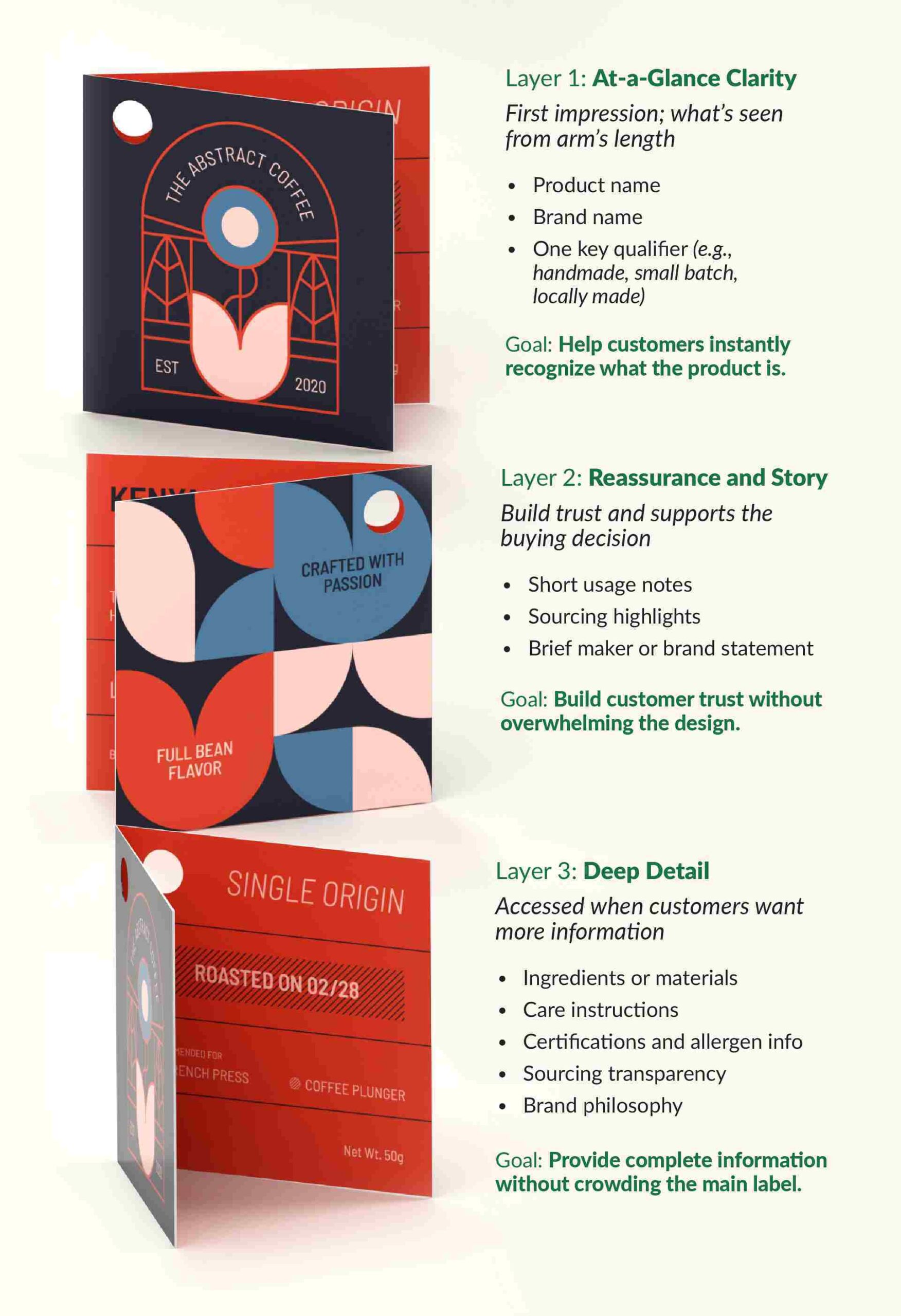
Overcrowded labels fail when all three layers compete for the same space. Instead, organize your content by layers so your label remains clear and easy to navigate.
Design Based on How Customers Handle Your Products
A common mistake in label design is that they often look and handle differently on a laptop or phone, where everything appears readable and balanced, than when applied to the product packaging. At the market, customers hold products at different angles, in varying light, often with one hand.
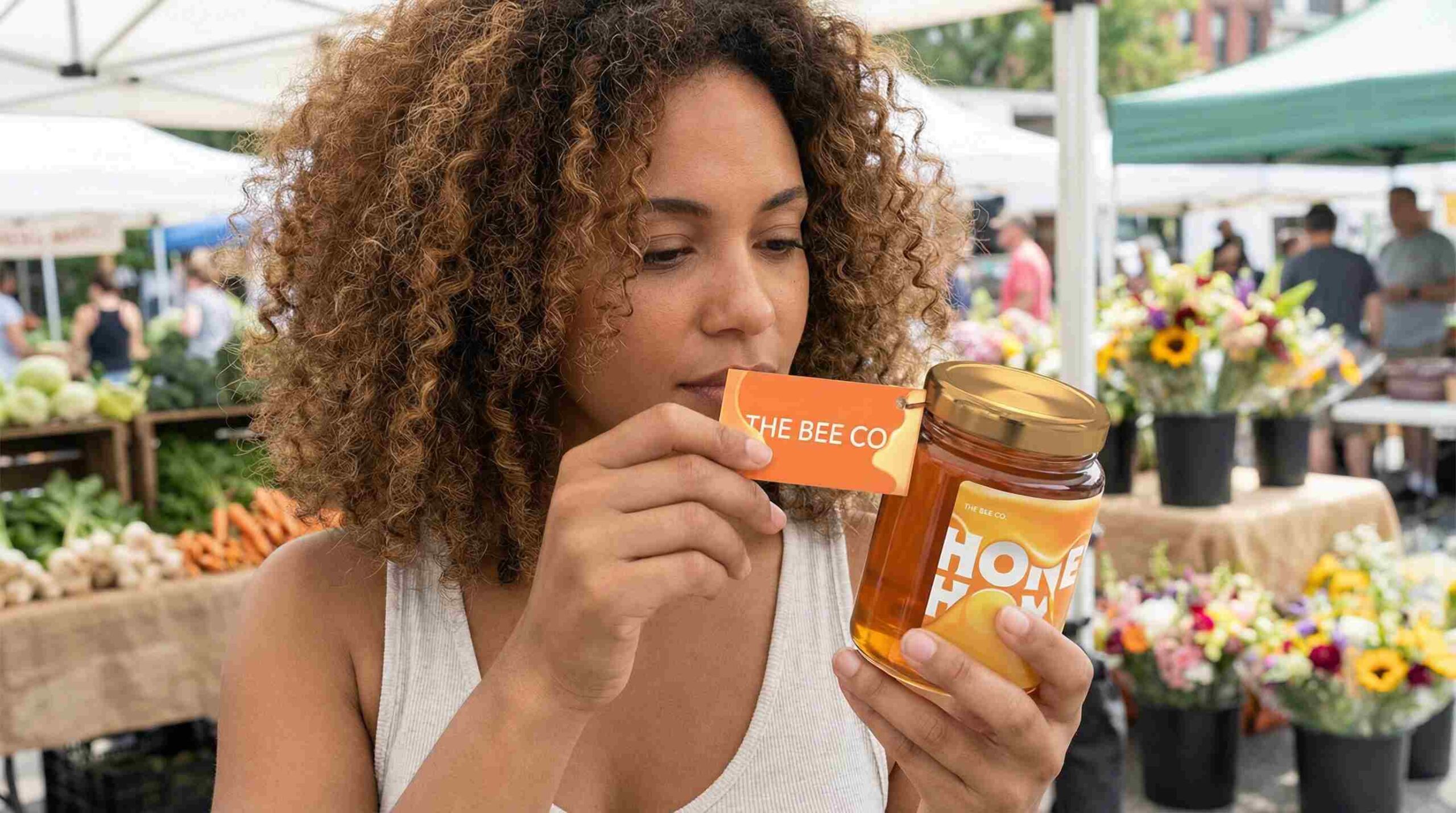
Inspecting a brand tag on a honey jar
Most of the time, customers do one of two things:
- They scan the front while the product is resting on the table.
- They flip it over once to check the back, then make a decision.
Your label design should easily support this natural movement.
Practical Design Rule
If a customer has to turn the product more than once to figure out what it is or what it does, your label is making things too complicated.
That’s why double-sided printing is one of the best choices a small vendor can make.
Use Both Sides of the Tag With Intent
Double-sided tags are not meant to add extra information. Instead, they help separate the tag’s roles so customers can identify the product more easily.
A High-Impact Front
The front of the tag should help sell the product right away:
- Clear product name
- One benefit or distinguishing trait
- Brand identification
This makes your product stand out on a crowded table.
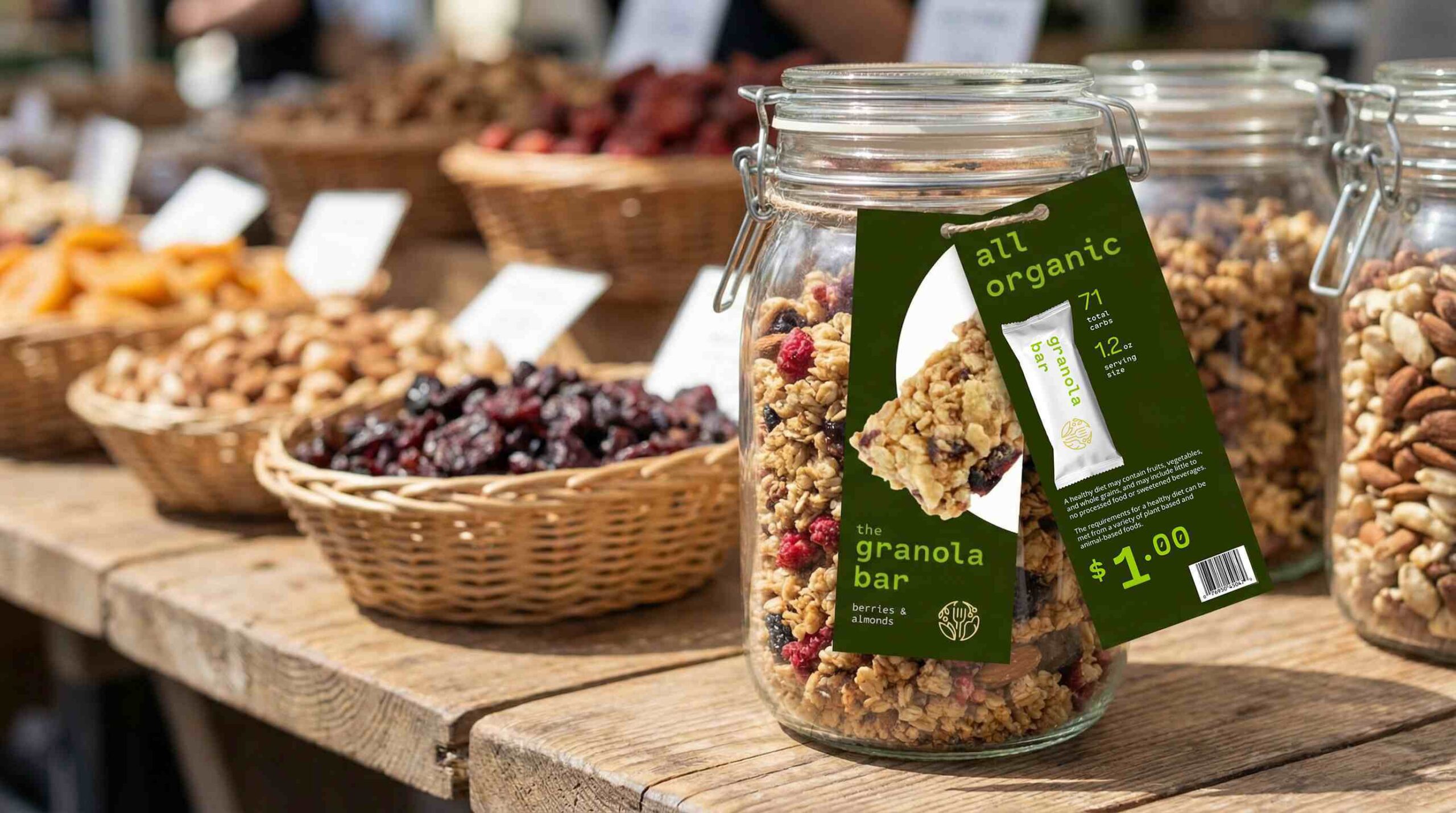
Glass jar of granola with a green organic label
A Purpose-driven Back
The back of the tag should help build trust:
- A short maker statement or mission line
- How the product is used or cared for
- Key claims like sustainably sourced or phthalate-free, if relevant
For example, if you make soap, you could use the back of the tag to share skin benefits or your approach to ingredients, instead of squeezing everything onto the front.
This approach makes your product feel high-quality, thoughtful, and easy to read.
Using QR Codes as a Business Tool, Not a Gimmick
People often talk about QR codes as a new trend, but for small-batch sellers, they actually help solve real day-to-day problems.
When you have short production runs and products that change often, reprinting labels gets expensive. Ingredients might change, seasonal scents come and go, and regulations can require updates. That’s where QR codes help.
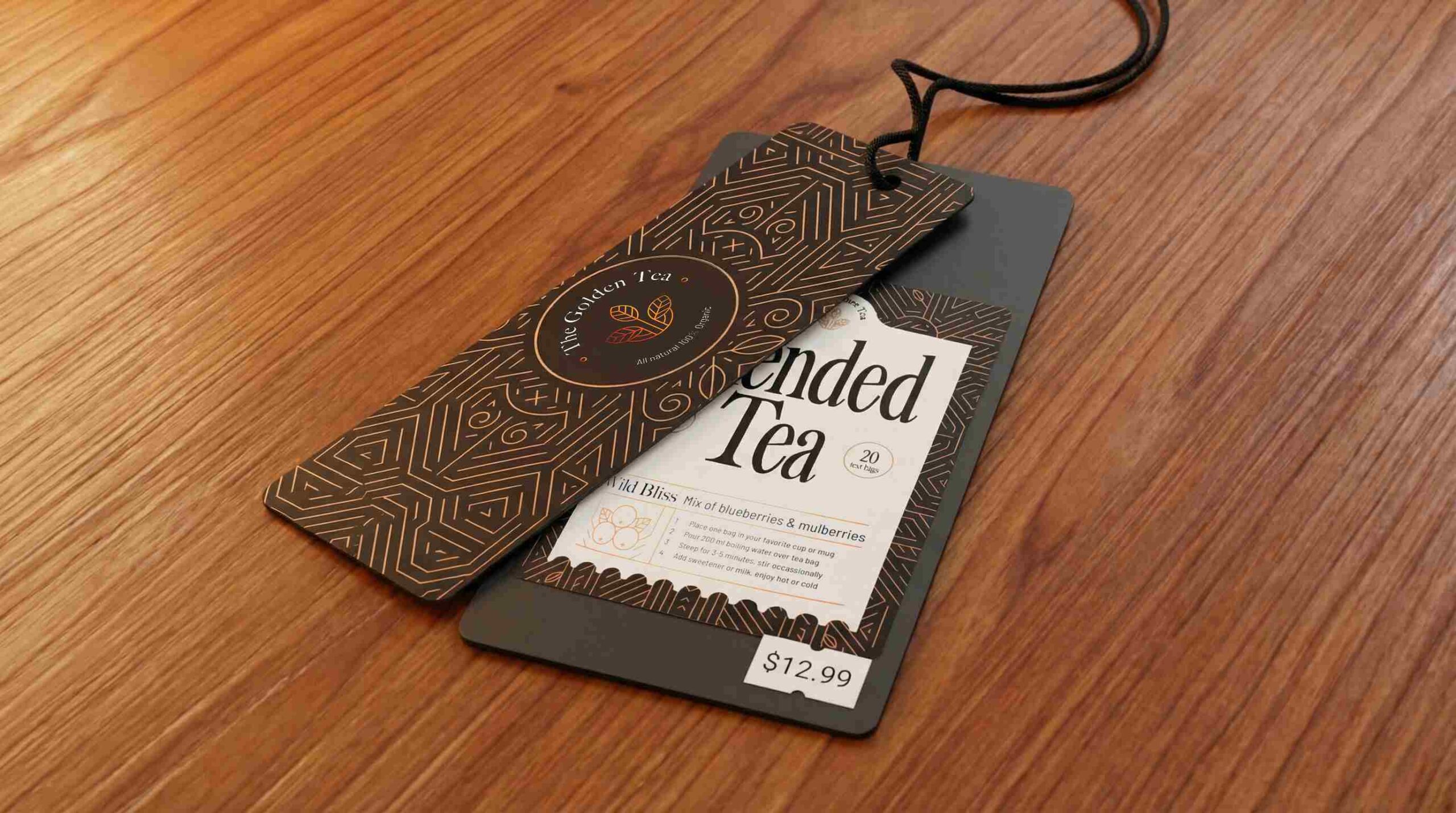
Hand scanning a QR code on a cabbage crate
What QR Codes Actually Do Well
When used correctly, QR codes allow you to:
- Put long or changing information online instead of on the physical tag.
- Update product details without having to reprint your inventory.
- Share information that builds trust, like where you source ingredients or photos of your process.
- Give returning customers an easy link to reorder.
Shoppers are much more likely to scan a QR code if you tell them why. For example, a label that says “Scan for ingredients and care” works better than a QR code with no explanation, because people know what they’ll get.
What Not to Do
- Don’t use QR codes to replace information you’re legally required to include.
- Use QR codes to add extra details, not to hide the essential details.
- Make the QR code easier to scan by adjusting its size. A small QR code may not scan properly.
When customers see that scanning a QR code helps them make a better choice, they use it more often than most sellers expect.
Designing for Short Runs Without Sacrificing Brand Consistency
One overlooked challenge for artisan vendors is redesign fatigue. Frequent changes to flavors, scents, or SKUs can lead to outdated labeling, mismatched tags, or rushed reprints.
Rather than making a new tag for each product, try using a modular tag system.
How the Modular Tag Approach Works
- Create one core tag that carries your brand identity and values.
- Add flexible details, like flavors or batch numbers, using stickers, stamps, or batch labels.
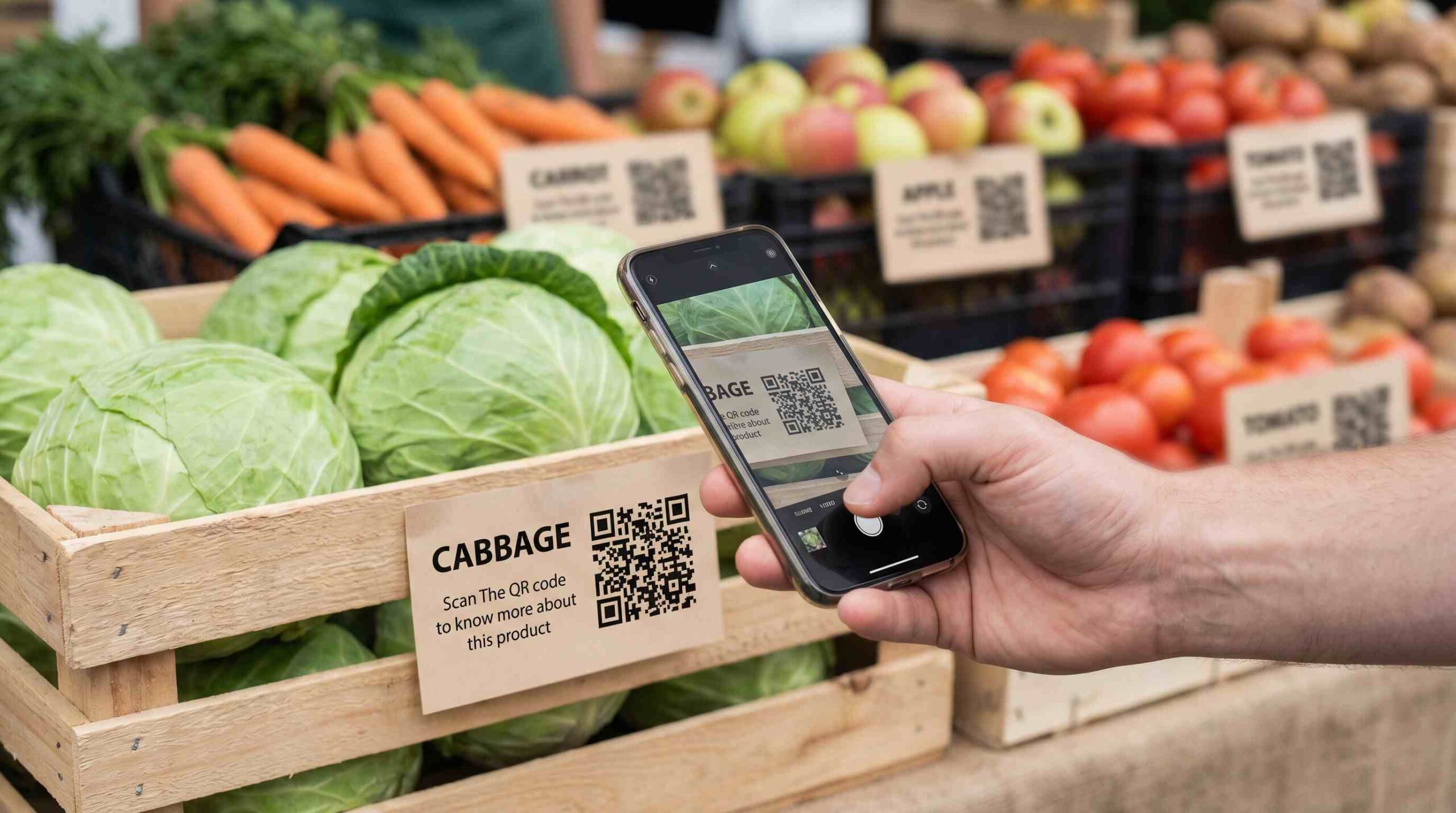
Tea product hang tags on a wooden surface
Keeping things simple with this method helps you cut down on waste, save on printing costs, and restock more easily during busy market times.
It also helps your booth look more put-together, which can make customers see your business as more professional and trustworthy.
Designing for Short Runs Without Sacrificing Brand Consistency
One overlooked challenge for artisan vendors is redesign fatigue. Frequent changes to flavors, scents, or SKUs can lead to outdated labeling, mismatched tags, or rushed reprints.
Rather than making a new tag for each product, try using a modular tag system.
How the Modular Tag Approach Works
- Create one core tag that carries your brand identity and values.
- Add flexible details, like flavors or batch numbers, using stickers, stamps, or batch labels.
Keeping things simple with this method helps you cut down on waste, save on printing costs, and restock more easily during busy market times. It also helps your booth look more put-together, which can make customers see your business as more professional and trustworthy.
Compliance Without Compromising Your Brand
If you sell food or personal care items, you don’t have to pick between a clean design and meeting requirements. You can have both. Simply keep the required details visually separate from your branding.
Make sure required information like net weight, ingredients, and allergen warnings are:
- Easy to read
- Simple to find
- Visually set apart from your marketing text
When you keep compliance details in their own section instead of mixing them with your brand story, your labels look more confident and are easier to read. Customers, especially those with dietary or skin sensitivities, will value this clarity.
Practical Steps You Can Apply to Your Tags This Week
Applying the principles mentioned above, here are some practical tips you can use right away to improve your artisanal product tags.
- Spread out all the information you include on your tag and sort it into three layers.
- Choose what needs to be clearly visible from arm’s length.
- Put trust-building details on the back of the tag.
- Find information that could go behind a QR code instead of being printed on the tag.
- Check if your tag is easy to read by holding a printed version at the same distance customers would see it at a market, instead of just looking at it on a screen.
Even small layout changes can make a bigger difference than completely redesigning your tag.
People Also Ask About Artisanal Product Tags
A.
Yes, customers do read tags, but only when they are clear and easy to scan.
A.
Double-sided printing is worth it. The small extra cost usually pays off with better readability and fewer redesigns later.
A.
A common mistake is putting the entire brand story on the front of the tag instead of encouraging customers to learn more elsewhere.
A.
Choose flexible templates and modular content so your tags can grow with your business.
Small Tags Should Support Big Business Goals
Your tag does more than just package your product. It acts as a sales tool, builds trust, and represents your brand. A well-designed label helps customers see your value, feel good about buying, and remember your brand after the sale.
The goal is not to say everything. Focus on sharing what matters most, at the right time and place.