Brochures are a familiar way to share detailed information about a brand or services in a compact format. In the spa industry, a short brochure can shape first impressions, help clients make decisions, and support your team during each visit. When guests pick up your brochure, they start to form ideas about your expertise and which services to try. While a simple price list helps clients feel comfortable, a thoughtfully designed brochure gives them the confidence to explore more options. This guide will help you turn your spa menu into a clear, client-friendly tool that explains your value, builds trust, and encourages first-time visitors to become loyal clients.
What Clients Are Really Looking For When They Open Your Menu
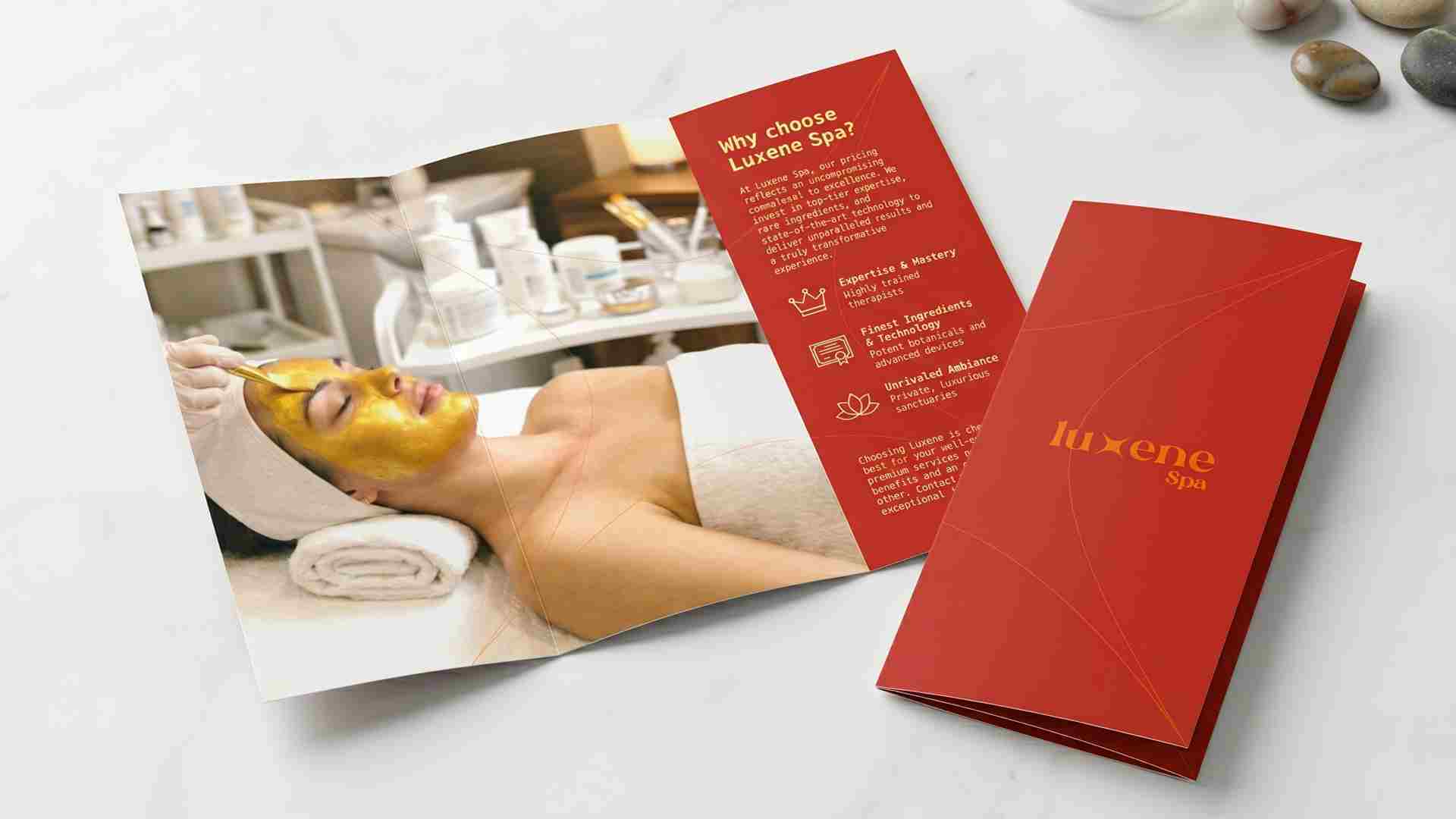
Opened red spa brochure showing facial.
Most clients aren’t looking at your menu to compare technical details. They just want to feel confident in their choices.
In a real spa, clients usually have questions like these:
- Which service is right for me?
- What results should I expect?
- Why does one option cost more than another?
- Is this worth adding to my appointment?
A general tip for creating brochures is to see them not just as advertising, but also as a quiet guide to your services.
A good spa brochure should do a few key things:
- Explain what each treatment offers and who will benefit from it.
- Focus on the results clients can expect, not just the methods used.
- Help your therapists and front desk team by answering common questions right in the brochure.
This helps both clients and staff have smoother experience, and everyone gets the same helpful information no matter who is working.
Try to think of your brochure as a friendly conversation between your best therapist and a first-time guest. Now, let’s look at some helpful tips for organizing your brochures.
Reorganizing Your Spa Menu Brochures
Tip 1: Organize Services by Client Goals, Not Just Categories
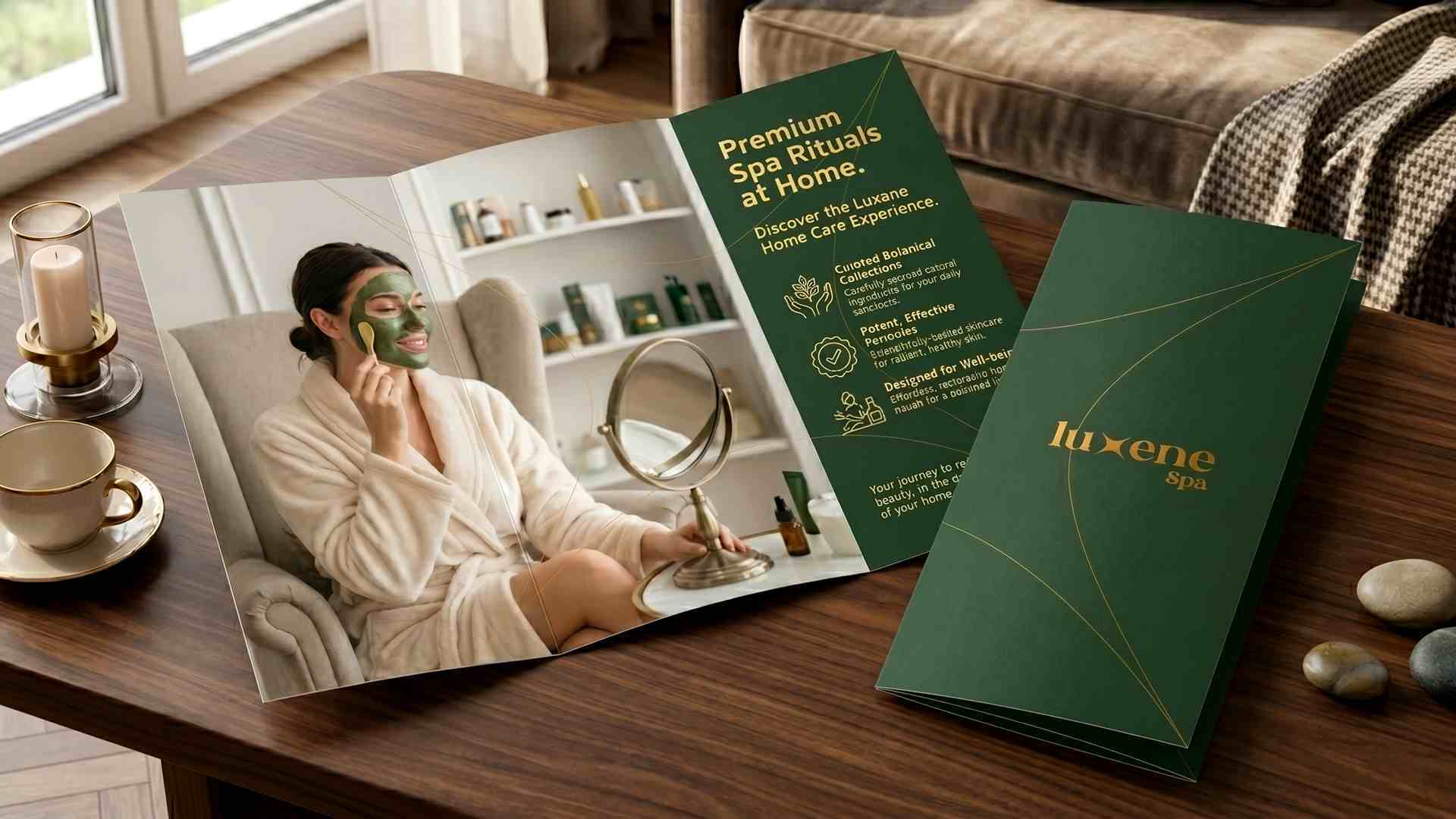
Green brochure showing home spa rituals.
Most spas offer multiple services, and grouping them into what the client wants to achieve will automatically give you the brochure’s structure.
Examples of goal-based categories:
- Relaxation and Stress Relief
- Skin Brightening and Renewal
- Acne and Problem-Skin Care
- Body Sculpting and Detox
Organizing them this way helps clients quickly narrow their choices and feel more confident in their selections.
Tip 2: Lead With Benefits Before Details
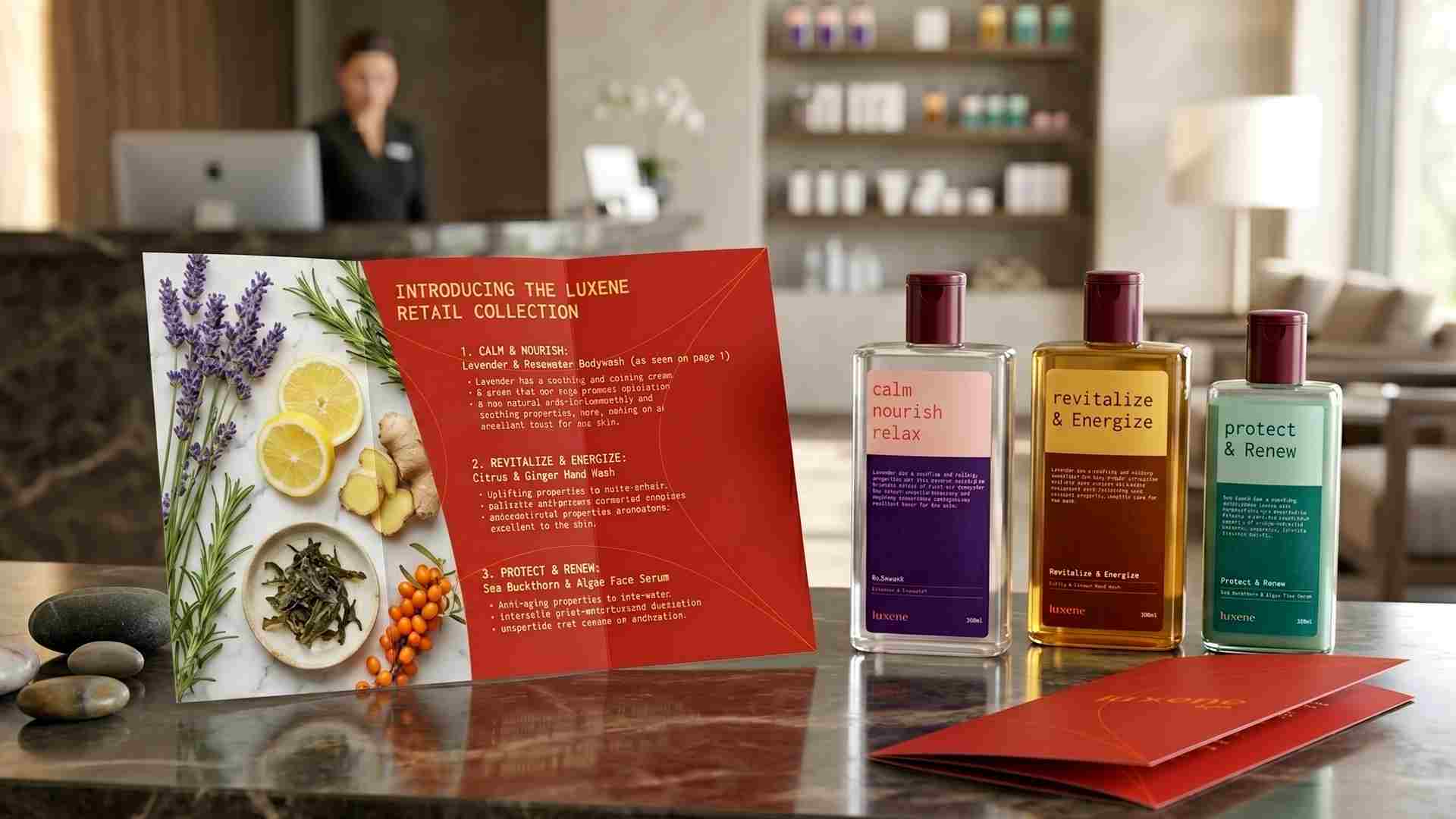
Retail product bottles next to brochure.
Spa clients care more about the results than the technical details. Try describing your services by focusing on the benefits clients will see, rather than just listing the time, method, or tools used.
For Example:
- Facial Spa: 60-minute facial using professional-grade products
The first example is too simple and might not catch a client’s interest. Now, look at this next version:
- Facial Spa: Helps restore hydration, smooth texture, and calm stressed skin for a refreshed, healthy glow.
The descriptive information focuses on the benefits and outcomes that a client would appreciate.
Once you’ve determined the benefits through the text, you can now include:
- Who the service is best for?
- Key techniques or ingredients
- Suggested add-ons
This approach grabs the client’s attention and encourages them to learn more about your service.
Tip 3: Explain Why Certain Services Cost More

Employee assists guest at check in
One challenge is helping customers choose premium treatments, especially when the differences between services are not immediately clear.
Adding a short explanation builds transparency and trust.
Some examples include:
- Treatment provides deeper, more focused relief through longer, more focused time and pressure techniques tailored to each person.
- It targets specific needs, such as chronic tension, stress recovery, or skin care, using methods designed for each concern.
- We use high-quality oils, specialized tools, and advanced techniques to deliver both immediate results and long-term benefits.
Of course, these explanations should come after the benefits in the layout, so customers know what they’re getting first and understand what they are paying for.
Tip 4: Make Your Brochure Informative
A brochure becomes more useful when it shares helpful insights clients can actually apply. Adding simple wellness and skincare guidance makes it worth keeping.
Consider adding clear, easy-to-read sections like these:
- Offer simple tips clients can use at home to keep their skin healthy and balanced between visits.
- Provide clear aftercare reminders so clients know how to protect their treatments and make the most of them.
- Point out daily habits, such as staying hydrated and using sun protection, that help clients get better results from regular spa visits.
Encourage clients to take the brochure home and look at it again later. This helps keep your brand in their thoughts and reminds them of the value you offer.
Tip 5: Show How Signature Products Continue Your Services
Selling retail products works best when you present them as a natural part of your client’s treatment journey.
Rather than listing lots of products, highlight a few key items that tie directly to the services you offer in your brochure.
For each featured product, be sure to include:
- A main benefit, described in simple terms.
- Who will benefit most from it.
- When clients should use it at home.
This approach helps clients see your products as helpful tools, not just extras.
Tip 6: Include Gentle Prompts That Encourage Conversation
Use your brochure to start conversations, not to take their place. Helpful prompts can guide clients and still leave room for your team to offer personal recommendations.
Gentle prompts can make clients feel more at ease when asking questions:
- Encourage clients to ask their therapist how a treatment fits their skin type, concerns, and long-term goals.
- Offer certain services as a friendly starting point for first-time guests who might not know what to book.
- Point out treatments that work well for seasonal skin changes, so clients know when and why to try them.
These prompts help your staff guide clients more easily, without needing to use a hard sell.
Spa Menu Brochures Offer Big Benefits for Your Business
A well-made spa brochure helps your clients pick the right services and makes every interaction smoother. If your brochure clearly explains what you offer and why it matters, clients are more likely to trust you and feel confident in their choices. Instead of only listing services, use your brochure to guide clients and encourage them to try something new. With clear design, simple messaging, and help from UPrinting, your brochures can become useful tools for improving client experiences and growing your business.