QR codes are seen everywhere these days, from labels and product packaging to business cards, banners, and postcards. With around 89 million Americans using them for mobile payments, information access, and promotions, it’s no surprise that global QR code usage has increased by 57% in 2024. In fact, their visibility is expected to rise by 22% in 2025.
Well, the quick answer is — no, they don’t!
The QR codes we often see are small, pixelated boxes and you might have, at some point, thought if they always had to be square.
QR codes , or quick-response codes, are two-dimensional barcodes composed of data modules in a specific shape, usually a square. These modules can store encoded data like URLs, payment information, or contact details. Unlike traditional barcodes that are read per line with a laser scanner, QR codes can be scanned simultaneously using a smartphone.
QR codes were originally designed as squares when they were invented in 1994 by Masahiro Hara, an engineer who worked for Denso Wave. While it may seem like a coincidence, there are several reasons why QR codes are designed to be square:
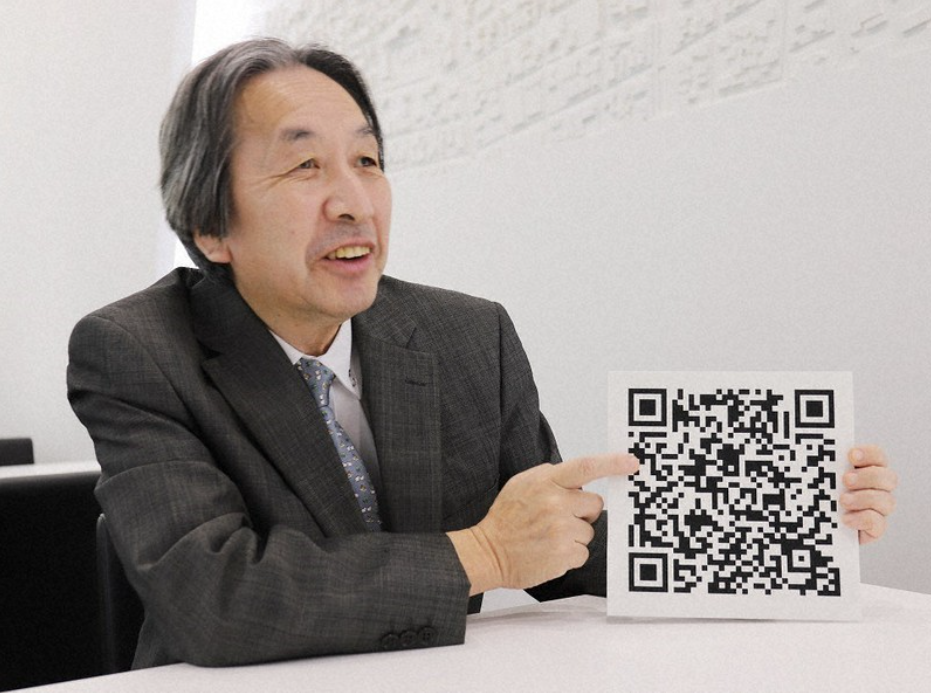
Man in suit pointing at a QR code sign on a table.
Absolutely — QR codes can be custom-shaped to fit your branding and business needs! With the advances in design and technology, it’s now possible to create unique QR code shapes that are both visually appealing and functional. Here are some examples that you can try:
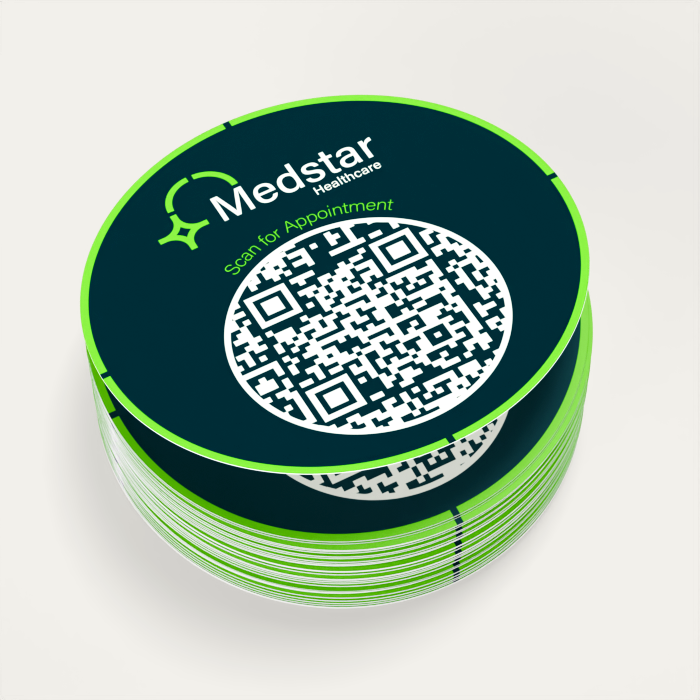
A sleek and modern choice that blends well with logos and stamps. It creates a smooth and organic look while keeping your QR code scannable. Perfect for businesses aiming for a minimalist yet professional design.
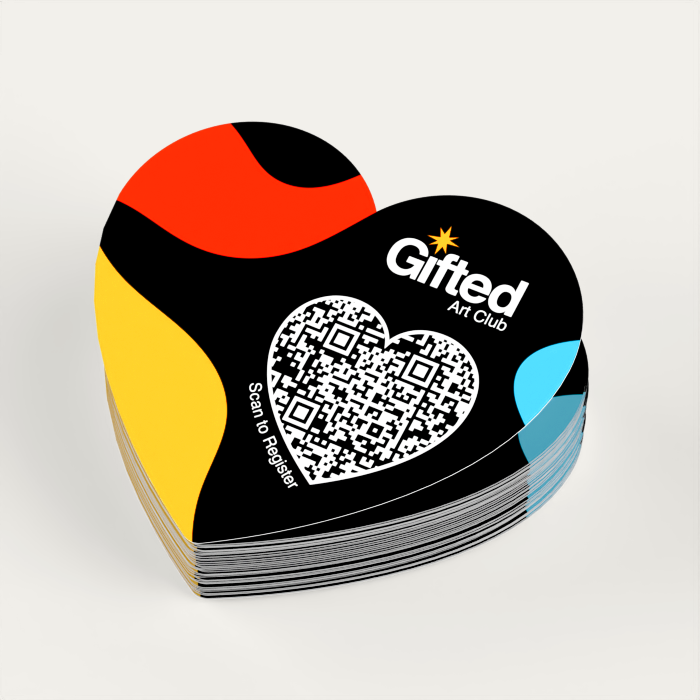
A charming way to add warmth and emotion to your QR code. Ideal for events centered around love, care, or giving back to the community. Works well for wedding businesses, charities, and Valentine’s campaigns.
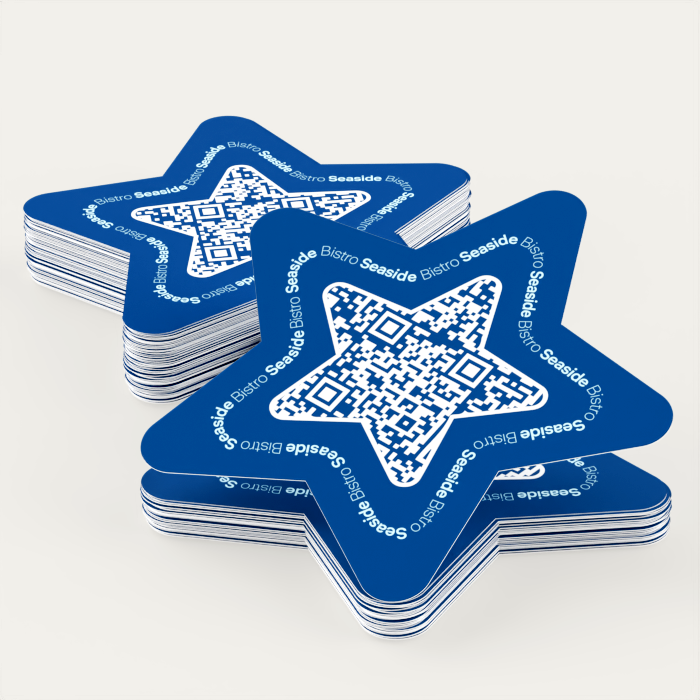
fun and eye-catching shape that highlights achievements and celebrations. A great fit for contests, awards, or holiday-themed promotions. It draws attention while maintaining full functionality.
Custom-shaped QR codes are created by placing a standard square QR code within a larger design. The goal is to ensure their functional elements blend well with the unique design without losing their scannability. Here’s how they work:
Custom-shaped QR codes come with benefits, but they also have a few disadvantages. Here are their pros and cons to help you determine if they suit your needs:
| Pros | Descriptions |
|---|---|
| They stand out | Because of their unique shape, custom-shaped QR codes immediately capture the attention of your audience. They also give your brand a competitive edge as they veer from the standard square QR code most people see. |
| They showcase your brand | Custom-shaped QR codes allow you to incorporate your brand’s logo or theme into the QR code. This gives your brand more visibility and reinforces brand recognition to your audience. |
| They are creative | Custom-shaped QR codes allow more room for creativity, making QR codes visually appealing and adding a personal touch to marketing products. |
| They blend with designs | Custom-shaped QR codes are versatile. They can be integrated into any design, whether on flyers, posters, banners, postcards, merch, or product packaging. |
| They encourage engagement | Because custom-shaped QR codes are eye-catching, they also spark curiosity, drive people to scan them, and encourage user interaction. |
| Cons | Descriptions |
|---|---|
| They might be hard to scan | When not designed correctly or when the data grid is damaged or obstructed, custom-shaped QR codes can confuse scanners and might not work properly. |
| They might not be compatible | Some smartphones or scanning apps may have scanning issues with custom-shaped QR codes. This is why it is important to test them across various devices and apps before printing them in bulk. When in doubt, choose the standard square shape, as it applies to older devices. |
| They take time to create | Depending on how intricate the design is, a custom-shaped QR code might need more time and effort to design compared to a traditional square one. This is to ensure that the design looks great while still being functional. |
