Weddings move fast, and vendor referrals are competitive. The right printed materials help you look legit, book faster, and stay memorable, whether you’re meeting couples at a bridal show, walking through a consultation, or coordinating vendors on event day.
This checklist breaks down what to print based on how wedding vendors actually work: booking + consults, bridal show networking, event-day coordination, and referral follow-ups.
What Wedding Vendors Should Print First (The Must-Have Starter Kit)
If you’re building your print kit from scratch or prepping for the next bridal expo, start here. These are the pieces that work across almost every wedding vendor category: photographers, planners, florists, DJs, HMUA teams, caterers, venues, and more.
The goal: cover your bases without overspending and create a set of materials you can reuse all season.
Business cards
Business cards are the fastest way to turn a quick intro into a real connection. They’re especially essential for bridal shows, open houses, and venue networking.
What to include:
- Your name + business name
- Role (photographer, planner, HMUA, etc.)
- Phone and email
- Website and Instagram handle
- QR code (optional, but helpful)
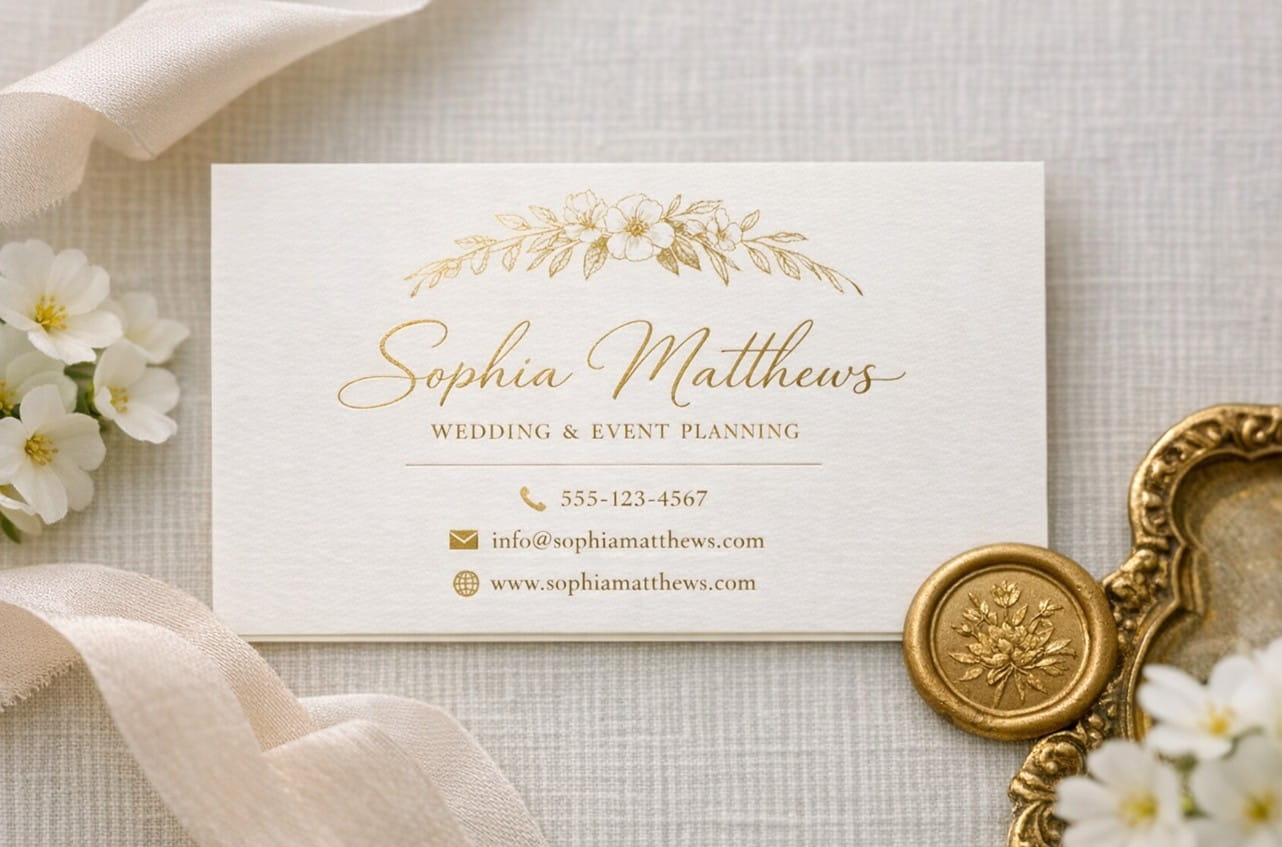
Elegant business card with gold foil typography and floral accents
Pro tip: Bring two versions if your budget allows:
- A standard card for everyday handouts
- A premium version for venue managers and fellow vendors who refer clients
One-page service overview or pricing sheet
Couples love clarity. A one-page overview gives them something clean and easy to review after the consultation.
Great for:
- Packages starting prices
- “What’s included” breakdown
- Add-ons and upgrades
- Your booking process and turnaround times
Smart move: Keep it as “pricing overview” instead of a full rate card so you can update pricing without reprinting constantly.
Brochure or mini lookbook
A brochure or small lookbook is where you show polish. It can do the heavy lifting for your brand style, your signature services, and your client results.
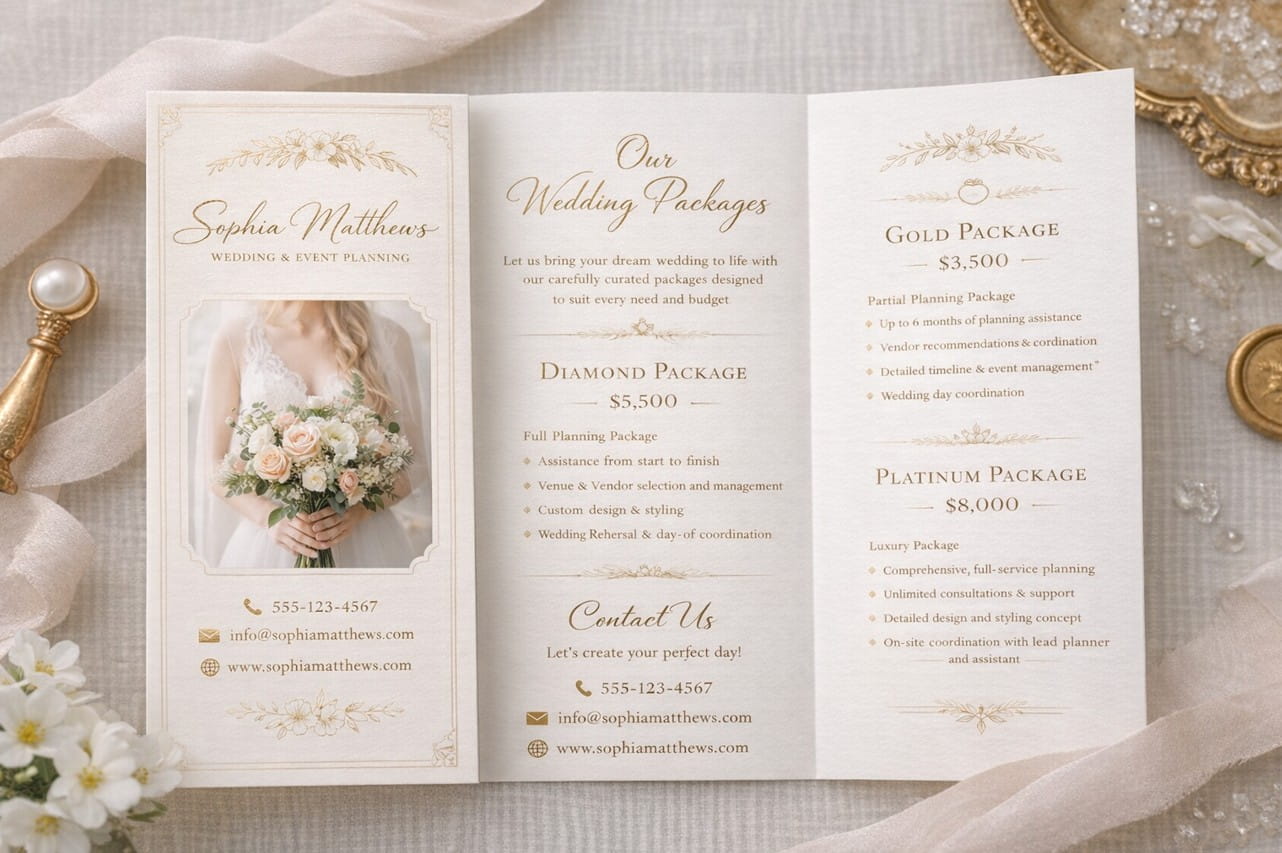
Tri-fold wedding services brochure detailing various package options
Include:
- Your best photos or portfolio highlights
- Service tiers or packages
- Short testimonial quotes
- Your “why” or differentiator
- Clear next step (book a consult, request a quote)
Bridal show handout (postcard or flyer)
At high-traffic events, you need a grab-and-go piece that people can actually keep. Flyers and postcards both work. Choose based on your content and your booth strategy.
Best for:
- A quick intro + QR code
- A limited-time show offer
- “Top packages” snapshot
- Social handles and booking link
Booth signage (table sign + banner option)
Your booth sign is your silent salesperson. It saves you from repeating your elevator pitch 50 times.
Strong booth signage combo:
- Table sign: your name + “what you do” + QR code
- Banner: bigger branding and visibility from across the room
Thank-you cards for clients + referrals
Thank-you cards are simple, but they’re a powerful trust signal. They show professionalism and keep relationships warm long after the event.
Two ways to use them:
- After an inquiry or consult
- After the wedding (best time to encourage reviews and referrals)
Bridal show handout (postcard or flyer)
Promotional wedding postcard
Booth signage (table sign + banner option)
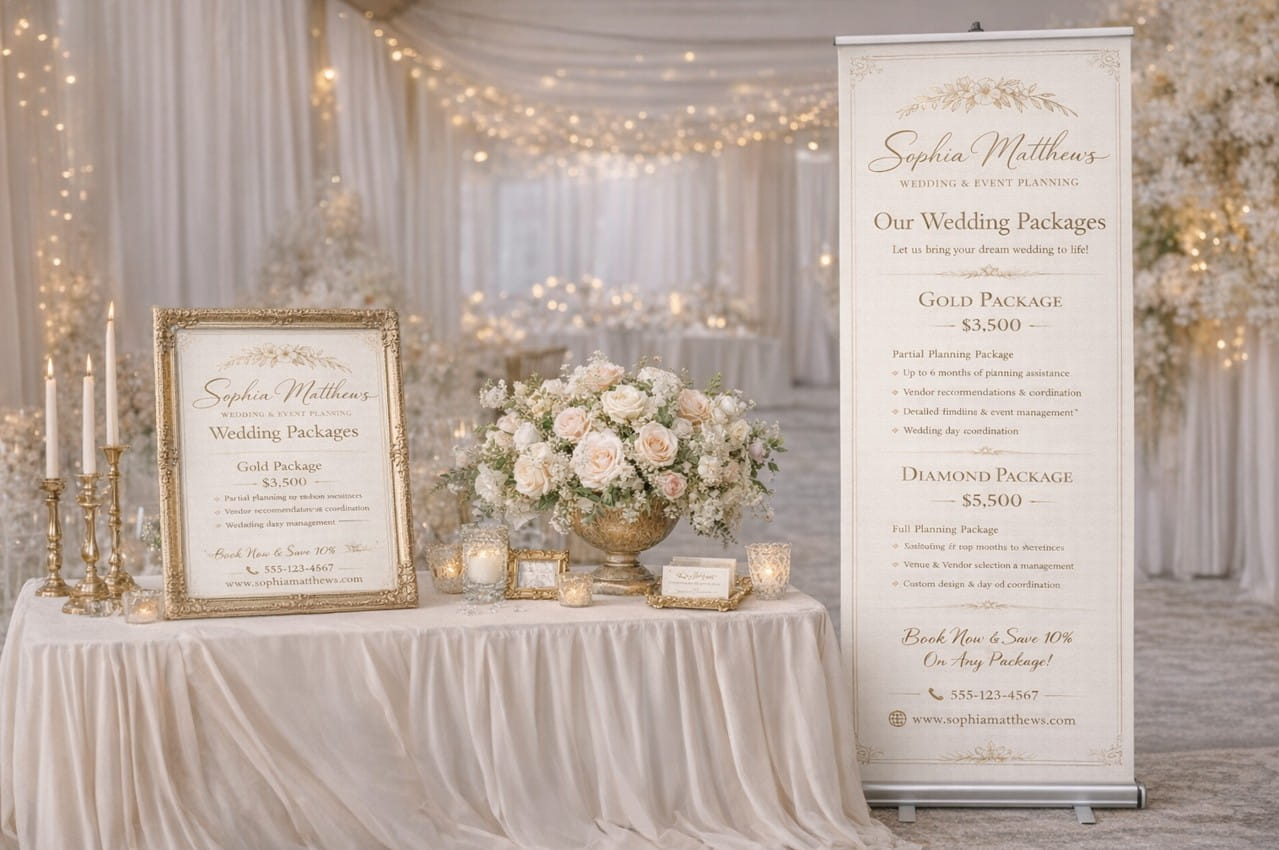
Event display table with a framed sign and a tall retractable banner
Your booth sign is your silent salesperson. It saves you from repeating your elevator pitch 50 times.
Strong booth signage combo:
- Table sign: your name + “what you do” + QR code
- Banner: bigger branding and visibility from across the room
Thank-you cards for clients + referrals
Thank-you cards are simple, but they’re a powerful trust signal. They show professionalism and keep relationships warm long after the event.
Two ways to use them:
- After an inquiry or consult
- After the wedding (best time to encourage reviews and referrals)
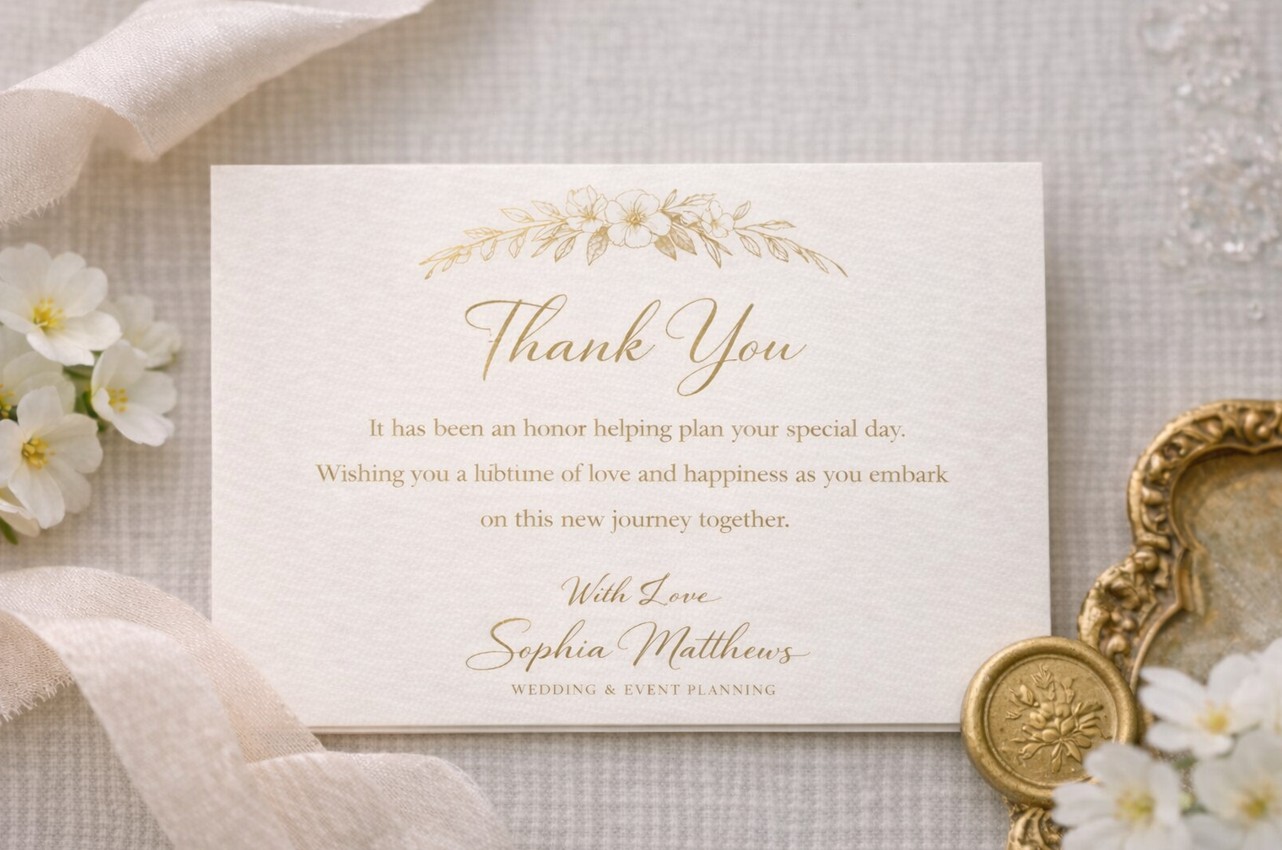
Thank you card with gold foil lettering and floral details
Booking + Consult Prints (Close Faster, Look More Premium)
This is the stage where couples decide whether you’re “one of many” or the vendor they trust. Booking and consult prints are all about clarity, confidence, and making decisions easier.
Business Cards That Get Kept (Not Tossed)
A wedding vendor business card isn’t just contact info. It’s a mini brand experience.
Ways to make your card more keepable:
- Use a clean design with readable fonts
- Add a QR code to your booking page or portfolio
- Include one “signature” line:
- “Modern wedding photography + documentary moments”
- “Planning support from vision to vendor coordination”
- “On-site coordination and timeline control”
Best moments to hand them out:
- Venue walkthroughs
- Bridal shows + open houses
- Vendor meetings
- Consultations and tastings
One-Page Service Menu / Package Overview Sheet
This is the sheet clients reference when they’re comparing vendors after the call.
Must-have sections:
- Your top 2–4 services or packages
- Starting prices or “packages begin at…”
- What makes your process easy (deliverables + timeline)
- Next step: how to book
Bonus: Add a short “What to expect” line like:
- “Inquiry → consult → contract → timeline → wedding day → delivery”
Brochure or Mini Lookbook
If your business is visual (photo/video/floral/design), a brochure can become your strongest closer.
What makes it work:
- A few curated images (not everything you’ve ever done)
- Short captions that show outcomes (“full-day coverage, no rushed portraits”)
- Clear package breakdown
- Testimonials from the type of client you want more of
Optional upgrade: Turn it into a mini booklet if you want a premium “coffee table” vibe.
Bridal Show + Open House Marketing Materials (High-Volume, Grab-and-Go)
Bridal shows are fast. People are collecting a lot of info from a lot of vendors. Your job is to make sure they remember you after the event and actually follow up.
This section covers prints built for volume, visibility, and easy next steps.
Flyers vs Postcards: Which Handout Should You Use?
Both work, but the best choice depends on what you need your handout to do.
Choose flyers if you want:
- More space for packages or pricing structure
- Room for bullet points and service details
- A “menu-style” breakdown
Choose postcards if you want:
- A cleaner look and premium feel
- A simple “book now” CTA with QR code
- Something easy to keep in a bag without folding
Quick rule:
- If your pitch needs an explanation, use a flyer.
- If your pitch is visual and immediate, use a postcard.
Booth Signage That Pulls People In
Your signage should answer two questions in three seconds:
- Who are you?
- Why should they care?
High-performing booth sign messaging examples:
- “Wedding Planner: timelines, vendors, and stress-free coordination”
- “Documentary-style wedding photography, modern edits”
- “Florals designed for photos, movement, and mood”
Booth signage checklist:
- Your brand name and service
- A QR code that leads somewhere useful (booking link, inquiry form, portfolio)
- One short credibility line (years, awards, featured venues, etc.)
Leave-Behind Items That Improve Follow-Up
The best follow-up materials are the ones that are easy to bring home and hard to ignore.
Easy leave-behind add-ons:
- Stickers (great on bags, packaging, and envelope seals)
- Small thank-you cards attached to giveaways
- “Review and referral” mini inserts
Event Day Print Materials (For Smooth Execution + Less Chaos)
Event-day prints aren’t just nice touches. They reduce confusion, save time, and help the wedding run smoother. Planners benefit the most, but almost any vendor can use these for better coordination.
Timeline and Vendor Contact Sheet (Especially for Planners)
This is the document that keeps everyone aligned.
Include:
- Full event timeline (start to finish)
- Vendor contact info + roles
- Load-in, setup, and breakdown times
- Key moments: ceremony start, speeches, first dance, etc.
- Venue notes (where to park, where to enter, who to check in with)
Why it matters: it stops last-minute chaos and prevents miscommunication between vendors.
Vendor Meal Cards / Delivery Tags / Setup Notes (Optional but Useful)
These prints feel small, but they can prevent big mistakes.
Useful examples:
- Meal cards or meal count notes for vendor meals
- Delivery tags for florals, rentals, cakes
- Setup instructions for decor, signage, or seating details
Best use case: when multiple vendors are placing items in the same spaces.
Day-Of Signage Vendors Can Provide or Coordinate
Even if you’re not the “signage vendor,” having signage templates ready can save the day.
Common day-of signage categories:
- Directional signs (“Ceremony this way”)
- Reserved seating signs
- Photo booth instructions
- Gift table notes
- Vendor-only signs (“Staff entrance,” “Do not move”)
Pro tip: Prioritize durability for event day prints since they get handled constantly.
Referral + Repeat Business Prints (The “Keep Getting Booked” Kit)
The best wedding vendors don’t just book once. They build a referral engine. These prints help you stay top-of-mind after the wedding and make it easy for people to recommend you.
Thank-You Cards for Wedding Vendors (Clients + Partner Vendors)
Thank-you cards help you close the loop professionally and keep relationships warm.
Send to clients to:
- Reinforce trust and appreciation
- Encourage reviews
- Remind them what you delivered
Send to partner vendors to:
- Strengthen referral relationships
- Stay visible in the vendor network
- Open doors to future collaborations
Post-Event Follow-Up Cards
These are simple cards that make your follow-up feel more premium than just another email.
Ideas for what to include:
- A short thank-you message
- “Here’s your gallery link” or “Your recap is ready”
- Review request QR code
- Referral reminder
Review + Referral Inserts
Think of these as “tiny marketing tools” that work quietly.
Keep it simple:
- “If you loved working with us, please leave a review”
- QR code to Google or preferred platform
- A small referral incentive (optional)
Smart Materials + Finishes (Look Premium Without Overspending)
You don’t need luxury everything. You just need your printed pieces to feel intentional, consistent, and durable enough for how you use them.
Best Paper Picks for Wedding Vendor Prints
Matte vs gloss (quick guide):
- Matte: clean, modern, easy to read, less glare at events
- Gloss: vibrant photos, strong contrast, more “pop”
Thick cardstock vs standard:
- Use thicker cardstock for: business cards, postcards, booth signs
- Use standard for: flyers, high-volume handouts
When lamination is worth it:
- Signage that gets reused
- Outdoor booths
- High-touch event-day materials
Matching Your Print Style to Your Brand
Your materials should feel like the same brand across everything.
Examples:
- Minimal + modern: clean type, white space, matte finishes
- Editorial + premium: high-res images, structured layouts, thicker stock
- Bold + energetic: strong colors, punchy headlines, high-contrast design
- Planner-forward: clean templates, easy-to-scan layouts, clear labels
Consistency checklist:
- Same logo placement
- Same fonts
- Same color palette
- Same tone and tagline style
Reorder Plan by Season (So You’re Never Scrambling Last Minute)
Most vendors only remember print materials when they’re already running low. A simple reorder plan saves you from last-minute stress, rushed decisions, and inconsistent branding.
When to Restock Your Printed Materials
Restock checkpoints:
- Before bridal show season
- Before peak wedding months
- After a big booking push or marketing campaign
- Anytime you’re below your “minimum stash”
Easy rule: reorder when you hit 25% remaining.
A Simple Vendor Print Inventory Checklist
Keep a running list so you always know what you have on hand.
Track:
- Business cards
- Postcards/flyers
- Service overview sheets
- Brochures/lookbooks
- Signage pieces
- Thank-you cards
- Stickers/inserts
Storage tip: Keep a small “grab-and-go” kit in your car or event bag for networking.
frequently asked questions
A.
Start with the basics: business cards, a one-page service overview, a brochure or mini lookbook, a bridal show handout, booth signage, and thank-you cards. Those pieces cover you from inquiry to booking to referrals.
A.
Bring enough to hand out freely without worrying about running out. A safe range is 100 to 250 cards per event, depending on expected attendance and whether you’re sharing with other vendors too.
A.
Use postcards for quick handouts and fast follow-up. Use brochures when you need room to explain packages, share testimonials, or show portfolio highlights. Many vendors use both: postcards for events, brochures for consultations.
In Summary
A polished print kit helps you stand out, book faster, and stay memorable. Start with must-haves, then build into event-day and referral prints so you can show up prepared at every wedding and every networking opportunity.