Whether you're a freelance designer or part of an established creative agency, your business card should showcase your creativity, brand identity, and professionalism. After all, they serve more than just a means of sharing your contact information. A well-designed business card serves as a miniature portfolio. They help potential clients remember your work and they reinforce your personal brand, which is why it’s critical that you make a good impression the moment you hand yours in.
And we’re here to help you achieve just that. We share the 10 essential elements a designer or creative must include in their business card design.
1. Your Name
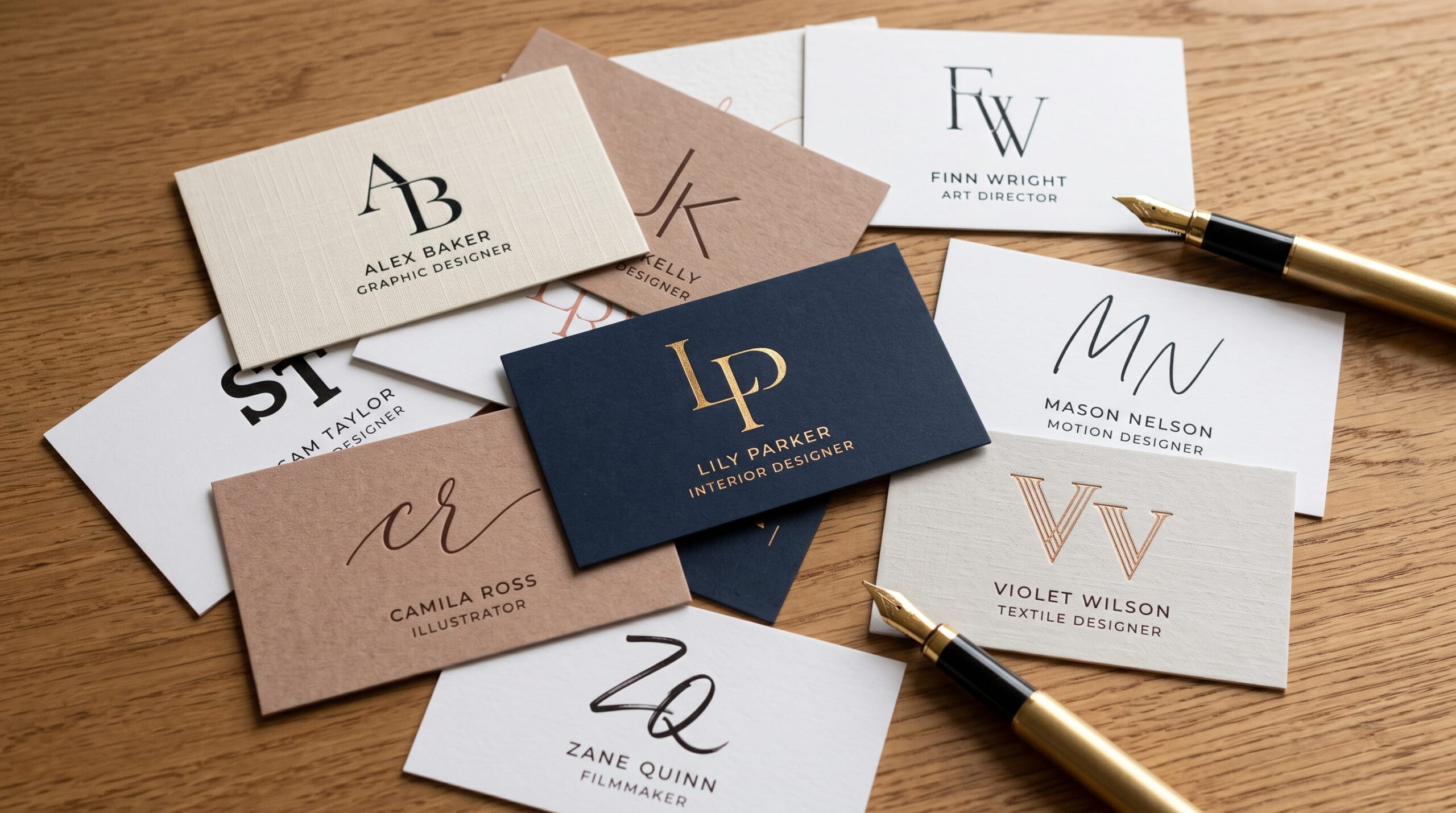
Collection of minimalist designer business cards
Your name should be the most prominent element on your business card, so choose typography that reflects your brand while remaining clear and easy to read. Using a distinctive yet legible typeface helps reinforce your brand identity and ensures people remember you as a creative professional.
2. Professional Title
Many creative professionals work across a wide range of specialties, so it's important to make your expertise immediately clear. Include a descriptive title or specialization that helps potential clients determine whether you’re the right fit for the project. Some examples include Graphic Designer, Brand Designer, UI/UX Designer, Illustrator, Motion Designer, Creative Director, Web Designer, and Freelance Designer.
3. Logo or Personal Insignia
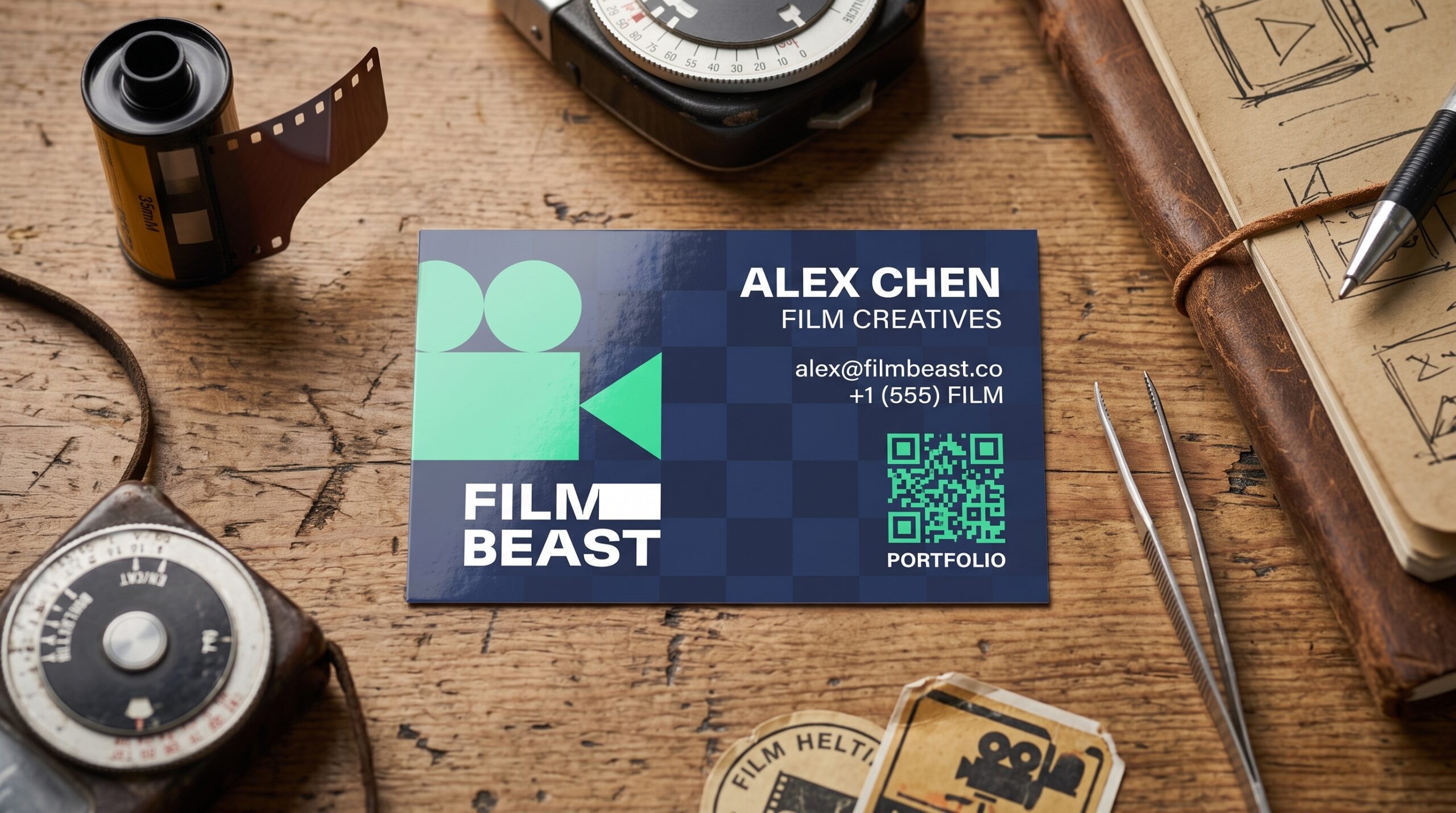
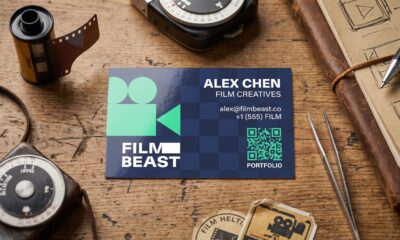
Filmmaker business card with a camera logo and portfolio QR code
Make your logo a prominent feature of your business card. A distinctive visual identity strengthens brand recognition, reinforces professionalism, and creates a cohesive look across your marketing materials.
If you promote yourself as an individual rather than as a studio or agency, consider using a monogram instead of a traditional logo.
4. Contact Information
Keep your contact information concise and relevant and include only communication channels you actively monitor such as phone number, work email address, and website. This way, potential clients can reach you without confusion or delays.
5. Portfolio URL
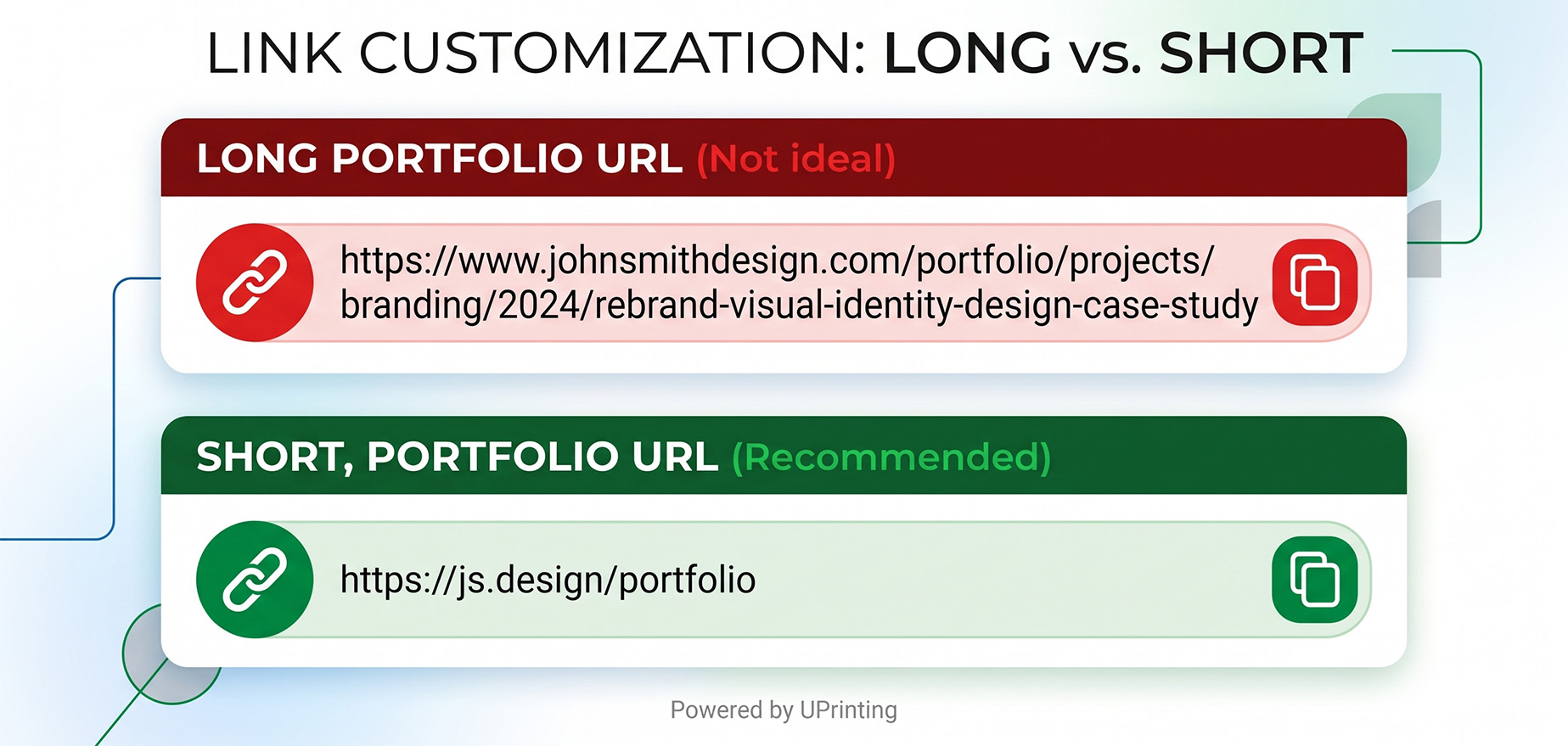
Illustrating long versus short portfolio URLs for business cards
Whether it’s a real website or a URL to a downloadable file, an online portfolio is often a deciding factor for many clients if they will hire you. Add this detail in your business card to direct people to your work and learn more about your services. If your portfolio URL is long or difficult to remember, use a short, custom domain that's easy to type and share.
6. Social Media Profiles
Add links to social media platforms where you regularly showcase your work and engage with potential clients. Remember to only feature platforms that are actively maintained to give them a few ways to explore your work.
As space is limited, it's best to limit to one or two social media handles in your business card, on top of your website or portfolio URL. Some of the most common online social media sites that designers put down on their business cards include the following:
LinkedIn – Best for virtually every creative professional.
Behance – Ideal for graphic, brand, and UX designers.
Dribbble – Great for UI/UX, product, and graphic designers.
Instagram – Best if your work is highly visual and you post regularly.
ArtStation – Recommended for game, concept, and 3D artists.
7. QR Code
A QR code provides a quick and convenient way for potential clients to access your portfolio, contact page, or digital business card with a simple scan. It bridges the gap between your printed business card and your online assets, making it easier for clients to explore your work and connect with you.
For reliable scanning, use a QR code that's at least 0.75 × 0.75 inches (19 × 19 mm). This size offers a good balance between readability and a clean, professional business card design.
8. Tagline or Short Value Statement (Optional)
A short, memorable tagline can reinforce your brand and give potential clients a quick sense of your design philosophy or area of expertise. While optional, it can make your business card more distinctive and memorable. We share some sample taglines that you can use as a jump-off point:
- Less Noise. More Impact.
- Designed to Stand Out
- Creativity with Purpose
- Simple. Bold. Memorable.
- Design That Speaks
- Make It Memorable
- Built to Be Seen
- Creativity in Every Detail
- Distinct by Design
9. Design Style That Represents Your Brand
Your business card should reflect your style and design expertise. Every visual element — from the typography and color palette to the layout and graphics — should work together.
10. High-Quality Print Finishes
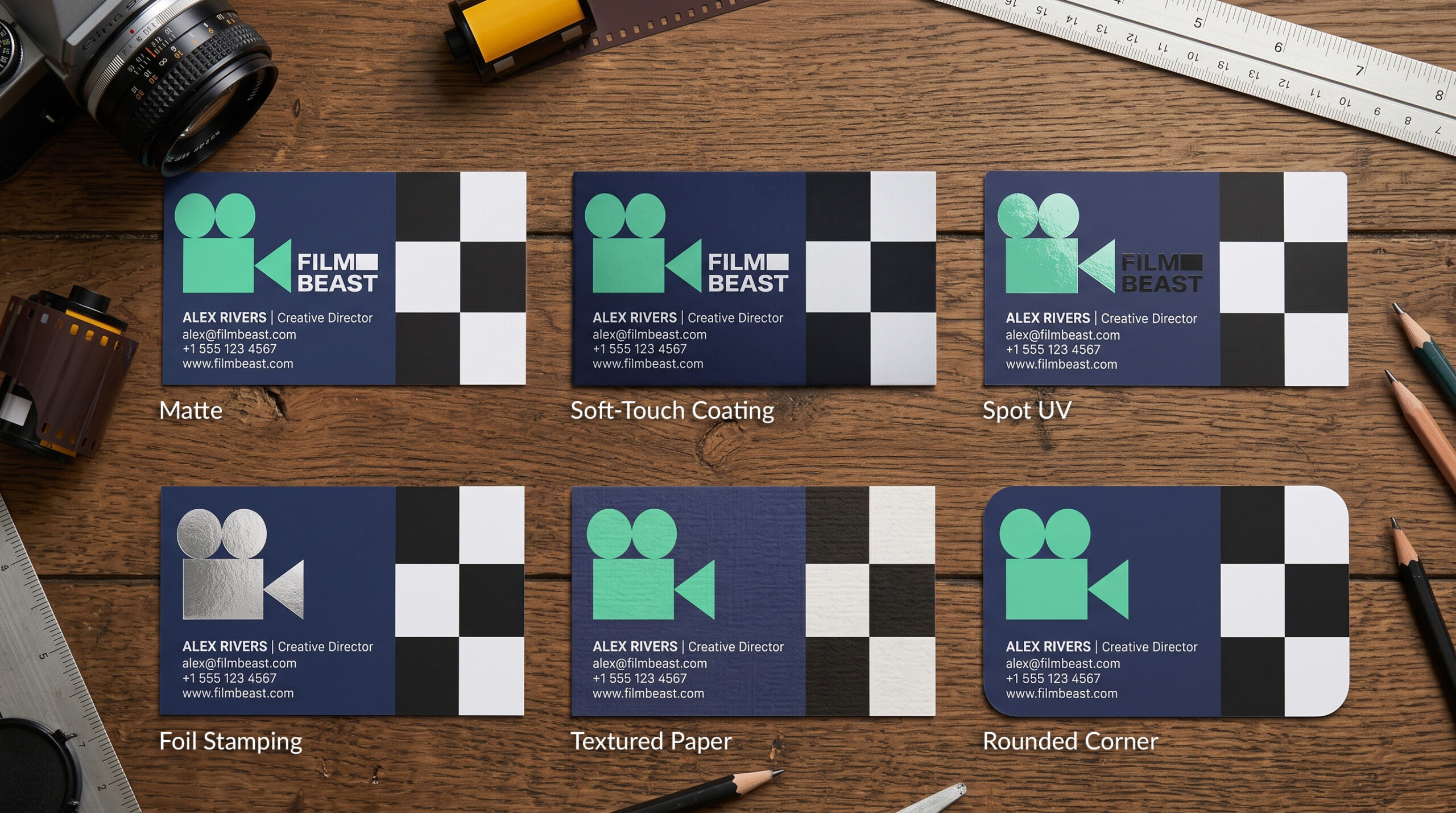
Business card finish options: matte, soft-touch, spot UV, foil, textured, and rounded corners
The materials and finishes you choose are just as important as the information printed on your business card. They influence how your card looks, feels, and is remembered. Consider premium finishing options such as:
- Matte finish
- Soft-touch coating
- Spot UV
- Foil stamping
- Textured paper
- Rounded corners
- Thicker cardstock
6 Tips for an Effective Designer Business Card
A great business card balances creativity with usability, so keep these best practices in mind:
- Keep the layout clean and simple. Focus on the essential information and avoid adding unnecessary design elements.
- Prioritize readability. Choose legible fonts, maintain sufficient contrast, and establish a clear visual hierarchy.
- Let your design support your message. Use typography, color, and graphics to reinforce your personal brand without overwhelming the content.
- Maintain consistent branding. Align your business card with your website, portfolio, social media, and other marketing materials for a cohesive brand experience.
- Use white space strategically. Giving elements room to breathe creates a more polished, professional look and improves readability. The general recommendation is to allocate 30–50% of the design to negative space to avoid a cluttered appearance.
- Proofread before printing. Double-check your name, job title, contact details, and website URL to avoid costly reprints and missed opportunities. Finally, make sure to test your QR works properly and redirects to the right page before you send your business card file for printing.
Final Thoughts
Your business card is often the first opportunity to showcase your design skills. By combining essential contact information with a design that reflects your style and expertise, you can leave a lasting impression and make it easy for potential clients to connect with you.
Design your custom business cards today with UPrinting and make every introduction count.