Trading cards have evolved from a niche hobby into a thriving global industry; one built on passion, community, and serious collector demand.
For businesses ready to get in on it, creating your own trading card line is one of the most rewarding ways to make your mark. The process takes effort, but the result is a tangible product with real, lasting appeal.
UPrinting is here to help. From design and artwork to printing and grading, here's everything you need to know to enter the trading card industry with confidence.
Before You Create: Learning the Different Types of Trading Cards
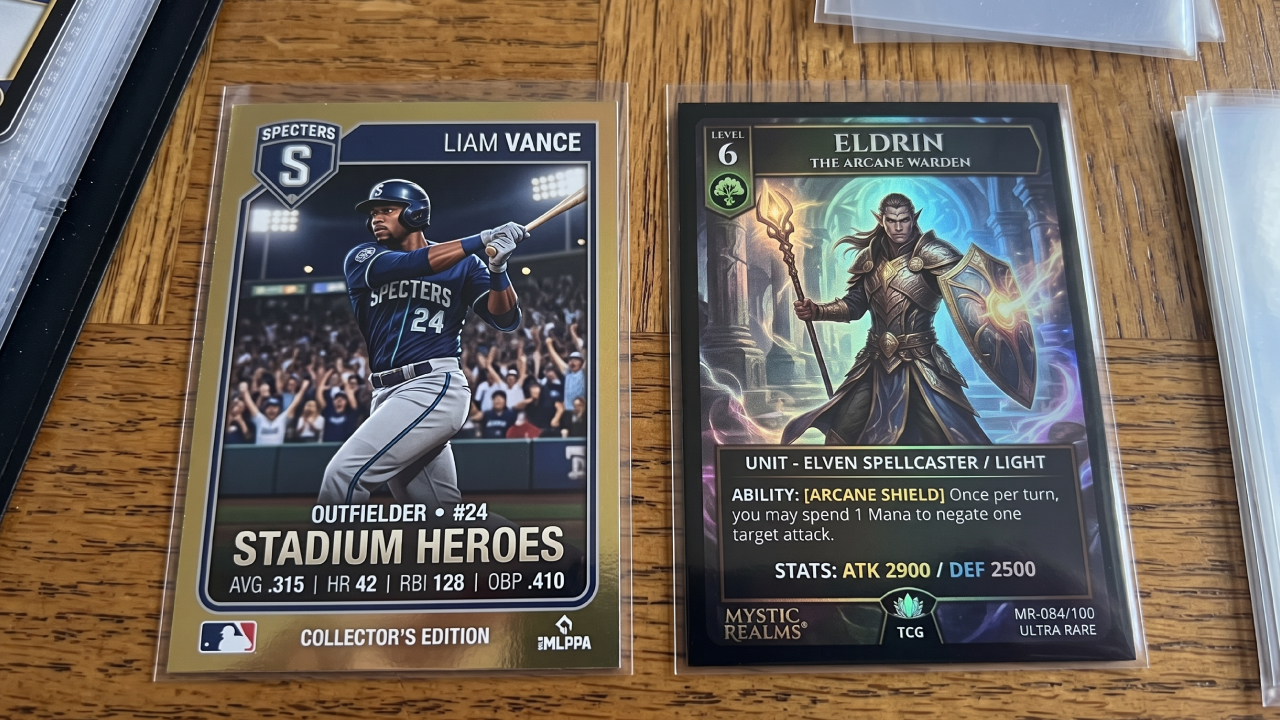
Baseball and fantasy trading cards in protective clear sleeves
Before diving in, decide what kind of trading card you want to make. Most fall into two main categories; each with its own purpose, audience, and design style.
Collectible Cards (Sports Cards and Entertainment Cards)
Collectible cards are created primarily for collecting, trading, showing, and keeping. This group includes sports cards showcasing well-known athletes and entertainment cards featuring celebrities, actors, musicians, and other public figures. Their value comes from who is on the card, their special moments, and the accuracy of the information. When you design collectible cards, use bold visuals, lasting appeal, and details that fans and collectors will recognize.
Trading Card Games (TCGs)
Trading card games, or TCGs, are made for both collecting and gameplay. Each card usually stands for a character, ability, item, creature, or special action that players use in matches. Unlike collectible cards, TCGs focus on rules, balanced card effects, and clear mechanics to make the game fun and fair. Building an interesting world, adding engaging stories, and making sure cards are easy to read all help create a great experience for players.
Collectible cards and trading card games may look similar, but their goals are quite different. Knowing which type you want to make will help you create trading cards that are more original and meaningful.
Creating the Trading Card Design
Once you've decided on the type of card you want to make, it's time to build your card design. Consistency is essential because it makes your cards recognizable and discourages counterfeits. Consistent, balanced designs are also a must for creating a card game to ensure fairness during play.
1. Know the Standard Card Size
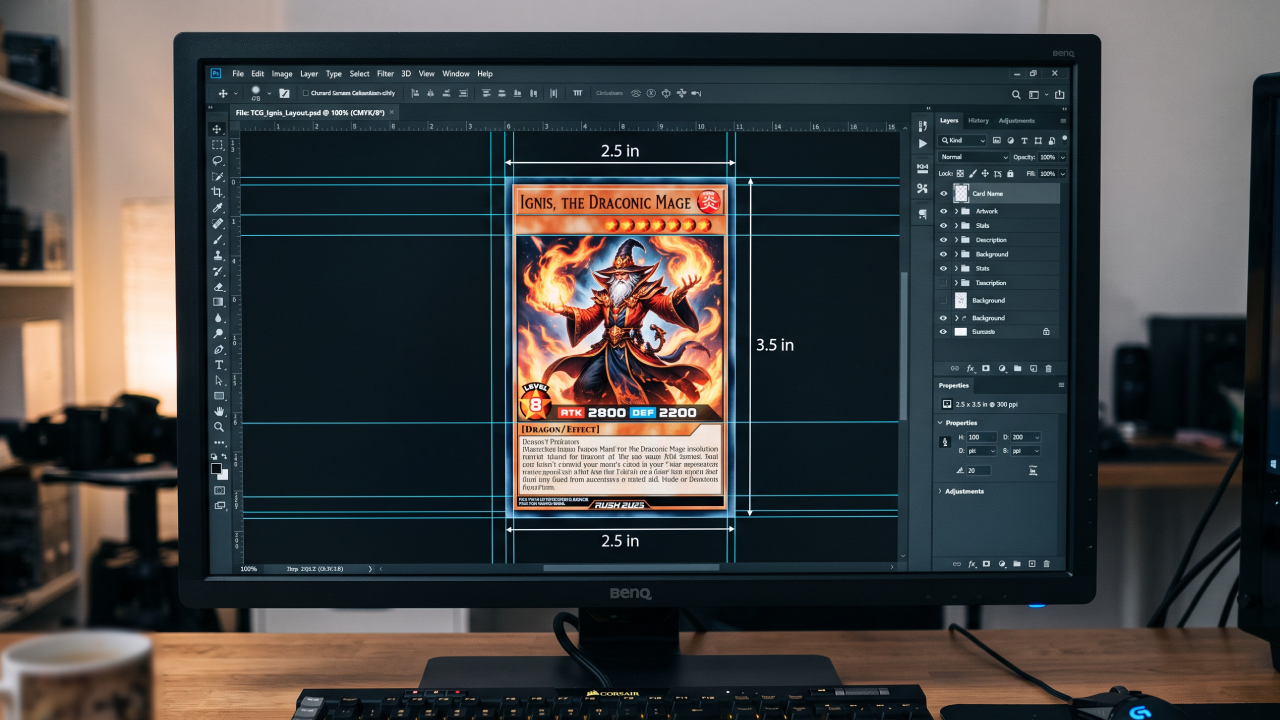
Standard 2.5 by 3.5 inch trading card dimensions in design software
Know the Standard Card Size
Most trading cards measure 2” x 3.5” to fit standard sleeves, binders, and deck boxes. You can use a different size but ensure all the cards have uniform dimensions. Rounded corners are recommended to prevent damage and maintain their appearance.
2. Create Your Front and Back Card Layouts
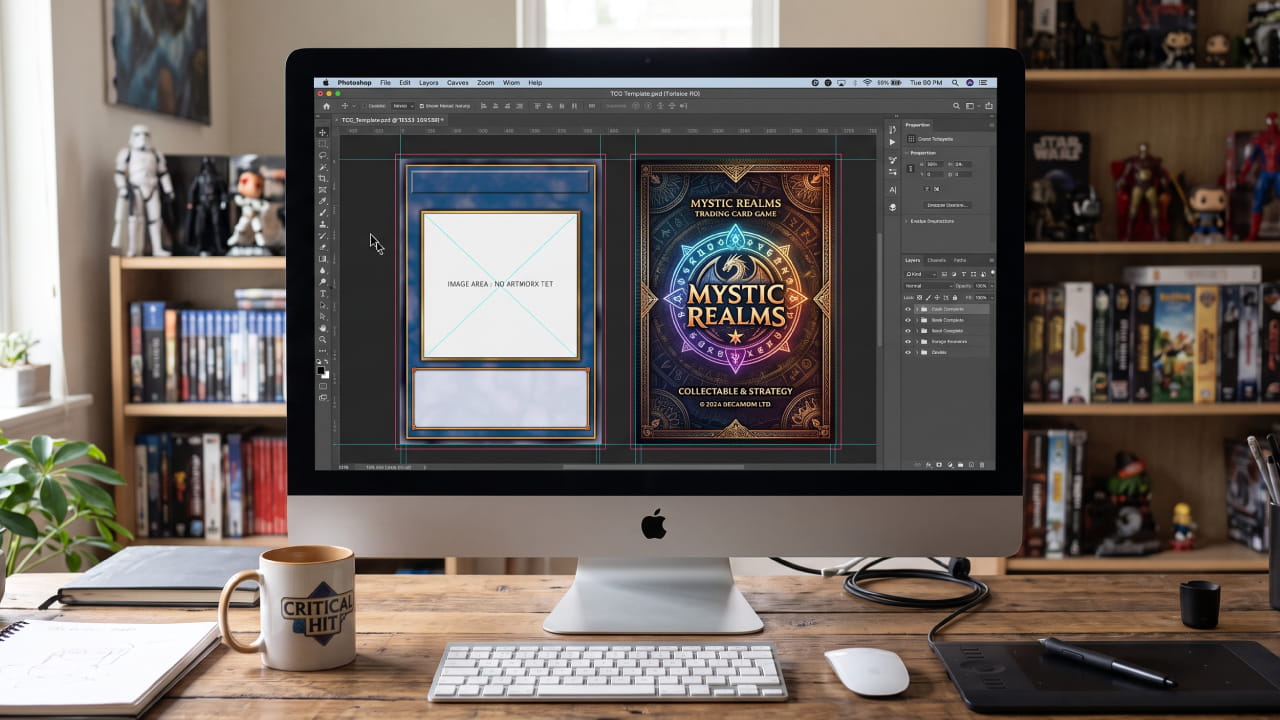
Front and back trading card design templates
Your card layout defines its visual identity. Create a consistent front with designated spaces for images, text boxes, and identifiers. Afterward, create a uniform design for the back side of the card. Use creative patterns or unique graphics that serve as identifiers for your card, ensuring that these are authentic and original. Use CMYK color settings for accurate and consistent print quality.
3. Organize Texts, Images, and Details
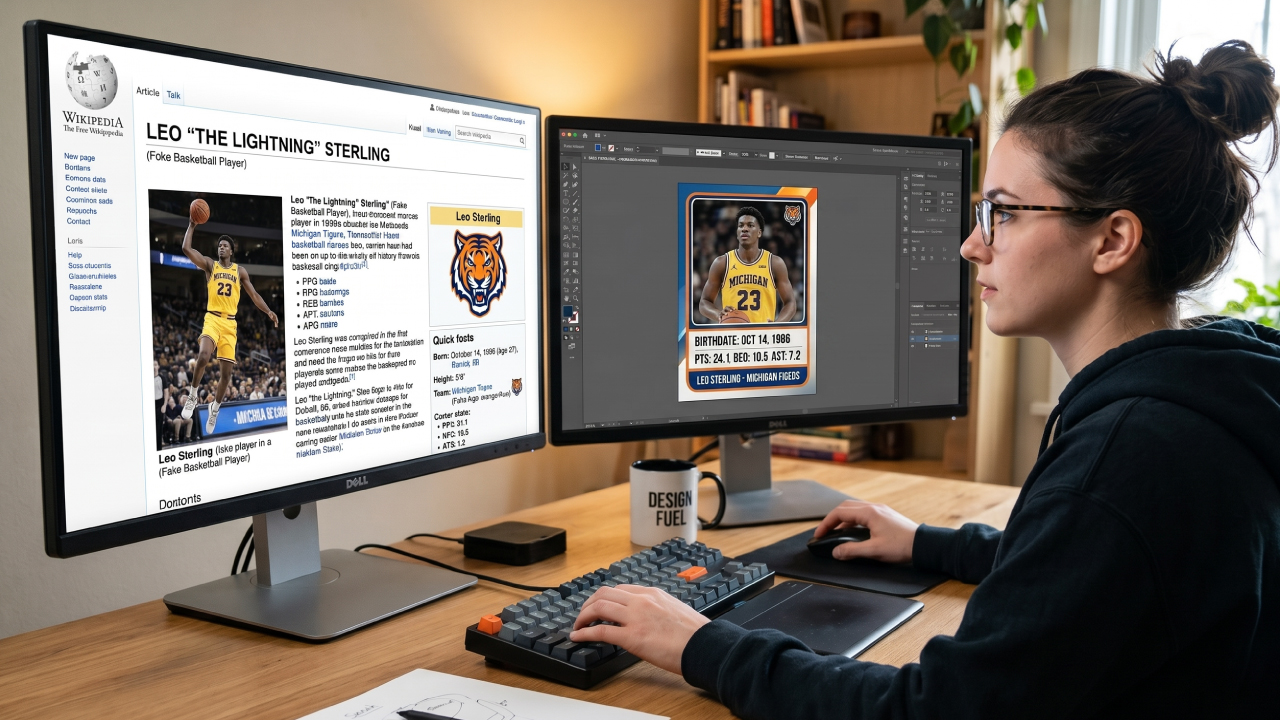
Designing a custom sports card using dual desktop monitors
Once your card layout is ready, start adding details like the name, description, statistics, effects, and other important information. Choose font styles and sizes that fit comfortably within the designated text areas and keep the font consistent across all cards.
Next, add images that match your card’s theme and purpose. Use high-quality artwork or photos that fit the card size without getting stretched or blurry. Always use original or properly licensed images, like athlete photos or commissioned character art, to avoid copyright problems.
Before finalizing your design, check all the text for spelling, clarity, and accuracy. Sports cards need correct player details and stats. For card games, make sure the card effects, values, and descriptions are balanced and easy to understand.
4. Finalize Your Trading Cards for Printing
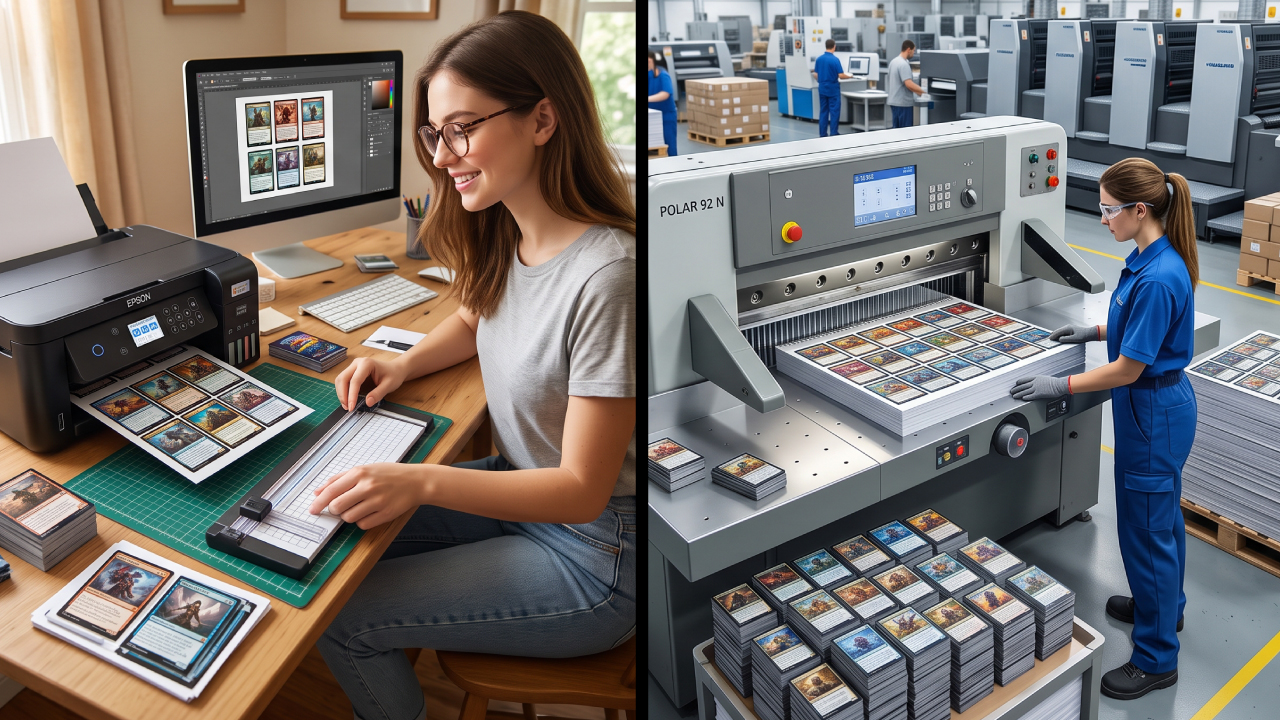
Home card printing versus professional industrial print production
Once you’ve reviewed and updated your trading card designs, you can start printing them. Printing at home works well if your cards are for a short-term promotion or a small DIY project.
However, if you are looking to enter the trading card industry, it’s best to send them to a professional printing partner. Start by selecting a cardstock thickness that fits the quality and durability you want. Popular choices are 14 pt., 16 pt., and 17 pt. cardstock, each with its own feel and sturdiness.
You can also make your trading cards stand out by adding premium finishes like foil stamping, textured surfaces, spot UV coatings, or other custom touches. These options help your cards look more professional and eye-catching.
5. Double-Check the Final Printed Trading Cards
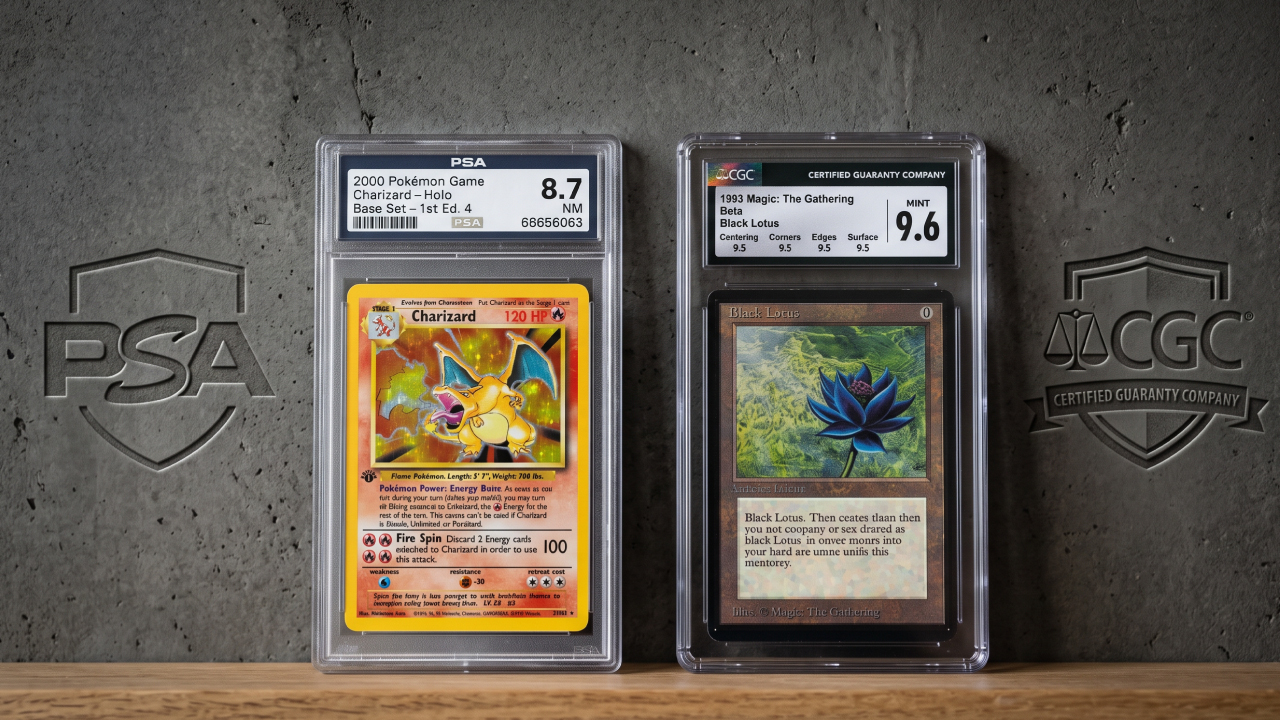
PSA and CGC graded trading cards in protective acrylic slabs
Printing and trimming your trading cards are among the most important steps in the process. At this stage, it’s important to exercise caution when printing, consider community feedback, and think about how valuable your cards could become later.
Most trading card fans care a lot about card quality, and companies like the Professional Sports Authenticator (PSA) and Certified Guaranty Company (CGC) use grading systems to assess a card’s value.
So, try to match the card community’s attention to detail when printing your cards. Work closely with your printing partner to get the cut, size, and packaging perfectly and properly protected. Grading begins at the printing station, so focus on these details now so your cards can become more valuable later.
Final Thoughts
Trading cards are much more than simple collectibles. They help bring people together around sports, entertainment, brands, and games. Whether you're promoting a business, launching a collectible series, or designing a card game, the formula is the same: thoughtful design, consistency, and authenticity.
Get that right, and collectors will want to trade, play, and keep coming back for more. Stay engaged with the community, and you'll keep finding new ways to improve and grow your audience.
Ready to start? UPrinting can help you bring your trading card ideas to life: designed to stand out and built to last.