Stickers are as versatile as they come. They are the perfect way to express yourself, market a brand, or customize just about anything. But the first step in sticker creation is choosing the right material. Making the right choice determines how well your stickers perform in their intended environment. Let’s peel back the layers on sticker materials and find out which one sticks best for your needs.
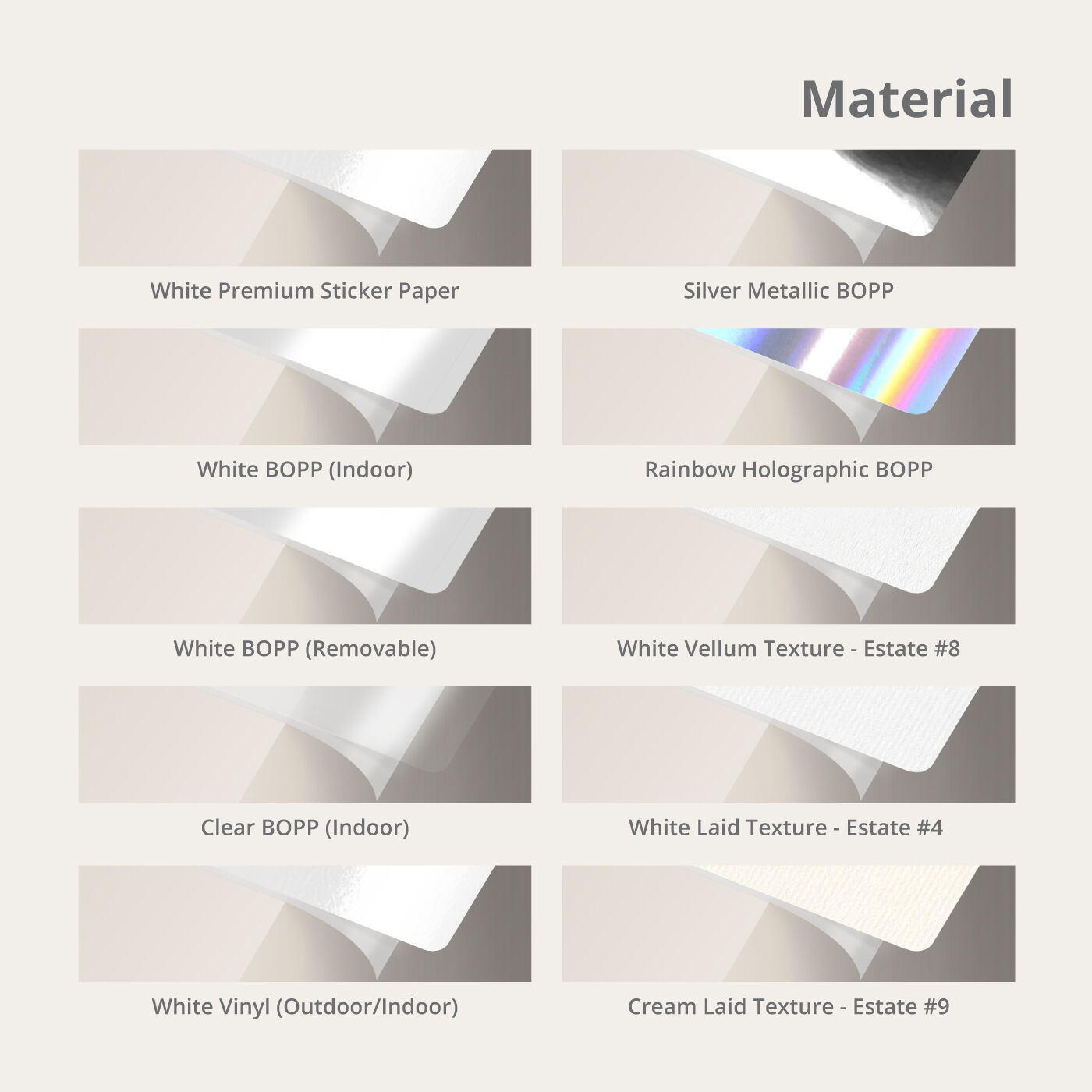
Printable sticker material samples with metallic, holographic, and vinyl finishes.
Stickers come in various materials, each with unique properties and uses. Understanding your options is the first step to making an informed choice.
Paper stickers are the classic choice. They’re cost-effective and ideal for indoor use like packaging and labeling. You can choose from 70 lb. label for sticker singles and sheets, while white premium sticker paper is available for rolls.
Vinyl is the go-to for outdoor stickers. Our 4 mil white vinyl is weather-resistant, durable, and offers vibrant color reproduction. This material is perfect for car decals or outdoor equipment.
BOPP, which is short for biaxially oriented polypropylene, offers a middle ground between paper and vinyl. It’s stronger than paper and more cost-effective than vinyl, suitable for products that may encounter moisture or sudden temperature changes.
If you want a tactile dimension to your stickers, choose our textured material. This gives your stickers an elegant look that’s hard to replicate. Ideal for wine bottles, premium products, and gourmet items.
An easy way to decide on your sticker material choice is to think about where it will be used.Your stickers’ environment should play a major role in your decision. Here’s how to match material to usage:
For labels, branding, and decorative stickers that stay indoors, paper or BOPP are sufficient. For products that need a premium look, opt for one of our textured papers.
For any exterior application, vinyl is your best bet. It stands up to weather and UV rays better than others.
When your stickers need to withstand water, like in bathrooms or kitchens, vinyl and BOPP are your best choice.
Durability is key, especially for stickers that need to last.
Vinyl withstands wear, tear, and scratches better than other materials.
UV-resistant vinyl is best for maintaining color integrity over time. The print doesn’t fade as much even with prolonged exposure to sunlight.
Your budget will significantly influence your material choice.
is cost-effective for large runs, while vinyl is pricier but offers longevity.In general, you can choose sticker singles for small runs and rolls for bulk applications.
Consider the balance between cost and the need for durability when choosing. If you’re going to use the stickers indoors exclusively, there may be no need to use more expensive vinyl.
Some industries have specific requirements that influence material choice.
Materials used here must often comply with food safety standards and be resistant to refrigeration conditions. BOPP, for example, is non-toxic and food-safe.
Materials for the automotive industry need to resist heat and environmental factors. White vinyl is an excellent choice for automotive applications.
The quantity of your custom sticker order may influence your material choice due to cost and production time.
For small runs, choose a material that doesn’t require a large setup, like digital printing on vinyl. The best option for small runs is sticker singles or sheets.
For large orders, paper might be more economical. We recommend using sticker rolls so they can be rapidly applied.
Choosing the right sticker material requires balancing factors such as usage, durability, customization, cost, adhesive quality, industry needs, printing methods, order quantity, and supplier capabilities. Consider all these to ensure your stickers stick around for the right reasons.
Picking the perfect sticker material isn’t just about aesthetics; it’s about performance, durability, and budget. Whether you choose paper for its cost-effectiveness, vinyl for its all-weather resilience, or polypropylene for a happy medium, your stickers should reflect the quality and intent behind them. By considering the outlined factors, you’re now equipped to make a sticky situation into a successful one.
Vinyl and BOPP are top choices for waterproof stickers. Both materials can be used indoors and outdoors.
Paper stickers are not ideal for outdoor use as they are not water or UV resistant.
Yes, generally, vinyl stickers are more expensive than paper due to their durability and material costs.
Ready to learn how to turn your material choices into a revenue stream? Check out our guide on selling stickers on Etsy.
